Related Research Articles

A surname, family name, or last name is the portion of a personal name that indicates a person's family. Depending on the culture, all members of a family unit may have identical surnames or there may be variations based on the cultural rules.
A matronymic is a personal name based on the given name of one's mother, grandmother, or any female ancestor. It is the female equivalent of a patronymic. Around the world, matronymic surnames are far less common than patronymic surnames. In some cultures in the past, matronymic last names were often given to children of unwed mothers. Or if a woman was especially well known or powerful, her descendants might adopt a matronym based on her name. A matronymic is a derived name, as compared to a matriname, which is an inherited name from a mother's side of the family, and which is unchanged.
Patel is an Indian surname, predominantly found in the state of Gujarat, Bihar and Mumbai, representing the community of land-owning farmers and later businessmen, agriculturalists and merchants. Traditionally the surname is a status name referring to the village chieftains throughout during medieval ages, and was later retained as successive generations stemmed out into communities of land owners, including among Patidars, Kolis, some Parsis and Muslims. There are roughly 500,000 Patels outside India, including 150,000 in the United Kingdom and 150,000 in the US. Nearly 1 in 10 people of Indian origin in the US is a Patel.
Strickland is an English toponymic surname derived from the manor of Strickland in Westmorland, England, now represented geographically by the villages of Great Strickland and Little Strickland. The surname dates as far back as the 12th century.
Neil is a masculine given name of Gaelic origin. The name is an Anglicisation of the Irish Niall which is of disputed derivation. The Irish name may be derived from words meaning "cloud", "passionate", or "champion". As a surname, Neil is traced back to Niall of the Nine Hostages who was an Irish king and eponymous ancestor of the Uí Néill and MacNeil kindred. Most authorities cite the meaning of Neil in the context of a surname as meaning champion.
The birth name is the name of the person given upon their birth. The term may be applied to the surname, the given name or to the entire name. Where births are required to be officially registered, the entire name entered onto a births register or birth certificate may by that fact alone become the person's legal name. The assumption in the Western world is often that the name from birth will persist to adulthood in the normal course of affairs—either throughout life, or until marriage. Some possible changes concern middle names, diminutive forms, changes relating to parental status, and changes related to gender transition. Matters are very different in some cultures in which a birth name is for childhood only, rather than for life.

Warboys is a large village and civil parish in the Huntingdonshire district of Cambridgeshire, England, 7 miles (11 km) north-east of Huntingdon. The village has a primary school, two public houses, a library, several churches and a number of shops, including a Spar, Happy Shopper and a hardware store.
Brian is a male given name of Irish and Breton origin, as well as a surname of Occitan origin. It is common in the English-speaking world. It is possible that the name is derived from an Old Celtic word meaning "high" or "noble". For example, the element bre means "hill"; which could be transferred to mean "eminence" or "exalted one". The name is quite popular in Ireland, on account of Brian Boru, a 10th-century High King of Ireland. The name was also quite popular in East Anglia during the Middle Ages. This is because the name was introduced to England by Bretons following the Norman Conquest. Bretons also settled in Ireland along with the Normans in the 12th century, and 'their' name was mingled with the 'Irish' version. Also, in the north-west of England, the 'Irish' name was introduced by Scandinavian settlers from Ireland. Within the Gaelic speaking areas of Scotland, the name was at first only used by professional families of Irish origin. It was the fourth most popular male name in England and Wales in 1934, but a sharp decline followed over the remainder of the 20th century and by 1994 it had fallen out of the top 100. It retained its popularity in the United States for longer; its most popular period there was from 1968–1979 when it consistently ranked between eighth and tenth. The name has become increasingly popular in South America - particularly Argentina and Uruguay since the early 1990s.
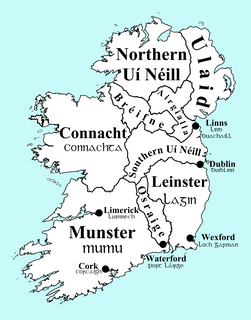
McGowan is an Irish surname. It is an Anglicization of the Irish Mac Gabhann & Scottish surname Mac Gobhann. Belonging to the Uí Echach Cobo, located in modern-day County Down, Northern Ireland, they produced several over-kings of Ulaid. By the late 12th century, the English had expelled the McGowans to Tír Chonaill in modern-day County Donegal, Republic of Ireland.
Shaw is most commonly a surname and rarely a given name.
Gibson is a surname of English origin. The name is derived from a patronymic form of the common medieval name Gib, which is a short form of Gilbert. Variant forms of the surname include Gibsoun, Gipson, Gibbson, Gibbons, Gilson, Gibb, Gibbs and Gibby amongst others.
Hore is an English surname, a variant of Hoare, and is derived from the Middle English hor(e) meaning grey- or white-haired. Notable people with the surname include:
Ferrer is a common surname in Catalan, described in some sources as having been brought to Spain in the 13th century by English-Scottish noblemen and is ranked 35th in Catalonia and was listed as 1,648th most common surname in the world.

Martin may either be a given name or surname. Martin is a common male given and family name in many languages and cultures. It comes from the Latin name Martinus, which is a late derived form of the name of the Roman god Mars, the protective godhead of the Latins, and therefore the god of war. The meaning is usually rendered in reference to the god as "of Mars", or "of war/warlike" ("martial").
Stewart is a Scottish surname possibly of pre-7th century Old English origin, derived from stigeweard, the genitive prefix stige meaning "hall", and the suffix weard meaning "guardian" or "warden". Alternative spellings are Stuart, Steward and Steuart. The surname Stewart has large concentrations in the United States, United Kingdom, Canada, Jamaica, New Zealand, Australia and elsewhere that has large Scottish or Ulster Scots diaspora.
Worboys is an English surname, a variant of Warboys. Notable people with the surname include:
Trump is a surname of English and German origin:
David G. Hey was an English historian, and was an authority on surnames and the local history of Yorkshire. Hey was the president of the British Association for Local History, and was a published author of several books on local history and the derivation of surnames.

A plant epithet is a name used to label a person or group, by association with some perceived quality of a plant. Vegetable epithets may be pejorative, such as turnip readily giving offence, or positive, such as the rose or other flowers implying beauty. Tree and flower forenames such as Hazel, Holly, Jasmine and Rose are commonly given to girls. Tree surnames such as Oakes (Oak) and Nash (Ash) are toponymic, given to a person in the Middle Ages who lived in a place near a conspicuous tree. A few plant surnames such as Pease and Onions are metonymic, for sellers of peas and onions respectively. Finally, plant surnames are sometimes emblematic, as in the name Rose, used as a family emblem.
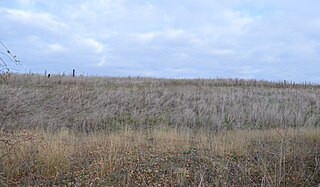
Warboys Clay Pit is a 12.6 hectare geological Site of Special Scientific Interest west of Warboys in Cambridgeshire. It is a Geological Conservation Review site.
References
- ↑ Hanks, Patrick; Hodges, Flavia (2002). The Oxford Names Companion. Oxford University Press. p. 651. ISBN 0198605617.
