
The economy of Eritrea has undergone extreme changes after the War of Independence. It experienced considerable growth in recent years, indicated by an improvement in gross domestic product in 2011 of 8.7 percent and in 2012 of 7.5% over 2011, and has a total of $8.090 billion as of 2020. However, worker remittances from abroad are estimated to account for 32 percent of gross domestic product.

The economy of Ethiopia is a mixed and transition economy with a large public sector. The government of Ethiopia is in the process of privatizing many of the state-owned businesses and moving toward a market economy. The banking, telecommunication and transportation sectors of the economy are dominated by government-owned companies.

The economy of Ghana has a diverse and rich resource base, including the manufacturing and export of digital technology goods, automotive and ship construction and export, and the export of resources such as hydrocarbons and industrial minerals.

The economy of Morocco is considered relatively liberal, governed by the law of supply and demand. Since 1993, in line with many Western world changes, Morocco has followed a policy of privatisation. Morocco has become a major player in African economic affairs, and is the 6th largest African economy by GDP (PPP). The World Economic Forum placed Morocco as the most competitive economy in North Africa, in its African Competitiveness Report 2014–2015.

The economy of Paraguay is a market economy that is highly dependent on agriculture products. In recent years, Paraguay's economy has grown as a result of increased agricultural exports, especially soybeans. Paraguay has the economic advantages of a young population and vast hydroelectric power. Its disadvantages include the few available mineral resources, and political instability. The government welcomes foreign investment.
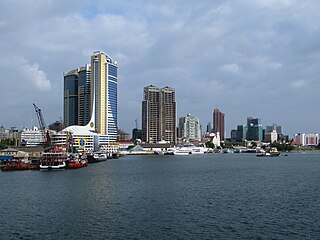
The economy of Tanzania is a lower-middle income economy that is centered around Manufacturing, Tourism, Agriculture, and financial services. Tanzania's economy has been transitioning from a planned economy to a market economy since 1985. Although the total GDP has increased since these reforms began, GDP per capita dropped sharply at first, and only exceeded the pre-transition figure in around 2007.
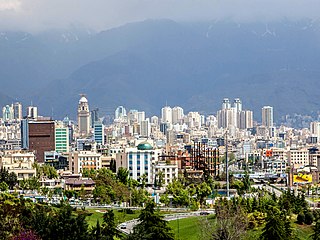
Iran has a mixed, centrally planned economy with a large public sector. It consists of hydrocarbon, agricultural and service sectors, in addition to manufacturing and financial services, with over 40 industries traded on the Tehran Stock Exchange. With 10% of the world's proven oil reserves and 15% of its gas reserves, Iran is considered an "energy superpower". Nevertheless, since 2024 Iran is suffering from an energy crisis. Also, some allegation were made that Iran manipulates its economic data.
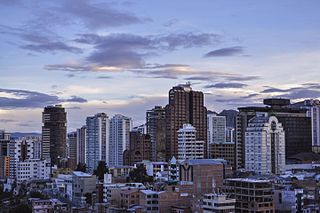
The economy of Bolivia is the 95th-largest in the world in nominal terms and the 87th-largest in purchasing power parity. Bolivia is classified by the World Bank to be a lower middle income country. With a Human Development Index of 0.703, it is ranked 114th. Driven largely by its natural resources, Bolivia has become a region leader in measures of economic growth, fiscal stability and foreign reserves, although it remains a historically poor country. The Bolivian economy has had a historic single-commodity focus. From silver to tin to coca, Bolivia has enjoyed only occasional periods of economic diversification. Political instability and difficult topography have constrained efforts to modernize the agricultural sector. Similarly, relatively low population growth coupled with low life expectancy has kept the labor supply in flux and prevented industries from flourishing. Rampant inflation and corruption previously created development challenges, but in the early twenty-first century the fundamentals of its economy showed unexpected improvement, leading Moody's Investors Service to upgrade Bolivia's economic rating in 2010 from B2 to B1. The mining industry, especially the extraction of natural gas and zinc, currently dominates Bolivia's export economy.

Sojitz Corporation is a sogo shosha based in Tokyo, Japan. It is engaged in a wide range of businesses globally, including buying, selling, importing, and exporting goods, manufacturing and selling products, providing services, and planning and coordinating projects, in Japan and overseas. Sojitz also invests in various sectors and conducts financing activities. The broad range of sectors in which Sojitz operates includes automobiles, energy, mineral resources, chemicals, foodstuff resources, agricultural and forestry resources, consumer goods, and industrial parks.

Mitsui & Co., Ltd. is one of the largest sogo shosha in Japan; it is part of the Mitsui Group.
The Laotian Chinese are Laotian citizens of Han Chinese ancestry. They constitute one of the many Overseas Chinese residing in Southeast Asia. At present, they constitute an estimated 1 to 2 percent of the Laotian population. The Laotian Chinese community have a disproportionately large presence in the Laotian business sector and dominate the Laotian economy today.
At the time of its founding in 1949, the People's Republic of China (PRC) was one of the poorest countries in the world. In the early 1950s, its industry developed rapidly through a state-led process heavily influenced by the Soviet experience. Aiming to close the gap between its political ambitions and its phase of development, China began the Great Leap Forward, which sought to even more rapidly industrialize the country. The effort largely failed, and its policies contributed to famine.

The industrial sector comprised 38.3% of the gross domestic product (GDP) of China in 2023. China is the world's leading manufacturer of chemical fertilizers, cement and steel. Prior to 1978, most output was produced by state-owned enterprises. As a result of the economic reforms that followed, there was a significant increase in production by enterprises sponsored by local governments, especially townships and villages, and, increasingly, by private entrepreneurs and foreign investors, but by 1990 the state sector accounted for about 70 percent of output. By 2002 the share in gross industrial output by state-owned and state-holding industries had decreased with the state-run enterprises themselves accounting for 46 percent of China's industrial output. In November, 2012 the State Council mandated a "social risk assessment" for all major industrial projects. This requirement followed mass public protests in some locations for planned projects or expansions.

Mining is important to the economy of Ethiopia as a diversification from agriculture. Currently, mining comprises only 1% of GDP. Gold, gemstones, and industrial minerals are important commodities for the country's export-oriented growth strategy.
Çalık Holding is a Turkish company that has been operating in the energy, construction, mining, textile, and finance sectors since the 1980s. Founder and chairman Ahmet Çalık began his business career in the textile industry, founding Orta Doğu Tekstil in 1981 and Çalık Denim in 1987. During the early-1990s independence of CIS countries, he made his first foreign investments and founded Gap Pazarlama and Gap İnşaat. These companies were brought together as Çalık Holding in 1997. The umbrella company founded Çalık Enerji in 1998 and Aktif Bank in 1999, to enter the energy and finance sectors.
Pakistan's industrial sector accounts for 28.11% of the GDP. Of this, manufacturing makes up 12.52%, mining constitutes 2.18%, construction makes up 2.05%, and electricity and gas 1.36%. The majority of industry is made up of textile units, with textiles contributing $15.4b to exports, making up 56% of total exports. Other units include surgical instruments, chemicals, and a budding automotive industry. Pakistan's inadequately developed labor market, unable to absorb the increasing number of educated workers, has resulted in a high rate of unemployment among graduates.

Mineral industry of Colombia refers to the extraction of valuable minerals or other geological materials in Colombia. Colombia is well-endowed with minerals and energy resources. It has the largest coal reserves in Latin America, and is second to Brazil in hydroelectric potential. Estimates of petroleum reserves in 1995 were 3.1 billion barrels (490,000,000 m3). Colombia also possesses significant amounts of nickel and gold. Other important metals included platinum and silver, which were extracted in much smaller quantities. Colombia also produces copper, small amounts of iron ore, and bauxite. Nonmetallic mined minerals include salt, limestone, sulfur, gypsum, dolomite, barite, feldspar, clay, magnetite, mica, talcum, and marble. Colombia also produces most of the world's emeralds. Despite the variety of minerals available for exploitation, Colombia still had to import substances such as iron, copper, and aluminum to meet its industrial needs.

The municipality of Gjilan is in the Anamorava microregion of Kosovo, and has 42 villages. Due to the overall increase in economic development, Gjilan has become a known administrative, commercial and industrial region. The territory of Gjilan's municipality currently has an area of 391 km with approximately 130,000 residents. The entire territory owns about 24,230 hectares of farmland, from which 18,224 hectares are considered to be agricultural land capable of producing a variety of traditional crops. Gjilan is well positioned geographically as an administrative unit. Automobile highways roads permit good communication and movement of goods and people, connecting it with Pristina, Vitia, Ferizaj, Kamenica, Bujanovac, and other centers of Kosovo. Thus, Gjilan has an important strategic center capable of having an impact in the region. Natural resources in the region have been exploited since the Middle Ages. Notable resources include potassium, magnesium, and the thermal mineral water, or hot springs.

British Columbia (B.C.) is the third largest Canadian province by population and fourth largest provincial economy. Like other provinces in the Canadian federation, B.C. consists of both private and public institutions. However, as Canada's westernmost province, located between the Pacific Ocean and the Rocky Mountains, B.C. has unique economic characteristics that distinguish it from much of the rest of Canada.


