The politics of Croatia are defined by a parliamentary, representative democratic republic framework, where the Prime Minister of Croatia is the head of government in a multi-party system. Executive power is exercised by the Government and the President of Croatia. Legislative power is vested in the Croatian Parliament. The Judiciary is independent of the executive and the legislature. The parliament adopted the current Constitution of Croatia on 22 December 1990 and decided to declare independence from Yugoslavia on 25 May 1991. The Constitutional Decision on the Sovereignty and Independence of the Republic of Croatia came into effect on 8 October 1991. The constitution has since been amended several times. The first modern parties in the country developed in the middle of the 19th century, and their agenda and appeal changed, reflecting major social changes, such as the breakup of Austria-Hungary, the Kingdom of Serbs, Croats and Slovenes, dictatorship and social upheavals in the kingdom, World War II, the establishment of Communist rule and the breakup of the SFR Yugoslavia.

The Croatian Parliament or the Sabor is the unicameral representative body of the citizens of the Republic of Croatia; it is Croatia's legislature. Under the terms of the Croatian Constitution, the Sabor represents the people and is vested with legislative power. The Sabor is composed of 151 members elected to a four-year term on the basis of direct, universal and equal suffrage by secret ballot. Seats are allocated according to the Croatian Parliament electoral districts: 140 members of the parliament are elected in multi-seat constituencies, 8 from the minorities and 3 from the Croatian diaspora. The Sabor is presided over by a Speaker, who is assisted by at least one deputy speaker.

The State of Slovenes, Croats and Serbs was a political entity that was constituted in October 1918, at the end of World War I, by Slovenes, Croats and Serbs resident in what were the southernmost parts of the Austro-Hungarian Empire. Although internationally unrecognized, this was the first incarnation of a Yugoslav state founded on the Pan-Slavic ideology. Thirty-three days after it was proclaimed, the State joined the Kingdom of Serbia to form the Kingdom of Serbs, Croats and Slovenes.

Stjepan Radić was a Croatian politician and the founder of the Croatian People's Peasant Party (HPSS). Radić is credited with galvanizing Croatian peasantry into a viable political force. Throughout his entire career, he was opposed to the union and, later, Serb hegemony in Yugoslavia and became an important political figure in that country. He was shot in parliament by the Serbian radical politician Puniša Račić. Radić died several weeks later from a serious stomach wound at the age of 57. This assassination further alienated the Croats and the Serbs.
State of Slovenes, Croats and Serbs became merged with Kingdom of Serbia and Kingdom of Montenegro to form the nation of Yugoslavia in 1918. The formation of Yugoslavia began with the formation of the Yugoslav Committee, a collection of mostly Croats, then Serbs and later Slovenes, whose goal was to form a single south Slavic state. In October 1918 the Croatian Parliament declared the Kingdom of Croatia - Slavonia as an independent state, which, in December that same year, incorporated in State of Slovenes, croats and Serbs, merged with Kingdom of Serbia and Kingdom of Montenegro and created the Kingdom of Serbs, Croats and Slovenes. The kingdom would be renamed to Yugoslavia in 1929, and ruled by Serbian Karađorđević dynasty till Second World War. After the formation of Yugoslavia, Serbia attempted to create a "Greater Serbia" by using police intimidation and vote rigging to establish a Serbian controlled Yugoslavia. From 1929-1941 Serbian controlled Yugoslavia established control over Croatia through Royal Yugoslav police force brutality and assassinations of important Croatians.
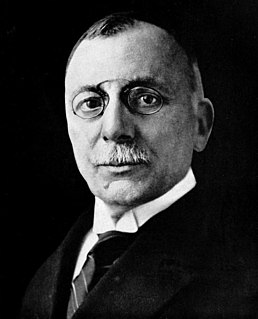
Ante Trumbić was a Croatian politician in the early 20th century.
Regular elections in Croatia are mandated by the Constitution and legislation enacted by Parliament. The presidency, Parliament, county prefects and assemblies, city and town mayors, and city and municipal councils are all elective offices. Since 1990, five presidential elections have been held. During the same period, nine parliamentary elections were also held. In addition, there were six nationwide local elections. Croatia has held two elections to elect 11 members of the European Parliament following its accession to the EU on 1 July 2013.

Svetozar Pribićević was a Croatian Serb politician who was one of the main proponents of Yugoslavism and a federalized South Slavic state which would later turn out to be Yugoslavia. However, he later became a bitter opponent of the same policy and of the dictatorship of king Aleksandar Karađorđević.

Parliamentary elections were held alongside presidential elections in Croatia on 2 August 1992, the first after independence and under the new constitution. All 138 seats in the Chamber of Representatives were up for election. The result was a victory for the Croatian Democratic Union, which won an absolute majority of 85 seats. Voter turnout was 75.6%.
Parliamentary elections were held in Croatia on 29 October 1995 to elect the 127 members of the Chamber of Representatives. The result was a victory for the Croatian Democratic Union, which won 75 seats, an absolute majority. Therefore, this was the last election to date in which a single party won enough seats to govern alone, without the need for parliamentary support from pre-election or post-election coalition partners. Voter turnout was 68.8%.
Matko Laginja was a Croatian lawyer and politician.
The Croatian Bloc or the Croatian National Representation was the name held by the wide coalition of Croatian political parties in the Kingdom of Serbs, Croats, and Slovenes from 1921 to 1929's 6th of January Dictatorship and within the Kingdom of Yugoslavia from 1935 to 1941.
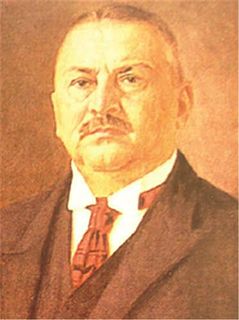
Vjekoslav Heinzel was the Mayor of Zagreb from 1920 to 1928. He is best remembered for great development projects of the 1920s that significantly expanded the city.
The Vidovdan Constitution was the first constitution of the Kingdom of Serbs, Croats and Slovenes. It was approved by the Constitutional Assembly on 28 June 1921 despite the opposition boycotting the vote. The Constitution is named after the feast of St. Vitus (Vidovdan), a Serbian Orthodox holiday. The Constitution required a simple majority to pass. Out of 419 representatives, 223 voted for, 35 voted against and 161 abstained.

In Yugoslavia, elections were held while it had existed as the Kingdom of Yugoslavia, the first one being in 1918 for the Provisional Popular Legislature of Serbs, Croats and Slovenes and the last being the parliamentary election of 1938. Women were not eligible to vote. After the 1918 indirect ones, the 1920 parliamentary election was the first direct one. Parliamentary elections were held in 1923, 1925 and 1927, while with the new constitution a de facto Lower and Upper House were introduced in 1931. The 1931 elections were not free, as they were handled under a single-course dictatorship, while the 1935 and 1938 were held under limited basic democratic principles.
The Party of Rights, was an influential Croatian political party in the 19th and 20th centuries. The right or rights in the party's name refer to the idea of Croatian national and ethnic rights, which was central to the party's ideology. Numerous modern Croatian and Bosnian Croat political parties claim lineage from it.
On 21 March 1920 local elections were held in Zagreb, the first ones in the newly formed Kingdom of Serbs, Croats and Slovenes. The incumbent mayor was Stjepan Srkulj from the Croatian Union party, who took office in 1917. Svetozar Delić of the Socialist Workers' Party of Yugoslavia was elected mayor, but his term lasted only six days before being suspended by the government. New elections were called for 18 June 1920.
Local elections for the Zagreb City Assembly were held on 11 December 1921. These were the third elections in Zagreb since the formation of the Kingdom of Serbs, Croats and Slovenes. The Croatian Bloc won a majority and incumbent mayor Vjekoslav Heinzel was reelected as mayor of Zagreb.
The 1927 local elections in Zagreb were held on 4 September, 7 days before the parliamentary elections. The Croatian Bloc coalition won a majority in the City Assembly and reelected Vjekoslav Heinzel as mayor.