Zhu Yu is a performance artist and alleged cannibal living in Beijing, China. Zhu graduated from the Affiliated High School of the China Central Academy of Fine Arts in 1991. His work deals with subjects of contemporary art.

Sui Jianguo, professor and ex-chairman of the Department of Sculpture in Central Academy of Fine Arts in Beijing, is a contemporary Chinese artist.
Miao Xiaochun is an artist and photographer based in Beijing.

Li Songsong is a Chinese artist working in Beijing.
Li Qing is a Chinese artist based in Hangzhou, Zhejiang Province, China.
Yin Zhaohui is an artist based in Beijing.
Shang Yang is a contemporary Chinese painter based in Beijing and is considered one of the most important painters of the life-stream movement. Known for his oriental humanist thought he believes landscapes are living things and puts their spirit into his brushwork. In 1965 he graduated from the Hubei Art Academy, where he then taught for several years. He received his masters from the Hubei Art Academy in 1981. Yang became the Associate President in 1989. Shang Yang became a Professor and the Officer-in-Charge of Fine Arts at the Research Institute of South China Normal University in 1993. Also in 1993, he became the Vice President of the Chinese Art painting Society. Shang Yang has exhibited extensively in China since the 1980s, including at Shanghai Biennale in 1996, and has shown internationally at galleries in London, Paris, Tokyo, St. Petersburg, and Helsinki. Shang Yang's work often appropriates images from traditional Chinese landscape painting, which are screened onto the canvas by a machine; he then distorts the image with graffiti or obtrusive geometrical designs. His works combine avant-garde exploration and solid artistic skill to create unique works of expressionism oil painting.
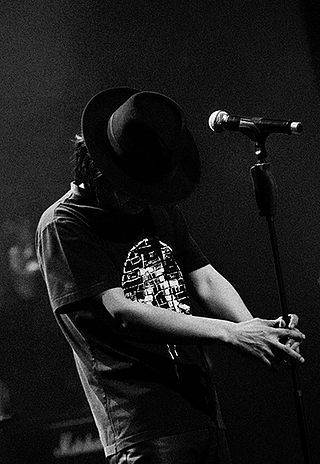
Zuoxiao Zuzhou, real name Wu Hongjin, (吴红巾), is a Chinese musician and artist.
Liu Ye is a Beijing-based contemporary Chinese painter known for his bright-hued paintings of childlike female figures, his favorite cartoon character Miffy the bunny and works inspired by Piet Mondrian. Liu Ye is part of a generation of artists who grew up during the Cultural Revolution. However, unlike most acclaimed Chinese contemporary art, his works have little political implications. Instead, he prefers to use a universal language to depict his inner world. His work has been exhibited extensively in China, Europe and the United States.
Wu Zhengyan is a contemporary Chinese painter based in Beijing. She graduated from Shanxi University in the Department of Art in 2004 and later taught in Beijing Agriculture college. It was in 2006 that she became a professional artist. As a member of the "post-80s" generation of artists in China, Wu has been involved in several group shows since 2003.
Hong Lei is one of the leading artists in the era of China's New Photography movement in the 1990s.
Fei Dawei is a Paris-based art critic and curator. He belonged to the first generation of art critics and curators in China after the Cultural Revolution, especially to the '85 New Wave.
Liu Chuang (刘窗)) is a Chinese artist who currently lives and works in Beijing. He was born in 1979 and graduated from Hubei Institute of Fine Arts in 2001. His work, "Buying Everything on You" was featured in The Generational: Younger Than Jesus exhibition that took place at the New Museum in 2009. The show was curated by Massimiliano Gioni. As part of an ongoing project, "Buying Everything on You" was also on view at Frieze New York 2013, and was presented by the Shanghai-based gallery Leo Xu Projects.

Yuan Gong, is a Chinese contemporary artist. He has obtained a PhD degree in theory of art at the Chinese National Academy of Arts in 2012, but has immersed himself in different aspects of Chinese contemporary art since the 1990s. Being both creator and researcher, designer and planner, Yuan is a multiple facets artist playing at the interface of conceptual art, performance and fine arts. Using a large variety of media, his artworks address many philosophical questions, reflecting his concerns about the Chinese society and impugning the art system, the exhibition format and the status of the artwork.
Pan Deng is a Chinese contemporary artist and painter. He is the chairman of the YangJianhou Foundation and a member of Arts Mid-Hudson.

Nan Qi or Nan Xi is a Chinese artist based in Beijing. He is best known for his "halo dot" paintings which combine traditional Chinese ink painting methodology with modern technology, creating a "Ben-Day" dot effect.
The Wuming Painting Collective was an underground counter-culture Chinese art collective and movement formed in 1969.
Zhu Qizhan was a Chinese artist known for merging the color concepts of Western art and the calligraphic brushwork of traditional Chinese painting into a personal style.
Li Huayi is a contemporary ink artist whose admiration for the monumental landscapes of the Northern Song dynasty with his training in both traditional Chinese ink and Western art, inspired him to create his own style of ink painting.
Hu Zhiying is a contemporary Chinese avant-garde artist and art educator. He works within the areas of painting, installation, video art, and conceptual art. His artworks are displayed worldwide, and he has taught painting and calligraphy at the Guangzhou Academy of Fine Arts and South China Normal University.


