Related Research Articles
Survey methodology is "the study of survey methods". As a field of applied statistics concentrating on human-research surveys, survey methodology studies the sampling of individual units from a population and associated techniques of survey data collection, such as questionnaire construction and methods for improving the number and accuracy of responses to surveys. Survey methodology targets instruments or procedures that ask one or more questions that may or may not be answered.
Social statistics is the use of statistical measurement systems to study human behavior in a social environment. This can be accomplished through polling a group of people, evaluating a subset of data obtained about a group of people, or by observation and statistical analysis of a set of data that relates to people and their behaviors.
Cross-cultural studies, sometimes called holocultural studies or comparative studies, is a specialization in anthropology and sister sciences such as sociology, psychology, economics, political science that uses field data from many societies through comparative research to examine the scope of human behavior and test hypotheses about human behavior and culture.
The American Association for Public Opinion Research (AAPOR) is a professional organization of more than 2,000 public opinion and survey research professionals in the United States and from around the world, with members from academia, media, government, the non-profit sector and private industry. AAPOR publishes three academic journals: Public Opinion Quarterly, Survey Practice and the Journal of Survey Statistics and Methodology. It holds an annual research conference and maintains a "Code of Professional Ethics and Practices", for survey research which all members agree to follow. The association's founders include pioneering pollsters Archibald Crossley, George Gallup, and Elmo Roper.
Warren J. Mitofsky was an American political pollster.

Shlomo S. Sawilowsky was a professor of educational statistics and Distinguished Faculty Fellow at Wayne State University in Detroit, Michigan, where he has received teaching, mentoring, and research awards.
James A. Davis (1929–2016) was a distinguished American sociologist who is best known as a pioneer in the application of quantitative statistical methods to social science research and teaching. Most recently, he was a Senior Lecturer in Sociology at the University of Chicago.
The Roper Center for Public Opinion Research at Cornell University is the world's oldest archive of social science data and the largest specializing in data from public opinion surveys. Its collection includes over 27,000 datasets and more than 855,000 questions with responses in Roper iPoll, adding hundreds more each year. The archive contains responses from millions of individuals on a vast range of topics. The current executive director of the center is Jonathon P. Schuldt, Associate Professor of Communication at Cornell University, with a governing board of directors chaired by Robert Y. Shapiro of Columbia University.

Andrew Eric Gelman is an American statistician and professor of statistics and political science at Columbia University.
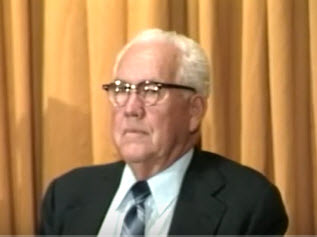
Morris Howard Hansen (1910–1990) was an American statistician. While at the United States Census Bureau, he was one of the first to develop methods for statistical sampling and made contributions in many areas of surveys and censuses.
Denise Anne Lievesley is a British social statistician. She has formerly been Chief Executive of the English Information Centre for Health and Social Care, Director of Statistics at UNESCO, in which capacity she founded the UNESCO Institute for Statistics, and Director (1991–1997) of what is now the UK Data Archive.
Phillip S. Kott is an American statistician. He has worked in the field of survey statistics since 1984, and is regarded as a leader in this field. His areas of expertise include survey sampling design, analysis of survey data, and calibration weighting, among other areas. He revolutionized sampling design and estimation strategies with the Agricultural Resource Management Survey, which uses survey information more efficiently. He has taught at George Mason University, and USDA Graduate School. He is currently an Associate Editor for the Journal of Official Statistics and the scientific journal Survey Methodology.
With the application of probability sampling in the 1930s, surveys became a standard tool for empirical research in social sciences, marketing, and official statistics. The methods involved in survey data collection are any of a number of ways in which data can be collected for a statistical survey. These are methods that are used to collect information from a sample of individuals in a systematic way. First there was the change from traditional paper-and-pencil interviewing (PAPI) to computer-assisted interviewing (CAI). Now, face-to-face surveys (CAPI), telephone surveys (CATI), and mail surveys are increasingly replaced by web surveys. In addition, remote interviewers could possibly keep the respondent engaged while reducing cost as compared to in-person interviewers.

Frauke Kreuter is a German sociologist and statistician. She is a professor of the Joint Program in Survey Methodology (JPSM) of the University of Maryland, College Park and a professor in statistics and data science at the Ludwig Maximilian University of Munich, Germany. Her research in survey methodology includes work on sampling error and observational error.
Mary Catherine Hill is an American hydrologist, a member of the National Academy of Engineering, the winner of the Walter L. Huber Civil Engineering Research Prize and of the Dooge Medal of the International Association of Hydrological Sciences, a Darcy Lecturer for the National Ground Water Association, and Fellow of the American Geophysical Union and the Geological Society of America. After working for 33 years at the United States Geological Survey, she became a professor of geology at the University of Kansas.
Alan Gilbert Agresti is an American statistician and Distinguished Professor Emeritus at the University of Florida. He has written several textbooks on categorical data analysis that are considered seminal in the field.
Jill A. Dever is an American statistician specializing in survey methodology who works as a senior researcher and senior director in the division for statistical & data sciences at RTI International.

Joseph Waksberg was an American statistician. While at the United States Census Bureau and Westat, he developed methods for area sampling and telephone sampling and made contributions in many areas of surveys and censuses.
Timothy P. Johnson is professor emeritus of Public Policy, Management, and Analytics at University of Illinois at Chicago (UIC) and a Fellow of the American Statistical Association. His research focuses on research methods, social epidemiology, and survey methodology.
Lars Lyberg was a Swedish statistician, head of research and development at Statistics Sweden, the founding editor of the Journal of Official Statistics, and a Fellow of the Royal Statistical Society and American Statistical Association. His research focused on data quality, total survey error, and research in the multinational, multiregional, and multicultural contexts.
References
- 1 2 "Craig A. Hill". RTI International Experts. November 2020. Archived from the original on December 10, 2023. Retrieved February 9, 2024.
- ↑ "Craig A. Hill". scholar.google.com. Retrieved 2024-02-09.
- ↑ Hill, Craig; Dean, Elizabeth; Murphy, Joe (2013). Social Media, Sociality, and Survey Research. Wiley Publishing. ISBN 978-1-118-37973-8.
- ↑ Hill, Craig A.; Biemer, Paul P.; Buskirk, Trent D.; Japec, Lilli; Kirchner, Antje; Kolenikov, Stas; Lyberg, Lars E., eds. (2020-10-13). Big Data Meets Survey Science: A Collection of Innovative Methods (1 ed.). Wiley. doi:10.1002/9781118976357. ISBN 978-1-118-97632-6. S2CID 240797608. Archived from the original on 2023-11-07. Retrieved 2024-02-09.
- ↑ https://www.linkedin.com/in/craigahill22/
- ↑ "BigSurv2023 Academic Comittee[sic] | BigSurv". www.bigsurv.org. Archived from the original on 2024-01-19. Retrieved 2024-02-09.
- ↑ "ASA Fellows". American Statistical Association. Archived from the original on 1996-10-28. Retrieved 2024-02-09.
- ↑ "2021 Award Winners - Warren J. Mitofsky Innovators Award". American Association for Public Opinion Research. 2022-12-07. Archived from the original on 2023-12-04. Retrieved 2024-02-09.