The Book of Habakkuk is the eighth book of the 12 minor prophets of the Bible. It is attributed to the prophet Habakkuk, and was probably composed in the late 7th century BC. The original text was written in the Hebrew language. It is an important text in Judaism, and passages from the book are quoted by authors of the New Testament, and its message has inspired modern Christian hymn writers.
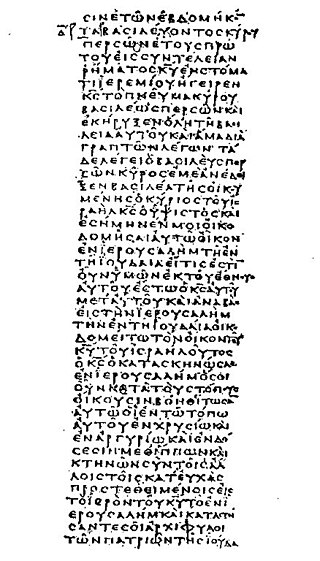
The Septuagint, sometimes referred to as the Greek Old Testament or The Translation of the Seventy, and often abbreviated as LXX, is the earliest extant Greek translation of the Hebrew Bible from the original Hebrew. The full Greek title derives from the story recorded in the Letter of Aristeas to Philocrates that "the laws of the Jews" were translated into the Greek language at the request of Ptolemy II Philadelphus by seventy-two Hebrew translators—six from each of the Twelve Tribes of Israel.

The Dead Sea Scrolls, also called the Qumran Caves Scrolls, are a set of ancient Jewish manuscripts from the Second Temple period. They were discovered over a period of 10 years, between 1946 and 1956, at the Qumran Caves near Ein Feshkha in the West Bank, on the northern shore of the Dead Sea. Dating from the 3rd century BCE to the 1st century CE, the Dead Sea Scrolls include the oldest surviving manuscripts of entire books later included in the biblical canons, including deuterocanonical manuscripts from late Second Temple Judaism and extrabiblical books. At the same time, they cast new light on the emergence of Christianity and of Rabbinic Judaism. Almost all of the 15,000 scrolls and scroll fragments are held in the Shrine of the Book at the Israel Museum located in Jerusalem. The Israeli government's custody of the Dead Sea Scrolls is disputed by Jordan and the Palestinian Authority on territorial, legal, and humanitarian grounds—they were mostly discovered following the Jordanian annexation of the West Bank and were acquired by Israel after Jordan lost the 1967 Arab–Israeli War—whilst Israel's claims are primarily based on historical and religious grounds, given their significance in Jewish history and in the heritage of Judaism.
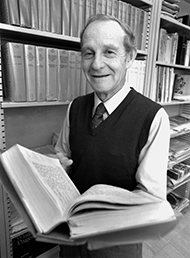
David Noel Freedman was an American biblical scholar, author, editor, archaeologist, and, after his conversion from Judaism, a Presbyterian minister. He was one of the first Americans to work on the Dead Sea Scrolls. He is the son of the writer David Freedman. He died of a heart ailment.

Emanuel Tov is a Dutch–Israeli biblical scholar and linguist, emeritus J. L. Magnes Professor of Bible Studies in the Department of Bible at the Hebrew University of Jerusalem. He has been intimately involved with the Dead Sea Scrolls for many decades, and from 1991, he was appointed Editor-in-Chief of the Dead Sea Scrolls Publication Project.
James A. Sanders was an American scholar of the Old Testament/Hebrew Bible and one of the Dead Sea Scrolls editors. Sanders grew up in racially segregated Memphis, attended a Methodist church, and went to Nashville to attend Vanderbilt University where he associated with Baptist & Methodist fellowships. He was the first to translate and edit the Psalm Scroll, which contained a previously unknown psalm. Sanders retired in the late 1990s, but published and lectured regularly into his 90s.
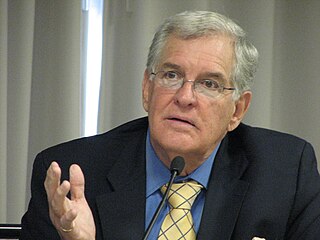
James Hamilton Charlesworth is an American academic who served as the George L. Collord Professor of New Testament Language and Literature until January 17, 2019, and Director of the Dead Sea Scrolls Project at the Princeton Theological Seminary. His research interests include the Apocrypha and Pseudepigrapha of the Hebrew and Christian Bibles, the Dead Sea Scrolls, Josephus, the Historical Jesus, the Gospel of John, and the Book of Revelation.

John Strugnell was an English Professor Emeritus at the Harvard Divinity School and a former editor-in-chief of the Dead Sea Scrolls project. Strugnell became, at 23, the youngest member of the team of scholars led by Roland de Vaux, formed in 1954 to edit the Dead Sea Scrolls in Jerusalem. He was studying Oriental languages at Jesus College, Oxford when Sir Godfrey Rolles Driver, a lecturer in Semitic philology, nominated him to join the Scrolls editorial team.

Frank Moore Cross Jr. was the Hancock Professor of Hebrew and Other Oriental Languages at Harvard University, notable for his work in the interpretation of the Dead Sea Scrolls, his 1973 magnum opusCanaanite Myth and Hebrew Epic, and his work in Northwest Semitic epigraphy. Many of his essays on the latter topic have since been collected in Leaves from an Epigrapher's Notebook.
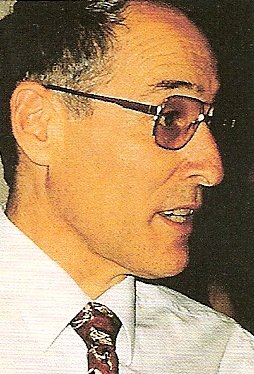
Elisha Qimron is an academic who studies ancient Hebrew. He took his Doctor of Philosophy in 1976 at the Hebrew University of Jerusalem with the dissertation The Hebrew of the Dead Sea Scrolls.
Eugene "Gene" CharlesUlrich is an American Dead Sea scrolls scholar and the John A. O'Brien Professor emeritus of Hebrew Scripture and Theology in the Department of Theology at the University of Notre Dame. He is chief editor of the biblical texts of the Dead Sea scrolls and one of the three general editors of the Scrolls International Publication Project.
Mark Stratton John Matthew Smith is an American Old Testament scholar and professor.
Noel Beldon Reynolds is an American political scientist and an emeritus professor of political science at Brigham Young University (BYU), where he has also served as an associate academic vice president and as director for the Foundation for Ancient Research and Mormon Studies (FARMS). He was a member of the BYU faculty from 1971 to 2011. He has also written widely on the theology of the Church of Jesus Christ of Latter-day Saints, of which he is a member.
Loren T. Stuckenbruck is a historian of early Christianity and Second Temple Judaism, currently professor of New Testament at the University of Munich, in Germany. His work has exerted a significant impact on the field.
John J. Collins is an Irish-born American biblical scholar, the Holmes Professor of Old Testament Criticism and Interpretation at Yale Divinity School. He is noted for his research in the Hebrew Bible, as well as the apocryphal works of the Second Temple period including the sectarian works found in Dead Sea Scrolls and their relation to Christian origins. Collins has published and edited over 300 scholarly works, and a number of popular level articles and books. Among his best known works are the Between Athens and Jerusalem: Jewish Identity in the Hellenistic Diaspora ; Daniel in the Hermeneia commentary series ; The Scepter and the Star. The Messiahs of the Dead Sea Scrolls and Other Ancient Literature ; and The Bible after Babel: Historical Criticism in a Postmodern Age.
Bernard Malcolm Levinson serves as Professor of Classical and Near Eastern Studies and of Law at the University of Minnesota, where he holds the Berman Family Chair in Jewish Studies and Hebrew Bible. He is the author of Deuteronomy and the Hermeneutics of Legal Innovation, "The Right Chorale": Studies in Biblical Law and Interpretation, and Legal Revision and Religious Renewal in Ancient Israel; and is the co-editor of The Pentateuch as Torah: New Models for Understanding Its Promulgation and Acceptance. He has published extensively on biblical and ancient Near Eastern law and on the reception of biblical literature in the Second Temple period. His research interests extend to early modern intellectual history, constitutional theory, the history of interpretation, and literary approaches to biblical studies.
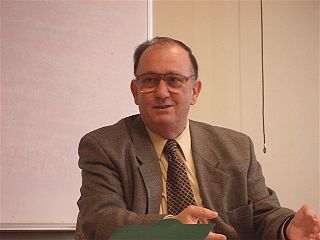
Michael Edward Stone is a professor emeritus of Armenian Studies and of Comparative Religion at the Hebrew University of Jerusalem. His research deals with Armenian studies and with Jewish literature and thought of the Second Temple period. He is also a published poet.
Millar Burrows was an American biblical scholar, a leading authority on the Dead Sea scrolls and professor emeritus at Yale Divinity School. Burrows was director of American School of Oriental Research in Jerusalem, and later president of the American Schools of Oriental Research. His grandson, Edwin G. Burrows (1943–2018), was an American historian and winner of the Pulitzer Prize (1999). His great-granddaughter, Kate Burrows, is a professor of public health at the University of Chicago.
Peter William Flint was an American biblical scholar who was involved in research of the Dead Sea Scrolls for over 20 years.
Eileen Marie Schuller is a professor at the Faculty of Social Sciences at McMaster University in Hamilton, Ontario. Schuller is an official editor of the Dead Sea Scrolls. She teaches undergraduate and graduate studies in the Biblical field. Over a span of 30 years, her involvement in the publication of the Dead Sea Scrolls has led to numerous contributions in authenticating the discoveries found in the caves near the Ancient Qumran settlement.


