Related Research Articles
The Theban Mapping Project is an archaeological expedition devoted to Ancient Egypt. It was established in 1978 by the Egyptologist Dr. Kent R. Weeks at the University of California, Berkeley. In 1985, it was moved to the American University in Cairo. The Project's original goal was to create an archaeological map of the Valley of the Kings, and that was published as the Atlas of the Valley of the Kings in 2000. Since 2001, the Project has also developed a management plan for the Valley of the Kings, which is funded by the World Monuments Fund.

Amenmesse was the fifth pharaoh of the Nineteenth Dynasty in Ancient Egypt, possibly the son of Merneptah and Queen Takhat. Others consider him to be one of the innumerable sons of Ramesses II. Very little is known about this pharaoh, who ruled Egypt for only three to four years. Various Egyptologists date his reign between 1202 BC–1199 BC or 1203 BC–1200 BC with others giving an accession date of 1200 BC. Amenmesse means "born of or fashioned by Amun" in Egyptian. Additionally, his nomen can be found with the epithet Heqa-waset, which means "Ruler of Thebes". His royal name was Menmire Setepenre.
Kent R. Weeks is an American Egyptologist.

Tomb KV60 is an ancient Egyptian tomb in the Valley of the Kings, Egypt. It was discovered by Howard Carter in 1903, and re-excavated by Donald P. Ryan in 1989. It is one of the more perplexing tombs of the Theban Necropolis, due to the uncertainty over the identity of one female mummy found there (KV60A). She is identified by some, such as Egyptologist Elizabeth Thomas, to be that of the Eighteenth Dynasty pharaoh Hatshepsut; this identification is advocated for by Zahi Hawass.

Tomb KV7 was the tomb of Ramesses II, an ancient Egyptian pharaoh during the Nineteenth Dynasty.

Tomb KV11 is the tomb of Pharaoh Ramesses III. It is located in the main valley of the Valley of the Kings. The tomb was originally started by Setnakhte, but abandoned when it unintentionally broke into the earlier tomb of Amenmesse (KV10). Setnakhte was buried in KV14. The tomb KV11 was later restarted and extended and on a different axis for Ramesses III.
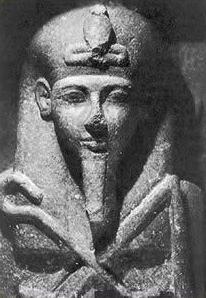
Akhenre Setepenre Siptah or Merneptah Siptah was the penultimate ruler of the Nineteenth Dynasty of Egypt. His father's identity is currently unknown. Both Seti II and Amenmesse have been suggested although the fact that Siptah later changed his royal name or nomen to Merneptah Siptah after his Year 2 suggests rather that his father was Merneptah. If correct, this would make Siptah and Seti II half-brothers since both of them were sons of Merneptah.

James Burton was the British Egyptologist who mapped the Valley of the Kings; and was the first post-Renaissance person to enter KV5; and discovered the Karnak king list; and discovered TT391.

The area of the Valley of the Kings, in Luxor, Egypt, has been a major area of modern Egyptological exploration for the last two centuries. Before this, the area was a site for tourism in antiquity. This area illustrates the changes in the study of ancient Egypt, beginning as antiquity hunting and ending with the scientific excavation of the whole Theban Necropolis. Despite the exploration and investigation noted below, only eleven of the tombs have actually been completely recorded.

Tomb KV1, located in the Valley of the Kings in Egypt, was used for the burial of Pharaoh Ramesses VII of the Twentieth Dynasty. Although it has been open since antiquity, it was only properly investigated and cleared by Edwin Brock in 1984 and 1985. The single corridor tomb is located in Luxor's West Bank, and is small in comparison to other tombs of the Twentieth Dynasty.

Tomb KV10, located in the Valley of the Kings near the modern-day Egyptian city of Luxor, was cut and decorated for the burial of Pharaoh Amenmesse of the Nineteenth Dynasty of Ancient Egypt. However, there is no proof that he was actually buried here. Later, the decoration was replaced with scenes for Takhat and Baketwernel—two royal women dating to the late 20th Dynasty.

Tomb KV15, located in the Valley of the Kings in Egypt, was used for the burial of Pharaoh Seti II of the Nineteenth Dynasty. The tomb was dug into the base of a near-vertical cliff face at the head of a wadi running southwest from the main part of the Valley of the Kings. It runs along a northwest-to-southeast axis, comprising a short entry corridor followed by three corridor segments, which terminate in a well room that lacks a well, which was never dug. This then connects with a four-pillared hall and another stretch of corridor that was converted into a burial chamber.
Otto John Schaden was an American Egyptologist. He was the field director of the Amenmesse Tomb Project of the University of Memphis (Tennessee). In addition to his work on the tomb of Amenmesse (KV10) in the main arm of the Valley of the Kings, he has also cleared and reinvestigated tombs WV23, WV24, and WV25 in the Western Valley.
The Valley of the Kings, also known as the Valley of the Gates of the Kings, is an area in Egypt where, for a period of nearly 500 years from the Eighteenth Dynasty to the Twentieth Dynasty, rock-cut tombs were excavated for pharaohs and powerful nobles under the New Kingdom of ancient Egypt.
KV63 is a chamber in Egypt's Valley of the Kings pharaonic necropolis. Initially believed to be a royal tomb, it is now believed to have been a storage chamber for the mummification process. It was found in 2005 by a team of archaeologists led by Otto Schaden.

Salima Ikram is a Pakistani professor of Egyptology at the American University in Cairo, a participant in many Egyptian archaeological projects, the author of several books on Egyptian archaeology, a contributor to various magazines and a guest on pertinent television programs.

Takhat was an ancient Egyptian princess and queen of the 19th Dynasty, the mother of the usurper pharaoh Amenmesse.
Lyla Pinch Brock is a Canadian Egyptologist, specializing in epigraphy. She lives in Saissac, France.
Anuketemheb was an ancient Egyptian princess and queen of the 19th or the 20th Dynasty. She is known from only one artifact, a red granite sarcophagus lid which was originally hers but was later reused for Takhat, the mother of Amenmesse and was discovered in the tomb KV10.
References
- ↑ Smith, Tanalee (10 February 2006). Egypt Offers First Peek at New Tombs, Associated Press
- 1 2 "Sad News: Ted Brock". SSEA 2015 Symposium. Archived from the original on 2016-01-25.
