Borland Software Corporation was a computing technology company founded in 1983 by Niels Jensen, Ole Henriksen, Mogens Glad, and Philippe Kahn. Its main business was developing and selling software development and software deployment products. Borland was first headquartered in Scotts Valley, California, then in Cupertino, California, and then in Austin, Texas. In 2009, the company became a full subsidiary of the British firm Micro Focus International plc. In 2023, Micro Focus was acquired by Canadian firm OpenText, which later absorbed Borland's portfolio into its application delivery management division.

Internet Explorer is a retired series of graphical web browsers developed by Microsoft that were used in the Windows line of operating systems. While IE has been discontinued on most Windows editions, it remains supported on certain editions of Windows, such as Windows 10 LTSB/LTSC. Starting in 1995, it was first released as part of the add-on package Plus! for Windows 95 that year. Later versions were available as free downloads or in-service packs and included in the original equipment manufacturer (OEM) service releases of Windows 95 and later versions of Windows. Microsoft spent over US$100 million per year on Internet Explorer in the late 1990s, with over 1,000 people involved in the project by 1999. New feature development for the browser was discontinued in 2016 and ended support on June 15, 2022 for Windows 10 Semi-Annual Channel (SAC), in favor of its successor, Microsoft Edge.
SoftICE is a kernel mode debugger for DOS and Windows up to Windows XP. It is designed to run underneath Windows, so that the operating system is unaware of its presence. Unlike an application debugger, SoftICE is capable of suspending all operations in Windows when instructed. Due to its low-level capabilities, SoftICE is also popular as a software cracking tool.
Microsoft Developer Network (MSDN) was the division of Microsoft responsible for managing the firm's relationship with developers and testers, such as hardware developers interested in the operating system (OS), and software developers developing on the various OS platforms or using the API or scripting languages of Microsoft's applications. The relationship management was situated in assorted media: web sites, newsletters, developer conferences, trade media, blogs and DVD distribution.

Revolution OS is a 2001 documentary film that traces the twenty-year history of GNU, Linux, open source, and the free software movement.

ReactOS is a free and open-source operating system for i586/amd64 personal computers intended to be binary-compatible with computer programs and device drivers developed for Windows Server 2003 and later versions of Microsoft Windows. ReactOS has been noted as a potential open-source drop-in replacement for Windows and for its information on undocumented Windows APIs.

Spider is a type of patience game, and is one of the more popular two-deck solitaire games. The game originates in 1949, and its name comes from a spider's eight legs, referencing the eight foundation piles that must be filled to win the game.
An independent software vendor (ISV), also known as a software publisher, is an organization specializing in making and selling software, as opposed to computer hardware, designed for mass or niche markets. This is in contrast to in-house software, which is developed by the organization that will use it, or custom software, which is designed or adapted for a single, specific third party. Although ISV-provided software is consumed by end users, it remains the property of the vendor.

The Major BBS was bulletin board software developed between 1986 and 1999 by Galacticomm. In 1995 it was renamed Worldgroup Server and bundled with a user client interface program named Worldgroup Manager for Microsoft Windows. Originally DOS-based, two of the versions were also available as a Unix-based edition, and the last versions were also available for Windows NT-based servers.

Vicious Cycle Software was an American video game development company based in Morrisville, North Carolina.
A micro ISV, a term coined by Eric Sink, is an independent software vendor with fewer than 10 or even just one software developer. In such an environment the company owner develops software, manages sales and does public relations.
Ludvig "Ludde" Strigeus is a Swedish programmer, best known for developing software such as the BitTorrent client μTorrent, OpenTTD, and Spotify.
The .NET Micro Framework (NETMF) is a .NET Framework platform for resource-constrained devices with at least 512 kB of flash and 256 kB of random-access memory (RAM). It includes a small version of the .NET Common Language Runtime (CLR) and supports development in C#, Visual Basic .NET, and debugging using Microsoft Visual Studio. NETMF features a subset of the .NET base class libraries, an implementation of Windows Communication Foundation (WCF), a GUI framework loosely based on Windows Presentation Foundation (WPF), and a Web Services stack based on Simple Object Access Protocol (SOAP) and Web Services Description Language (WSDL). NETMF also features added libraries specific to embedded applications. It is free and open-source software released under Apache License 2.0.
Panorama Software is a Canadian software and consulting company specializing in business intelligence. The company was founded by Rony Ross in Israel in 1993; it relocated its headquarters to Toronto, Canada in 2003. Panorama sold its online analytical processing (OLAP) technology to Microsoft in 1996, which was built into Microsoft OLAP Services and later SQL Server Analysis Services, an integrated component of Microsoft SQL Server.
HCL Connections is a Web 2.0 enterprise social software application developed originally by IBM and acquired by HCL Technologies in July 2019. Connections is an enterprise-collaboration platform which aims to helps teams work more efficiently. Connections is part of HCL collaboration suite which also includes Notes / Domino, Sametime, Portal and Connections.
Visual Studio Tools for Applications (VSTA) is a set of tools that independent software vendors (ISVs) can use to build customization abilities into their applications for both automation and extensibility. Those customization abilities can be used by end-users to tailor the ISV's application within a managed extensibility environment just like Visual Basic for Applications.

Microsoft Entertainment Pack, also known as Windows Entertainment Pack or simply WEP, is a collection of 16-bit casual computer games for Windows. There were four Entertainment Packs released between 1990 and 1992. These games were somewhat unusual for the time, in that they would not run under MS-DOS. In 1994, a compilation of the previous four Entertainment Packs were released called The Best of Microsoft Entertainment Pack. A Game Boy Color version was released in 2001.
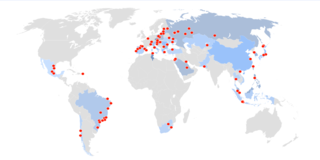
Microsoft Innovation Centers (MICs) are local government organizations, universities, industry organizations, or software or hardware vendors who partner with Microsoft with a common goal to foster the growth of local software economies. These are state of the art technology facilities which are open to students, developers, IT professionals, entrepreneurs, startups and academic researchers. While each Center tunes its programs to local needs, they all provide similar content and services designed to accelerate technology advances and stimulate local software economies through skills and professional training, industry partnerships and innovation. As of 10 September 2010, there are 115 Microsoft Innovation Centers worldwide, most of which are open to the public. Recently it was reported that Microsoft had proposed to build about 100 innovation centers in India, and several in China. Some innovation centers have also started to develop in Pakistan.

GreenButton was a software company based in Wellington, New Zealand. It was established in 2006 and it helped independent software vendors (ISVs) and enterprises transition to cloud computing. GreenButton operated additional offices in Palo Alto, California, and Seattle. On 2 May 2014, the company was acquired by Microsoft. Following the acquisition, GreenButton's technologies were incorporated into Microsoft's Azure cloud service.
Microsoft Detours is an open source library for intercepting, monitoring and instrumenting binary functions on Microsoft Windows. It is developed by Microsoft and is most commonly used to intercept Win32 API calls within Windows applications. Detours makes it possible to add debugging instrumentation and to attach arbitrary DLLs to any existing Win32 binary. Detours does not require other software frameworks as a dependency and works on ARM, x86, x64, and IA-64 systems. The interception code is applied dynamically at execution time.


