Related Research Articles
At common law, damages are a remedy in the form of a monetary award to be paid to a claimant as compensation for loss or injury. To warrant the award, the claimant must show that a breach of duty has caused foreseeable loss. To be recognized at law, the loss must involve damage to property, or mental or physical injury; pure economic loss is rarely recognized for the award of damages.
Punitive damages, or exemplary damages, are damages assessed in order to punish the defendant for outrageous conduct and/or to reform or deter the defendant and others from engaging in conduct similar to that which formed the basis of the lawsuit. Although the purpose of punitive damages is not to compensate the plaintiff, the plaintiff will receive all or some of the punitive damages in award.
A writ of prohibition is a writ directing a subordinate to stop doing something the law prohibits. This writ is often issued by a superior court to the lower court directing it not to proceed with a case which does not fall under its jurisdiction.
The Constitution of the Commonwealth of Massachusetts is the fundamental governing document of the Commonwealth of Massachusetts, one of the 50 individual states that make up the United States of America. It consists of a preamble, declaration of rights, description of the principles and framework of government, and articles of amendment.

The Massachusetts Supreme Judicial Court (SJC) is the highest court in the Commonwealth of Massachusetts. Although the claim is disputed by the Supreme Court of Pennsylvania, the SJC claims the distinction of being the oldest continuously functioning appellate court in the Americas, with a recognized history dating to the establishment of the Massachusetts Superior Court of Judicature in 1692 under the charter of the Province of Massachusetts Bay.

Non-economic damages caps are tort reforms to limit damages in lawsuits for subjective, non-pecuniary harms such as pain, suffering, inconvenience, emotional distress, loss of society and companionship, loss of consortium, and loss of enjoyment of life. This is opposed to economic damages, which encompasses pecuniary harms such as medical bills, lost wages, lost future income, loss of use of property, costs of repair or replacement, the economic value of domestic services, and loss of employment or business opportunities. Non-economic damages should not be confused with punitive or exemplary damages, which are awarded purely to penalise defendants and do not aim to compensate either pecuniary or non-pecuniary losses.
Quock Walker, also known as Kwaku or Quork Walker, was an enslaved American who sued for and won his freedom suit case in June 1781. The court cited language in the 1780 Constitution of Massachusetts that declared, "All men are born free and equal". The case is credited with helping abolish slavery in Massachusetts, although the 1780 constitution was never amended to prohibit the practice explicitly. Massachusetts was the first U.S. state to effectively and fully abolish slavery—the 1790 United States census recorded no enslaved people in the state.
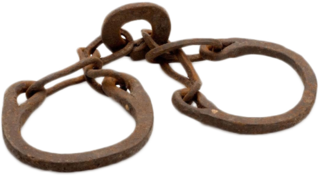
Slavery was practiced in Massachusetts bay by Native Americans before European settlement, and continued until its abolition in the 1700s. Although slavery in the United States is typically associated with the Caribbean and the Antebellum American South, enslaved people existed to a lesser extent in New England: historians estimate that between 1755 and 1764, the Massachusetts enslaved population was approximately 2.2 percent of the total population; the slave population was generally concentrated in the industrial and coastal towns. Unlike in the American South, enslaved people in Massachusetts had legal rights, including the ability to file legal suits in court.
Grimshaw v. Ford Motor Company was a personal injury tort case decided in Orange County, California in February 1978 and affirmed by a California appellate court in May 1981. The lawsuit involved the safety of the design of the Ford Pinto automobile, manufactured by the Ford Motor Company. The jury awarded plaintiffs $127.8 million in damages, the largest ever in US product liability and personal injury cases. Grimshaw v. Ford Motor Company was one of the most widely publicized of the more than a hundred lawsuits brought against Ford in connection with rear-end accidents in the Pinto. The trial judge reduced the jury's punitive damages award to $3.5 million.

James Otis Jr. was an American lawyer, political activist, colonial legislator, and early supporter of patriotic causes in Massachusetts Bay Colony at the beginning of the Revolutionary Era. Otis was a fervent opponent of the writs of assistance imposed by Great Britain on the American colonies in the early 1760s which allowed law enforcement officials to search private property without cause. He later expanded his criticism of British authority to include tax measures that were being enacted by Parliament. As a result, Otis is often credited with coining the slogan "taxation without representation is tyranny".
Paul Mpande Ngobeni is a South African lawyer who graduated from Hamilton College, New York. He has served on a task team advising the African National Congress on constitutional law matters where he assisted in designing its legal strategy for defending South African President Jacob Zuma against corruption charges. He has also served as a consultant for the South African Ministry of Housing on various legal matters, including transformation.
Florida Star v. B.J.F., 491 U.S. 524 (1989), is a United States Supreme Court case involving freedom of the press and privacy rights. After The Florida Star newspaper revealed the full name of a rape victim it got from a police report, the victim sued for damages. State law made it illegal for a publication to print a rape victim's name, and the victim was awarded damages. On appeal, the Supreme Court ruled the imposition of damages for truthfully publishing public information violates the First Amendment.

James Pitts (1712–1776) was a Massachusetts merchant and an early American Patriot.
Jenny Slew was one of the first enslaved Black Americans to sue for her freedom, and the first person to succeed through trial by jury. Her lawyer was Benjamin Kent.
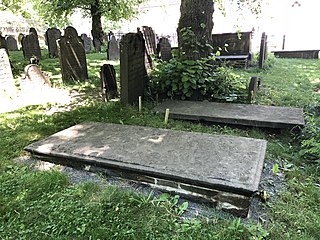
Benjamin Kent (1708–1788) was a Massachusetts Attorney General (1776–1777) and then acting Attorney General during much of Robert Treat Paine's tenure (1777–1785). He was appointed seven successive terms. Prior to the American Revolution, Kent was notable for his representation of slaves suing their masters for their freedom, which contributed to the demise of slavery in Massachusetts. He was a member of the North End Caucus and prominent member of the Sons of Liberty, which formed to protest the passage of the Stamp Act of 1765. The efforts of the Sons of Liberty created the foundation for the Boston Tea Party. Kent called for independence early in the American Revolution.

Barnstable's Olde Colonial Courthouse, at 3046 Main St. in Barnstable, MA, was constructed c.1763, to replace Barnstable County's first courthouse nearby. Barnstable County comprises all of Cape Cod, MA

The 27 grievances is a section from the United States Declaration of Independence. The Second Continental Congress's Committee of Five drafted the document listing their grievances with the actions and decisions of King George III with regard to the Colonies in North America. The Second Continental Congress voted unanimously to adopt and issue the Declaration of Independence on July 4, 1776.
Smithfield Foods has been sued multiple times related to the disposal of hog waste using anaerobic lagoons. State governments have responded to the suits against Smithfield and similar litigation by strengthening ”Right-to-Farm” laws.

Ezekiel Goldthwait was an American merchant and landowner. Born in Boston, the capital of the Province of Massachusetts Bay, he rose to become on the city's leading citizens in the years leading to the American Revolution.
Lesbian, gay, bisexual, and transgender (LGBT) persons have been present throughout the history of the US state of Massachusetts. A 2018 report by Boston Indicators and The Fenway Institute found that Massachusetts had the second-largest LGBT population in the country by percentage, behind Vermont, at roughly 5% of the state population.
References
- 1 2 3 4 "Suffolk Inferior Court, Boston: Gray v. Pitts, July 26, 1771 · Colonial America: The Age of Sodomitical Sin · OutHistory". outhistory.org. Retrieved February 2, 2023.
- ↑ "Gray vs. Pitts. Assault and Battery. - Trial Minutes". Massachusetts Historical Society.
- 1 2 3 4 Legal Papers of John Adams. Harvard University Press. 1968.
- ↑ "Colonial America: The Age of Sodomitical Sin · OutHistory". outhistory.org. Retrieved February 2, 2023.