Related Research Articles
Psycholinguistics or psychology of language is the study of the interrelation between linguistic factors and psychological aspects. The discipline is mainly concerned with the mechanisms by which language is processed and represented in the mind and brain;that is,the psychological and neurobiological factors that enable humans to acquire,use,comprehend,and produce language.
Elizabeth Ann Bates was a professor of cognitive science at the University of California,San Diego. She was an internationally renowned expert and leading researcher in child language acquisition,psycholinguistics,aphasia,and the neurological bases of language,and she authored 10 books and over 200 peer-reviewed articles and book chapters on these subjects. Bates was well known for her assertion that linguistic knowledge is distributed throughout the brain and is subserved by general cognitive and neurological processes.
Bilingualism,a subset of multilingualism,means having proficiency in two languages. A bilingual individual is traditionally defined as someone who understands and produces two languages on a regular basis. A bilingual individual's initial exposure to both languages may start in early childhood,e.g. before age 3,but exposure may also begin later in life,in monolingual or bilingual education. Equal proficiency in a bilingual individuals' languages is rarely seen as it typically varies by domain. For example,a bilingual individual may have greater proficiency for work-related terms in one language,and family-related terms in another language.
Ellen Bialystok,OC,FRSC is a Canadian psychologist and professor. She carries the rank of Distinguished Research Professor at York University in Toronto,Ontario where she is director of the Lifespan Cognition and Development Lab. She is also an associate scientist at the Rotman Research Institute of the Baycrest Centre for Geriatric Care.
Brian James MacWhinney is a Professor of Psychology and Modern Languages at Carnegie Mellon University. He specializes in first and second language acquisition,psycholinguistics,and the neurological bases of language,and he has written and edited several books and over 100 peer-reviewed articles and book chapters on these subjects. MacWhinney is best known for his competition model of language acquisition and for creating the CHILDES and TalkBank corpora. He has also helped to develop a stream of pioneering software programs for creating and running psychological experiments,including PsyScope,an experimental control system for the Macintosh;E-Prime,an experimental control system for the Microsoft Windows platform;and System for Teaching Experimental Psychology (STEP),a database of scripts for facilitating and improving psychological and linguistic research.
Language production is the production of spoken or written language. In psycholinguistics,it describes all of the stages between having a concept to express and translating that concept into linguistic forms. These stages have been described in two types of processing models:the lexical access models and the serial models. Through these models,psycholinguists can look into how speeches are produced in different ways,such as when the speaker is bilingual. Psycholinguists learn more about these models and different kinds of speech by using language production research methods that include collecting speech errors and elicited production tasks.
Susan Moore Ervin-Tripp (1927–2018) was an American linguist whose psycholinguistic and sociolinguistic research focused on the relation between language use and the development of linguistic forms,especially the developmental changes and structure of interpersonal talk among children.

Laura-Ann Petitto is a cognitive neuroscientist and a developmental cognitive neuroscientist known for her research and scientific discoveries involving the language capacity of chimpanzees,the biological bases of language in humans,especially early language acquisition,early reading,and bilingualism,bilingual reading,and the bilingual brain. Significant scientific discoveries include the existence of linguistic babbling on the hands of deaf babies and the equivalent neural processing of signed and spoken languages in the human brain. She is recognized for her contributions to the creation of the new scientific discipline,called educational neuroscience. Petitto chaired a new undergraduate department at Dartmouth College,called "Educational Neuroscience and Human Development" (2002-2007),and was a Co-Principal Investigator in the National Science Foundation and Dartmouth's Science of Learning Center,called the "Center for Cognitive and Educational Neuroscience" (2004-2007). At Gallaudet University (2011–present),Petitto led a team in the creation of the first PhD in Educational Neuroscience program in the United States. Petitto is the Co-Principal Investigator as well as Science Director of the National Science Foundation and Gallaudet University’s Science of Learning Center,called the "Visual Language and Visual Learning Center (VL2)". Petitto is also founder and Scientific Director of the Brain and Language Laboratory for Neuroimaging (“BL2”) at Gallaudet University.
Ping Li is currently Sin Wai Kin Professor in Humanities and Technology,Chair Professor of Neurolinguistics and Bilingual Studies,and Dean of the Faculty of Humanities at the Hong Kong Polytechnic University (PolyU). Prior to joining PolyU,he was a Professor of Psychology,Linguistics,and Information Sciences and Technology,and Associate Director of the Institute for Computational and Data Sciences at Pennsylvania State University. His research interests are in language acquisition,bilingualism,and reading comprehension in both children and adults. He uses digital technologies and cognitive neuroscience methods to study neuroplasticity and individual differences in learning,so as to understand the relationships among languages,cultures,technology,and the brain. Li received a B.A. in Chinese linguistics from Peking University in 1983,an M.A. in theoretical linguistics from Peking University,a Ph.D. in psycholinguistics from Leiden University and the Max Planck Institute for Psycholinguistics in 1990,and completed post-doctoral fellowships at the Center for Research in Language at the University of California,San Diego and the McDonnell-Pew Center for Research in Cognitive Neuroscience in 1992. Li has been employed at the Chinese University of Hong Kong (1992–1996),the University of Richmond (1996–2006),and Pennsylvania State University (2008–2019),and he has also served as Program Director for the Perception,Action,and Cognition Program and the Cognitive Neuroscience Program at the National Science Foundation (2007–2009). Li was also President of the Society for Computation in Psychology and is currently Editor of Brain and Language,Elsevier and Senior Editor of Cognitive Science,Wiley. He is an elected Fellow of the American Association for the Advancement of Science (AAAS).
Jyotsna Vaid is a Professor of Cognition and Cognitive Neuroscience and Women's and Gender Studies at Texas A&M University. Vaid's research examines the impact of multiple language experience by considering properties of specific languages and variability in when and how multiple languages were acquired by bilinguals. Her research has examined the processing of evidentiality in Turkish,the processing of the impersonal se construction in Spanish,and word recognition in biscriptal readers of Hindi and Urdu. She has published extensively on the cognitive and neural bases of bilingualism. Most notably,Vaid's research in neuropsychology has clarified the role of the two cerebral hemispheres in bilingual language processing;her work shows that early onset of bilingualism is associated with more bilateral involvement in language,in contrast to the greater left hemisphere dominance for language among single language users. Recently she has examined cognitive and psycholinguistic aspects of informal translation experience among bilinguals,or language brokering. Other topics on which she has published include number processing in bilinguals,creative thought,cognitive bases of humor,spatial biases in cognition arising from directional reading habits,self presentation in personal ads,and gender and race disparities in professional visibility in academia.

Centre of Behavioural and Cognitive Sciences is an independent research center of University of Allahabad,Uttar Pradesh. It was created in 2002 as a ‘Centre with Potential for Excellence’by University Grants Commission (India) (UGC).
Viorica Marian is a Moldovan-born American psycholinguist,cognitive scientist,and psychologist known for her research on bilingualism and multilingualism. She is the Ralph and Jean Sundin Endowed Professor of Communication Sciences and Disorders,and professor of psychology at Northwestern University. Marian is the principal investigator of the Bilingualism and Psycholinguistics Research Group. She received her PhD in psychology from Cornell University,and master's degrees from Emory University and from Cornell University. Marian studies language,cognition,the brain,and the consequences of knowing more than one language for linguistic,cognitive,and neural architectures.
Bilingual lexical access is an area of psycholinguistics that studies the activation or retrieval process of the mental lexicon for bilingual people.
Loraine Katherine Obler is an American linguist and neuroscientist,internationally recognized as a leading scholar in the field of neurolinguistics and multilingualism. She is known for her contributions to understanding how language-related behavior is controlled within the brain. Her work spans diverse sub-disciplines such as the neurolinguistics of bilingualism,language processing in aging and Alzheimer's disease,and the cross-language study of aphasia.

Erika Hoff is a developmental psychologist and an expert on language development and bilingualism. She is a professor of psychology at Florida Atlantic University,where she directs the Language Development Laboratory.
Randi Martin is the Elma Schneider Professor of Psychology at Rice University and Director of the T. L. L. Temple Foundation Neuroplasticity Research Laboratory. With Suparna Rajaram and Judith Kroll,Martin co-founded Women in Cognitive Science in 2001,an organization supported in part through the National Science Foundation's ADVANCE Leadership program. She is a Fellow of the American Association for the Advancement of Science (AAAS) and the Society of Experimental Psychologists (SEP).
Núria Sebastián Gallés is a cognitive scientist known for her work on bilingual language development and the impact of bilingualism on cognition. She is Professor of Psychology at Pompeu Fabra University where she heads the Speech Acquisition and Perception (SAP) Research Group. In 2012,Sebastián Gallés received the Narcis Monturiol Medal as recognition of her scientific contributions. She was elected Fellow of the British Academy in 2016.
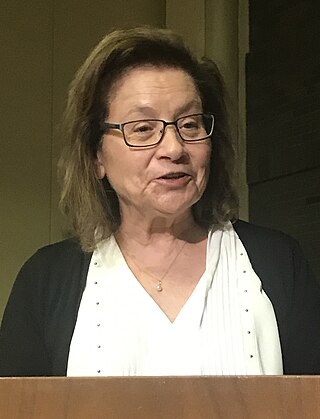
Rachel I. Mayberry is a language scientist known for her research on the effects of age of acquisition on sign language acquisition among deaf individuals –research that has provided evidence for a critical period in first language acquisition. She is Professor of Linguistics at University of California,San Diego (UCSD) and director of the Multimodal Language Lab.
Debra Titone is a cognitive psychologist known for her research on bilingualism and multilingualism. She is currently a Professor of Psychology and a chair holder of Canada Research in Language &Multilingualism at McGill University. Titone is a founding member and officer of the professional society,Women in Cognitive Science. She and her colleagues have written about gender disparities in opportunities,along with the advancement of women the field of cognitive science,with specific reference to Canada.
Karen Denise Emmorey is a linguist and cognitive neuroscientist known for her research on the neuroscience of sign language and what sign languages reveal about the brain and human languages more generally. Emmorey holds the position of Distinguished Professor in the School of Speech,Language,and Hearing Sciences at San Diego State University,where she directs the Laboratory for Language and Cognitive Neuroscience and the Center for Clinical and Cognitive Neuroscience.
References
- ↑ "Lab Members - The Purple Lab". Archived from the original on 9 July 2010. Retrieved 20 December 2008.
- ↑ "People | Women in Cognitive Science". womenincogsci.org. Archived from the original on 2012-12-15. Retrieved 2018-11-20.
- 1 2 "Judith F. Kroll — The Center for Language Science". cls.psu.edu. Archived from the original on 2015-01-23. Retrieved 2018-11-20.
- ↑ "Neurotree - Judith F. Kroll Family Tree". neurotree.org. Retrieved 2018-11-28.
- ↑ "Judith F. Kroll". Bilingualism, Mind, and Brain Lab. 2015-09-16. Retrieved 2018-11-20.
- ↑ "NSF Award Search: Award#1545900 - PIRE: Translating cognitive and brain science in the laboratory and field to language learning environments". www.nsf.gov. Retrieved 2018-11-28.
- ↑ "Married Penn State Guggenheim Fellows a rarity | Penn State University" . Retrieved 2018-11-28.
- ↑ "Grantome: Search". Grantome. Retrieved 2018-11-28.
- ↑ Kroll, Judith F., de Groot, Annette M. B. (2005). Handbook of bilingualism : psycholinguistic approaches. Oxford: Oxford University Press. ISBN 978-0195151770. OCLC 54988961.
{{cite book}}: CS1 maint: multiple names: authors list (link) - ↑ Cook, Vivian (2008). "Review of Handbook of Bilingualism: Psycholinguistic Approaches". Language. 84 (1): 196–199. doi:10.1353/lan.2008.0062. JSTOR 40071023. S2CID 145638492.
- ↑ "John Simon Guggenheim Foundation | Judith F. Kroll". www.gf.org. Retrieved 2018-11-28.
- ↑ Kroll, J. F.; Bobb, S. C.; Misra, M.; Guo, T. (2008-07-01). "Language selection in bilingual speech: Evidence for inhibitory processes". Acta Psychologica. 128 (3): 416–430. doi:10.1016/j.actpsy.2008.02.001. ISSN 0001-6918. PMC 2585366 . PMID 18358449.
