Related Research Articles

Penang is a Malaysian state located on the northwest coast of Peninsular Malaysia along the Strait of Malacca. It has two parts: Penang Island, where the capital city, George Town, is located, and Seberang Perai on the Malay Peninsula. These two halves are physically connected by the Penang Bridge and the Second Penang Bridge. The state shares borders with Kedah to the north and east, and Perak to the south.

The Malaysian Indian Congress is a Malaysian political party. It is one of the founding members of the coalition Barisan Nasional, previously known as the Alliance, which was in power from when the country achieved independence in 1957 until the elections in 2018. The party was among the first to fight for Malayan Independence and is one of the oldest parties in Malaysia.

The Federation of Malaya, more commonly known as Malaya, was a country of what previously had been the Malayan Union and, before that, British Malaya. It comprised eleven states – nine Malay states and two of the Straits Settlements, Penang and Malacca. It was established on 1 February 1948.
Sir Husein Hasanally Abdoolcader Mama was a Dawoodi Bohra by faith and a barrister and politician by profession in Malaya born in Surat, Bombay Presidency, British India. His eldest son Tan Sri Eusoffe Abdoolcader was also a prominent figure in Malaya and was a judge at the Supreme Court of Malaysia.

The term "British Malaya" loosely describes a set of states on the Malay Peninsula and the island of Singapore that were brought under British hegemony or control between the late 18th and the mid-20th century. Unlike the term "British India", which excludes the Indian princely states, British Malaya is often used to refer to the Federated and the Unfederated Malay States, which were British protectorates with their own local rulers, as well as the Straits Settlements, which were under the sovereignty and direct rule of the British Crown, after a period of control by the East India Company.

The State of Penang, one of the most developed and urbanised Malaysian states, is located at the nation's northwest coast along the Malacca Strait. Unlike most Malaysian states, the history of modern Penang was shaped by British colonialism, beginning with the acquisition of Penang Island from the Sultanate of Kedah by the British East India Company in 1786. Developed into a free port, the city state was subsequently governed as part of the Straits Settlements, together with Singapore and Malacca; the state capital, George Town, briefly became the capital of this political entity between 1826 and 1832. By the end of the 19th century, George Town prospered and became one of the major entrepôts in Southeast Asia.
Malaysian Jews are Jews living in Malaysia, whether immigrants or those originally from the country. The state of Penang was once home to a Jewish community, until the latter part of the 1970s, by which time most had emigrated due to growing state-sanctioned antisemitism. Indications of the growing racial and religious hostility in the nation in response to the Israeli–Palestinian conflict has caused many Malaysian Jews to leave or flee the country. The Malaysian Jewish community consists of Jews of Sephardic origin who live discreetly amongst the Kristang people (Malacca-Portuguese), Mizrahi Jews, Malabar Jews, and Ashkenazi Jews.
The Jawi Peranakan is an ethnic group found primarily within the Malaysian state of Penang and in Singapore, both regions were part of the historical Straits Settlements where their culture and history is centred around. The term "Jawi Peranakan" refers to locally born, Malay-speaking Muslims of mixed Indian and Malay ancestry. Over time, this has grown to include people with Arab ancestry as well. They were an elite group within the British Malayan community in mid-19th century Malaya. In addition to their substantial wealth and social standing, they are remembered for setting up the first Malay newspaper in Malaysia, Singapore, Indonesia and China, the Jawi Peranakan and their influences on Malay culture.
The Indian Independence League was a political organisation operated from the 1920s to the 1940s to organise those living outside British India into seeking the removal of British colonial rule over the region. Founded by Indian nationalists, its activities were conducted in various parts of Southeast Asia. It included Indian expatriates, and later, Indian nationalists in-exile under Japanese occupation following Japan's successful Malayan Campaign during the first part of the Second World War. During the Japanese Occupation of Malaya, the Japanese encouraged Indians in Malaya to join the League.
K. P. Keshava Menon (1884?–?) was an Indian lawyer and a leading Indian independence activist from Kerala who was a key proponent of the formation of the Indian Independence League (IIL) and a lawyer for the Indian National Army (INA).

The Royal Malaysia Police trace their existence to the Malacca Sultanate in the 1400s and developed through administration by the Portuguese, the Dutch, modernization by the British beginning in the early 1800s, and the era of Malaysian independence.
Tan Sri Prof. Chin Fung Kee was a respected and outstanding Malaysian civil engineer in engineering practice, as well as engineering research and education. He is known for his excellence in geotechnical, structural and hydraulic engineering. He was a local pioneer engineer who played a key role in the development of engineering education, research and practice in the country. His knowledge and contributions benefited the engineering fraternity both nationally and internationally and his achievements were recognized worldwide.

Prof. Dr. P. Ramasamy s/o Palanisamy is a Malaysian politician who served as the Deputy Chief Minister of Penang II and Member of the Penang State Executive Council (EXCO) in the Pakatan Rakyat (PR) and Pakatan Harapan (PH) state administrations under Chief Ministers Lim Guan Eng and Chow Kon Yeow and Member of the Penang State Legislative Assembly for Perai (MLA) from March 2008 to August 2023. He served as Member of Parliament (MP) for Batu Kawan from March 2008 to May 2013. For most of his political career, he was a member of the Democratic Action Party (DAP), a component party of the PH and formerly PR coalitions. His vocal opinions on Zakir Naik, support for the Hindu Nationalism policies in India under Narendra Modi regime and reforms of the civil service in Malaysia due to its Malay dominance have been controversial.
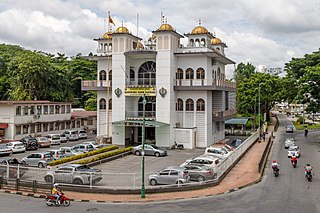
Malaysian Sikhs are known to be the fourth largest Malaysian Indian ethnic group. It is estimated that there are around 100,000 Sikhs in Malaysia.
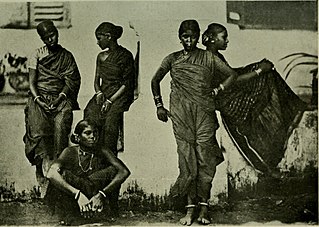
Penangite Indians, also known as Chulias, are Malaysian Indians that live primarily in the state of Penang, Malaysia. Most are the descendants from those who migrated from India during the British colonisation of Malaya. However, historical sources prove that the ancient Indians arrived in Penang during the Chola dynasty. Penangite Indians forms a large percentage of the state's professional community such as business, law and medicine as well as politics, it can be proven by the appointment of Dr. P. Ramasamy as deputy chief minister of Penang. It made him the first Malaysian of Indian origin to hold the post of deputy chief minister in any state of Malaysia. In addition, first Tamil Vernacular School in Malaysia was established in Penang.
D. S. Ramanathan was a Malaysian politician, mayor, teacher, unionist, Malayan Army and educationist of Ceylonese origin. He was a member as well as chairman of the Labour Party of Malaya, and subsequently joined the Malaysian Indian Congress. Besides that, Ramanathan also served as the first mayor for the city of George Town, and is credited for his pioneering efforts to set up a university in Penang. The idea of a university in Penang was first mooted by him in 1959 in the State Assembly and later crystallised when he was nominated chairman of the Penang University Project committee.
Dr Sir Kamil Mohamad Ariff bin Kadir Mastan (1893-1960) was a medical doctor and member of the Federal Legislative Council in Malaysia.

George Town, the capital city of the state of Penang, is the second largest city in Malaysia and the economic centre of the country's northern region. The history of George Town began with its establishment by Captain Francis Light of the British East India Company in 1786. Founded as a free port, George Town became the first British settlement in Southeast Asia and prospered in the 19th century as one of the vital British entrepôts within the region. It briefly became the capital of the Straits Settlements, a British crown colony which also consisted of Singapore and Malacca.

Malaysian Malayalees, also known as Malayalee Malaysians, are people of Malayali descent who were born in or immigrated to Malaysia from the Malayalam speaking regions of Kerala. They are the second largest Indian ethnic group, making up approximately 15% of the Malaysian Indian population. The bulk of Malaysian Malayali migration began during the British Raj, when the British facilitated the migration of Indian workers to work in plantations, but unlike the majority Tamils, the vast majority of the Malayalis were recruited as supervisors in the oil palm estates that followed the kangani system, and some were into trading and small businesses with a significant proportion of them running groceries or restaurants. Over 90% of the Malayalee population in Malaysia are Malaysian citizens.
References
- ↑ Khoo, Salma Nasution (2006). More Than Merchants: A History of the German-speaking Community in Penang, 1800s-1940s. Areca Books. ISBN 9789834283414.
- ↑ admin (30 July 2013). "From Malabaris to Malaysians". Penang Tourism. Retrieved 18 June 2019.
- ↑ Belle, Carl Vadivella (30 December 2014). Tragic Orphans: Indians in Malaysia. Institute of Southeast Asian Studies. ISBN 9789814519038.
- ↑ "MGS History | Malaysian-German Society". mgs.org.my. Retrieved 18 June 2019.