
The United States secretary of the treasury is the head of the United States Department of the Treasury,and is the chief financial officer of the federal government of the United States. The secretary of the treasury serves as the principal advisor to the president of the United States on all matters pertaining to economic and fiscal policy. The secretary is,by custom,a member of the president's cabinet and,by law,a member of the National Security Council.
The Department of the Treasury (USDT) is the national treasury and finance department of the federal government of the United States,where it serves as an executive department. The department oversees the Bureau of Engraving and Printing and the U.S. Mint. These two agencies are responsible for printing all paper currency and minting coins,while the treasury executes currency circulation in the domestic fiscal system. The USDT collects all federal taxes through the Internal Revenue Service;manages U.S. government debt instruments;licenses and supervises banks and thrift institutions;and advises the legislative and executive branches on matters of fiscal policy. The department is administered by the secretary of the treasury,who is a member of the Cabinet. The treasurer of the United States has limited statutory duties,but advises the Secretary on various matters such as coinage and currency production. Signatures of both officials appear on all Federal Reserve notes.
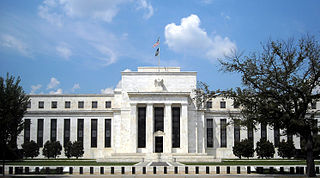
The monetary policy of The United States is the set of policies which the Federal Reserve follows to achieve its twin objectives of high employment and stable inflation.

Larry Henry Summers is an American economist who served as the 71st United States Secretary of the Treasury from 1999 to 2001 and as director of the National Economic Council from 2009 to 2010. He also served as president of Harvard University from 2001 to 2006,where he is the Charles W. Eliot University Professor and director of the Mossavar-Rahmani Center for Business and Government at Harvard Kennedy School. In November 2023,Summers joined the board of directors of artificial general intelligence company OpenAI.
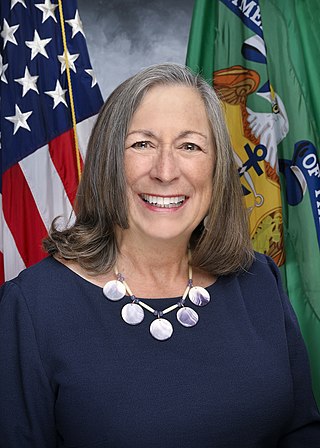
The Treasurer of the United States is an officer in the United States Department of the Treasury who serves as the custodian and trustee of the federal government's collateral assets and the supervisor of the department's currency and coinage production functions. As of September 12,2022,the treasurer is Marilynn Malerba,who is the first Native American to hold the office.

The Bureau of Engraving and Printing (BEP) is a government agency within the United States Department of the Treasury that designs and produces a variety of security products for the United States government,most notable of which is Federal Reserve Notes for the Federal Reserve,the nation's central bank. In addition to paper currency,the BEP produces Treasury securities;military commissions and award certificates;invitations and admission cards;and many different types of identification cards,forms,and other special security documents for a variety of government agencies. The BEP's role as printer of paper currency makes it one of two Treasury Department agencies involved in currency production. The other is the United States Mint,which mints coinage. With production facilities in Washington,D.C.,and Fort Worth,Texas,the Bureau of Engraving and Printing is the largest producer of government security documents in the United States.

United States Treasury securities,also called Treasuries or Treasurys,are government debt instruments issued by the United States Department of the Treasury to finance government spending,in addition to taxation. Since 2012,the U.S. government debt has been managed by the Bureau of the Fiscal Service,succeeding the Bureau of the Public Debt.

Charles Stebbins Fairchild was an American businessman and politician who served as United States Secretary of the Treasury from 1887 to 1889 and Attorney General of New York from 1876 to 1877. He was a notable anti-suffragist,challenging the Nineteenth Amendment to the United States Constitution in 1920 and serving as president of the American Constitutional League.

Martin Stuart Feldstein was an American economist. He was the George F. Baker Professor of Economics at Harvard University and the president emeritus of the National Bureau of Economic Research (NBER). He served as president and chief executive officer of the NBER from 1978 to 2008. From 1982 to 1984,Feldstein served as chairman of the Council of Economic Advisers and as chief economic advisor to President Ronald Reagan. Feldstein was also a member of the Washington-based financial advisory body the Group of Thirty from 2003.
Jeffrey B. Liebman is an American economist and academic. Since 2014,Liebman has served as director of the Rappaport Institute for Greater Boston at Harvard Kennedy School.
The Office of Financial Institutions (OFI) is an agency of the United States federal government in the United States Department of the Treasury. OFI coordinates the department's efforts regarding financial institutions legislation and regulation,legislation affecting Federal agencies that regulate or insure financial institutions,and securities markets legislation and regulation. The office coordinates the department's efforts on financial education policy and ensuring the resiliency of the financial services sector in the wake of a terrorist attack.
The Office of Financial Markets is an office of the United States federal government in the United States Department of the Treasury. OFM serves as the department's advisor on broad matters of domestic finance,financial markets,Federal,State and local finance,Federal Government credit policies,lending and privatization.

Alicia Haydock Munnell is an American economist who is the Peter F. Drucker Professor of Management Sciences at Boston College's Carroll School of Management. Educated at Wellesley College,Boston University,and Harvard University,Munnell spent 20 years as an economist at the Federal Reserve Bank of Boston,where she researched wealth,savings,and retirement among American workers. She served in the Bill Clinton administration as Assistant Secretary of the Treasury for Economic Policy and as a member of the Council of Economic Advisers. Since 1997 she has been a professor at Boston College and director of its Center for Retirement Research,where she writes on retirement income policy.

Neal Steven Wolin is the CEO of the corporate advisory firm Brunswick Group,an equity partner of Data Collective,a board partner of Social Capital,and a limited partner advisor of Nyca Partners. He was the longest-serving Deputy Secretary of the U.S. Department of the Treasury and also served as Acting Secretary of the Treasury in early 2013.
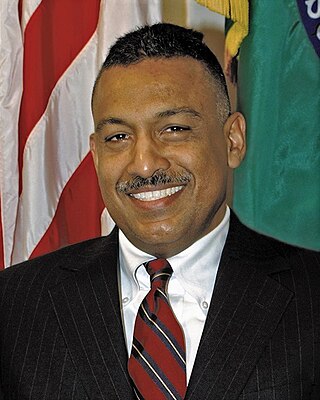
Larry R. Felix is an American civil servant who served as the Director of the Bureau of Engraving and Printing (BEP) within the United States Department of the Treasury from 2006 to 2015.

Larry E. Rolufs was an official in the United States Department of the Treasury who was Director of the Bureau of Engraving and Printing from 1995 to 1997.

Robert Joseph Leuver was an official in the United States Department of the Treasury who was Director of the Bureau of Engraving and Printing from 1983 to 1988.

Liu He (simplified Chinese:刘鹤;traditional Chinese:劉鶴;pinyin:LiúHè;Wade–Giles:Liu2 Ho4;born 25 January 1952) is a Chinese economist and retired politician who served as a vice premier of China from 2018 to 2023. Additionally,he served as the director of the Office serving the Central Financial and Economic Affairs Commission of the Chinese Communist Party (CCP) from 2013 to 2023,the director of the Financial Stability and Development Committee from 2017 to 2023,as well as a member of the Politburo of the Chinese Communist Party from 2017 to 2022.

Leonard R. Olijar is an American government official who had served as the director of the Bureau of Engraving and Printing from 2015 to 2023. As director,Olijar is responsible for managing the Bureau of Engraving and Printing,an agency within the United States Department of the Treasury tasked with producing Federal Reserve Notes,paper currencies,and United States Treasury securities.
