Related Research Articles

The American Astronomical Society is an American society of professional astronomers and other interested individuals, headquartered in Washington, DC. The primary objective of the AAS is to promote the advancement of astronomy and closely related branches of science, while the secondary purpose includes enhancing astronomy education and providing a political voice for its members through lobbying and grassroots activities. Its current mission is to enhance and share humanity's scientific understanding of the universe as a diverse and inclusive astronomical community.
The George Van Biesbroeck Prize is an award for long-term achievements in the field of astronomy. According to the American Astronomical Society awards website; "The Van Biesbroeck prize is normally awarded every two years and honors a living individual for long-term extraordinary or unselfish service to astronomy, often beyond the requirements of his or her paid position."

Virginia Louise Trimble is an American astronomer specializing in the structure and evolution of stars and galaxies, and the history of astronomy. She has published more than 600 works in Astrophysics, and dozens of other works in the history of other sciences. She is famous for an annual review of astronomy and astrophysics research that was published in the Publications of the Astronomical Society of the Pacific, and often gives summary reviews at astrophysical conferences. In 2018, she was elected a Patron of the American Astronomical Society, for her many years of intellectual, organizational, and financial contributions to the society.

Eugene Newman Parker was an American solar and plasma physicist. In the 1950s he proposed the existence of the solar wind and that the magnetic field in the outer Solar System would be in the shape of a Parker spiral, predictions that were later confirmed by spacecraft measurements. In 1987, Parker proposed the existence of nanoflares, a leading candidate to explain the coronal heating problem.
Jay Myron Pasachoff was an American astronomer. Pasachoff was Field Memorial Professor of Astronomy at Williams College and the author of textbooks and tradebooks in astronomy, physics, mathematics, and other sciences.

Robert P. Kirshner is an American astronomer, Chief Program Officer for Science for the Gordon and Betty Moore Foundation, and the Clownes Research Professor of Science at Harvard University. Kirshner has worked in several areas of astronomy including the physics of supernovae, supernova remnants, the large-scale structure of the cosmos, and the use of supernovae to measure the expansion of the universe.

John Cromwell Mather is an American astrophysicist, cosmologist and Nobel Prize in Physics laureate for his work on the Cosmic Background Explorer Satellite (COBE) with George Smoot.

Jean Hebb Swank is an astrophysicist who is best known for her studies of black holes and neutron stars.

Dr. Kimberly A. Weaver is an American astrophysics astronomer and professor. She has worked with NASA on several research projects. She is often seen on television programs about astronomy. She is an expert in the area of x-ray astronomy.

Rodger Evans Doxsey was an American physicist and astronomer who made major contributions to the scientific and operational success of NASA's Hubble Space Telescope (HST). He joined the HST Project at the Space Telescope Science Institute (STScI), in Baltimore, Maryland, in 1981, and was head of the Hubble Missions Office when he died in 2009.

Claudia Megan Urry is an American astrophysicist, who has served as the President of the American Astronomical Society, as chair of the Department of Physics at Yale University, and as part of the Hubble Space Telescope faculty. She is currently the Israel Munson Professor of Physics and Astronomy at Yale University and Director of the Yale Center for Astronomy and Astrophysics. Urry is notable not only for her contributions to astronomy and astrophysics, including work on black holes and multiwavelength surveys, but also for her work addressing sexism and sex equality in astronomy, science, and academia more generally.

Beth A. Brown was a NASA astrophysicist with a research focus on X-ray observations of elliptical galaxies and black holes. She earned a Ph.D. in Astronomy from the University of Michigan in 1998, becoming the first African-American woman to do so.
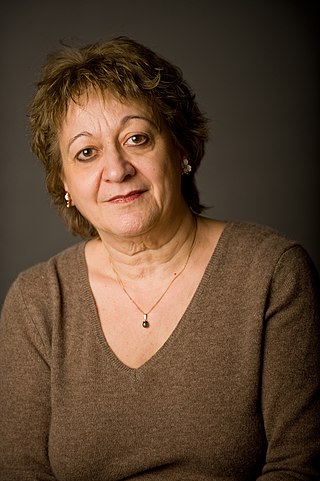
Chryssa Kouveliotou is a Greek astrophysicist. She is a professor at George Washington University and a retired senior technologist in high-energy astrophysics at NASA's Marshall Space Flight Center in Huntsville, Alabama.

Christina "Chrissy" Richey is an American planetary scientist and astrophysicist working at Jet Propulsion Laboratory in La Cañada Flintridge, California. Richey is a project staff scientist for the Europa Clipper mission and is a research technologist in the Astrophysics and Space Sciences Section. Prior to working at JPL, Richey worked as contractor for Arctic Slope Regional Corporation at NASA Headquarters in Washington, D.C. They were a program officer in NASA's Planetary Science Division, the deputy program scientist for the OSIRIS-REx mission, and the deputy science advisor for research and analysis for the Science Mission Directorate.
Ann Hornschemeier is an American astronomer specializing in X-ray emission from X-ray binary populations. She is the Chief Scientist for the Physics of the Cosmos program at NASA.
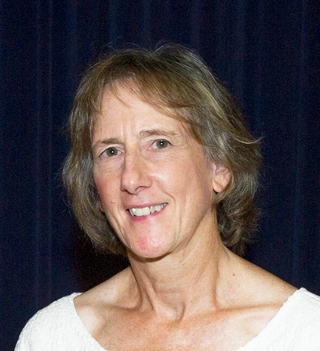
Alice Kust Harding is an American astrophysicist at the NASA Goddard Space Flight Center, Greenbelt, Maryland.

Marcia Jean Rieke is an American astronomer. She is a Regents' Professor of Astronomy and associate department head at the University of Arizona. Rieke is the Principal Investigator on the near-infrared camera (NIRCam) for the James Webb Space Telescope (JWST). Marcia Rieke is considered by many to be one of the "founding mothers" of infrared astronomy, along with Judith Pipher.

Rita M. Sambruna Commander OMRI (Hon) is an Italian-American astrophysicist and is the Deputy Director of the Astrophysics Science Division at National Aeronautics and Space Administration's (NASA) Goddard Space Flight Center. From September 2022 to May 2023, she was the Acting Deputy Director of the Science Exploration Directorate at Goddard. Rita held the Clare Boothe Luce Professorship in Physics and Astronomy at George Mason University in 2000-2005.

Charles Tsun-Chu Liu is a Taiwanese-born American astronomer and astronomy educator. His research interests include merging and colliding galaxies, active galactic nuclei, and the star formation history of the universe. He is a former director of the William E. Macaulay Honors College and The Verrazano School at the City University of New York's College of Staten Island. He currently serves as a professor of physics and astronomy at the College of Staten Island, and as President of the Astronomical Society of New York. Liu is the 2024 winner of the American Astronomical Society's (AAS) prestigious Education Prize, and was named an AAS fellow in 2019.
Judith Tobi Karpen is an American astrophysicist who works for NASA as chief of the Space Weather Laboratory at the Goddard Space Flight Center. She is known for her research on solar prominences and the solar wind, including the use of the Solar Dynamics Observatory to observe the fine structure of plumes in the solar corona.
References
- ↑ "'Bringing the Cosmos Down to Earth" in the Washington Post". Washington Post. Archived from the original on July 16, 2012. Retrieved 2012-05-02.
- ↑ "Stephen Maran Speaking on Cruises". insightcruises.com. Retrieved 2012-05-02.
- ↑ "National Capital Astronomers Newsletter, April 1994" (PDF). capitalastronomers.org. Retrieved 2012-04-20.
- 1 2 Maran, Stephen (2005). Astronomy for Dummies (2nd ed.). Wiley Publishing, Inc. ISBN 978-0-7645-8465-7.
- ↑ "'Star Attraction' in Bangor Daily News". Bangor Daily News . Retrieved 2012-05-02.
- ↑ "Biography of Stephen P. Maran at the American Astronomical Society". aas.org. Archived from the original on 2011-12-27. Retrieved 2012-04-20.
- ↑ "Astronautics and Aeronautics Chronology 1991-1995" (PDF). nasa.gov. Retrieved 2012-04-20.
- ↑ Hauser, M. G. (1993). "NASA/Goddard Space Flight Center Laboratory for Astronomy and Solar Physics Report, 1993". Bulletin of the Astronomical Society. 25 (1). adsabs.harvard.edu: 354. Bibcode:1993BAAS...25..354H.
- ↑ "Astronomical Society of the Pacific 1999 Awards". astrosociety.org. Retrieved 2012-04-20.
- ↑ "George Van Biesbroeck Prize List". aas.org. Archived from the original on 2013-01-18. Retrieved 2012-04-20.
- ↑ "American Institute of Physics 2011 Gemant Award". aip.org. Retrieved 2012-04-20.