
Locusts are various species of short-horned grasshoppers in the family Acrididae that have a swarming phase. These insects are usually solitary, but under certain circumstances they become more abundant and change their behaviour and habits, becoming gregarious. No taxonomic distinction is made between locust and grasshopper species; the basis for the definition is whether a species forms swarms under intermittently suitable conditions; this has evolved independently in multiple lineages, comprising at least 18 genera in 5 different subfamilies.

The desert locust is a species of locust, a periodically swarming, short-horned grasshopper in the family Acrididae. They are found primarily in the deserts and dry areas of northern and eastern Africa, Arabia, and southwest Asia. During population surge years, they may extend north into parts of Southern Europe, south into Eastern Africa, and east in northern India. The desert locust shows periodic changes in its body form and can change in response to environmental conditions, over several generations, from a solitary, shorter-winged, highly fecund, non-migratory form to a gregarious, long-winged, and migratory phase in which they may travel long distances into new areas. In some years, they may thus form locust plagues, invading new areas, where they may consume all vegetation including crops, and at other times, they may live unnoticed in small numbers.

The migratory locust is the most widespread locust species, and the only species in the genus Locusta. It occurs throughout Africa, Europe, Asia, Australia and New Zealand. Because of the vast geographic area it occupies, which comprises many different ecological zones, numerous subspecies have been described. However, not all experts agree on the validity of some of these subspecies.
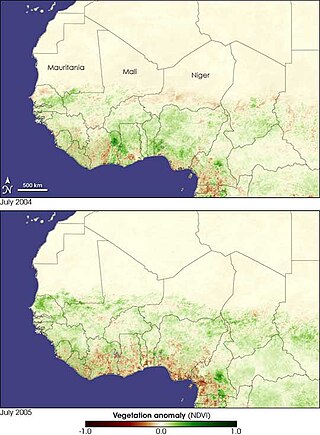
The 2005–2006 Niger food crisis was a severe but localized food security crisis in the regions of northern Maradi, Tahoua, Tillabéri, and Zinder of Niger from 2005 to 2006. It was caused by an early end to the 2004 rains, desert locust damage to some pasture lands, high food prices, and chronic poverty. In the affected area, 2.4 million of 3.6 million people are considered highly vulnerable to food insecurity. An international assessment stated that, of these, over 800,000 face extreme food insecurity and another 800,000 in moderately insecure food situations are in need of aid.

The red locust is a large grasshopper species found in sub-Saharan Africa. Its name refers to the colour of its hind wings. It is sometimes called the criquet nomade in French, due to its nomadic movements in the dry season. When it forms swarms, it is described as a locust.

The Great Green Wall or Great Green Wall for the Sahara and the Sahel is a project adopted by the African Union in 2007, initially conceived as a way to combat desertification in the Sahel region and hold back expansion of the Sahara desert, by planting a wall of trees stretching across the entire Sahel from Djibouti, Djibouti to Dakar, Senegal. The original dimensions of the "wall" were to be 15 km wide and 7,775 km long, but the program expanded to encompass nations in both northern and western Africa. The concept evolved into promoting water harvesting techniques, greenery protection and improving indigenous land use techniques, aimed at creating a mosaic of green and productive landscapes across North Africa. Later it adopted the view that desert boundaries change based on rainfall variations.

The Australian plague locust is a species of locust in the family Acrididae native to Australia, where it is a significant agricultural pest.

The Senegalese grasshopper is a medium-sized grasshopper species found in the Sahel region of Africa, the Canary Islands, Cape Verde Islands, and West Asia. Although not called a locust in English, this species shows gregarious behaviour and some morphological change on crowding. In many parts of the Sahel, this species may cause greater year-on-year crop damage than better-known locusts, attacking crops such as the pearl millet.

LUBILOSA was the name of a research programme that aimed at developing a biological alternative to the chemical control of locusts. This name is an acronym of the French title of the programme: Lutte Biologique contre les Locustes et les Sauteriaux. During its 13-year life, the programme identified an isolate of an entomopathogenic fungus belonging to the genus Metarhizium and virulent to locusts, and went through all the necessary steps to develop the commercial biopesticide product Green Muscle based on its spores.
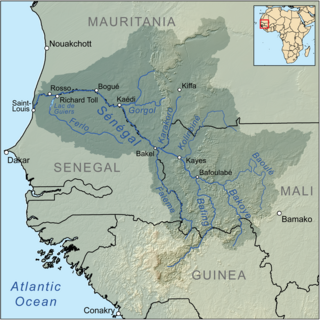
A large-scale, drought-induced famine occurred in Africa's Sahel region and many parts of the neighbouring Sénégal River Area from February to August 2010. It is one of many famines to have hit the region in recent times.

Dociostaurus maroccanus, commonly known as the Moroccan locust, is a grasshopper in the insect family Acrididae. It is found in northern Africa, southern and eastern Europe and western Asia. It lives a solitary existence but in some years its numbers increase sharply, and it becomes gregarious and congregates to form swarms which can cause devastation in agricultural areas. The species was first described by Carl Peter Thunberg in 1815.
2012 had a very severe drought in the Sahel, the semiarid region of Africa that lies between the Sahara and the savannas. Countries included in this region are Senegal, Mauritania, Mali, Burkina Faso, Niger, Nigeria, Chad, Sudan, and Eritrea. Droughts in the Sahel occur quite often and tend to reduce the already meager water supply and stress the economies of developing countries in that region.
In 2012, Madagascar had an upsurge in the size of its Malagasy migratory locust populations. In November of that year, the government issued a locust alert, saying that conditions were right for swarming of the pest insects. In February 2013, Cyclone Haruna struck the country, creating optimal conditions for locust breeding. By late March 2013, approximately 50% of the country was infested by swarms of locusts, with each swarm consisting of more than one billion insects. The authorities changed the situation to plague status. According to one eyewitness: "You don't see anything except locusts. You turn around, there are locusts everywhere".

George Basil Popov MBE, was a Russian-British entomologist born in Iran, his father having been employed there by the Imperial Bank of Persia. Popov became an authority on the Desert locust.

Locusta migratoria migratorioides, commonly known as the African migratory locust, is a subspecies of the migratory locust family Acrididae.

Between June 2019 and February 2022, a major outbreak of desert locusts began developing, threatening food supplies in East Africa, the Arabian Peninsula and the Indian subcontinent. The outbreak was the worst to hit Kenya in 70 years, and the worst in 25 years for Ethiopia, Somalia, and India.
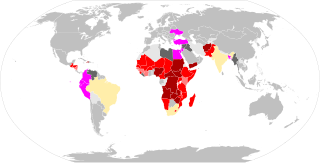
During the COVID-19 pandemic, food insecurity intensified in many places. In the second quarter of 2020, there were multiple warnings of famine later in the year. In an early report, the Nongovernmental Organization (NGO) Oxfam-International talks about "economic devastation" while the lead-author of the UNU-WIDER report compared COVID-19 to a "poverty tsunami". Others talk about "complete destitution", "unprecedented crisis", "natural disaster", "threat of catastrophic global famine". The decision of the WHO on 11 March 2020, to qualify COVID as a pandemic, that is "an epidemic occurring worldwide, or over a very wide area, crossing international boundaries and usually affecting a large number of people" also contributed to building this global-scale disaster narrative.
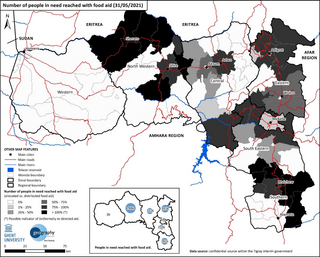
Beginning with the onset of the Tigray War in November 2020, acute food shortages leading to death and starvation became widespread in northern Ethiopia, and the Tigray, Afar and Amhara Regions in particular. As of August 2022, there are 13 million people facing acute food insecurity, and an estimated 150,000–200,000 had died of starvation by March 2022. In the Tigray Region alone, 89% of people are in need of food aid, with those facing severe hunger reaching up to 47%. In a report published in June 2021, over 350,000 people were already experiencing catastrophic famine conditions. It is the worst famine to happen in East Africa since 2011–2012.

Climate change in Africa is reducing its food security. Climate change at the global, continental, and sub-continental levels has been observed to include an increase in air and ocean temperatures, sea-level rise, a decrease in snow and ice extent, an increase and decrease in precipitation, changes in terrestrial and marine biological systems, and ocean acidification. The agricultural industry is responsible for more than 60% of full time employment in Africa. Millions of people in Africa depend on the agricultural industry for their economic well-being and means of subsistence. A variety of climate change-related factors such as worsening pests and diseases that damage agriculture and livestock, altered rainfall patterns, rising temperatures, droughts, and floods are having a negative impact on the agricultural industry in Africa. Many African populations access to food is being impacted by these climate change effects on the agricultural industry, which result in a trend of decreasing crop yields, animal losses, and rising food prices.
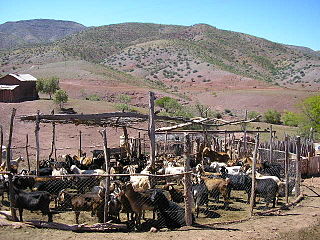
Desertification in Africa is a form of land degradation that involves the conversion of productive land into desert or arid areas. This issue is a pressing environmental concern that poses a significant threat to the livelihoods of millions of people in Africa who depend on the land for subsistence. Geographical and environmental studies have recently coined the term desertification. Desertification is the process by which a piece of land becomes a desert, as the word desert implies. The loss or destruction of the biological potential of the land is referred to as desertification. It reduces or eliminates the potential for plant and animal production on the land and is a component of the widespread ecosystem degradation. Additionally, the term desertification is specifically used to describe the deterioration of the world's drylands, or its arid, semi-arid, and sub-humid climates. These regions may be far from the so-called natural or climatic deserts, but they still experience irregular water stress due to their low and variable rainfall. They are especially susceptible to damage from excessive human land use pressure. The causes of desertification are a combination of natural and human factors, with climate change exacerbating the problem. Despite this, there is a common misconception that desertification in Africa is solely the result of natural causes like climate change and soil erosion. In reality, human activities like deforestation, overgrazing, and unsustainable agricultural practices contribute significantly to the issue. Another misconception is that, desertification is irreversible, and that degraded land will forever remain barren wastelands. However, it is possible to restore degraded land through sustainable land management practices like reforestation and soil conservation. A 10.3 million km2 area, or 34.2% of the continent's surface, is at risk of desertification. If the deserts are taken into account, the affected and potentially affected area is roughly 16.5 million km2 or 54.6% of all of Africa. 5.7 percent of the continent's surface is made up of very severe regions, 16.2 percent by severe regions, and 12.3 percent by moderate to mild regions.

