Clandestine chemistry is chemistry carried out in secret, and particularly in illegal drug laboratories. Larger labs are usually run by gangs or organized crime intending to produce for distribution on the black market. Smaller labs can be run by individual chemists working clandestinely in order to synthesize smaller amounts of controlled substances or simply out of a hobbyist interest in chemistry, often because of the difficulty in ascertaining the purity of other, illegally synthesized drugs obtained on the black market. The term clandestine lab is generally used in any situation involving the production of illicit compounds, regardless of whether the facilities being used qualify as a true laboratory.
Ya ba, formerly known as ya ma, are tablets containing a mixture of methamphetamine and caffeine.
The illegal drug trade in China is influenced by factors such as history, location, size, population, and current economic conditions. China has one-fifth of the world's population and a large and expanding economy while Opium has played an important role in the country's history since before the First and Second Opium Wars in the mid-19th century. China's large land mass, close proximity to the Golden Triangle, Golden Crescent, and numerous coastal cities with large and modern port facilities make it an attractive transit center for drug traffickers.
Crime is present in various forms in the Philippines, and remains a serious issue throughout the country. Illegal drug trade, human trafficking, murder, corruption and domestic violence remain significant concerns. The Philippines has a high rate of murder cases, which is the highest in Southeast Asia as of 2014. Most major cities are plagued with high prevalence of crimes.

The illicit cigarette trade is defined as “the production, import, export, purchase, sale, or possession of tobacco goods which fail to comply with legislation”. Illicit cigarette trade activities fall under 3 categories:
- Contraband: cigarettes smuggled from abroad without domestic duty paid
- Counterfeit: cigarettes manufactured without authorization of the rightful owners, with intent to deceive consumers and to avoid paying duty
- Illicit whites: brands manufactured legitimately in one country, but smuggled and sold in another without duties being paid.
The prevalence of illegal drug use in the Philippines is lower than the global average, according to the United Nations Office on Drugs and Crime (UNODC). President Rodrigo Duterte has claimed that the country could become a "narco-state". Two of the most used and valuable illegal drugs in the country are methamphetamine hydrochloride and marijuana. In 2012, the United Nations said the Philippines had the highest rate of methamphetamine use in East Asia, and according to a U.S. State Department report, 2.1 percent of Filipinos aged 16 to 64 use the drug based on 2008 figures by the Philippines Dangerous Drugs Board. As of 2016, the United Nations Office of Drugs and Crime report that 1.1 percent of Filipinos aged 10 to 69 use the drug. In Metro Manila, most barangays are affected by illegal drugs.
Daigou is an emerging form of cross-border exporting in which an individual or a syndicated group of exporters outside China purchases commodities for customers in China, in order to either illegally or legally use loopholes to circumvent import tariffs imposed on overseas goods. Daigou shoppers typically pose as ordinary shoppers and purchase the desired goods in a region outside China, after which they return the goods to China by post, or by posing as normal tourists while carrying the purchases in quantities under the threshold for customs declaration or sometimes concealing the purchased goods from the customs authorities altogether, and then relay the purchased goods to the actual buyers while charging an extra more than the cost of the purchase in order to make a high profit. Daigou activities can range from illegal criminal offences such as smuggling, tax evasion, and fraud to the legal exploitation of the loopholes in the form of tax avoidance, depending on the specific case.

The Philippine National Police, Philippine Drug Enforcement Agency, National Bureau of Investigation led by Justice secretary Leila de Lima launched a series of raids on the New Bilibid Prison on December 15, 19, and 22, 2014 targeting drug lords allegedly operating inside the prison and to seize contrabands reportedly in possession of some of the prison's inmates. Prohibited items such as methamphetamine chloride and other drug paraphernalia, inflatable sex dolls, a stripper bar and jacuzzi were found in air-conditioned villas of high-profile inmates. Police also found other items and contrabands prohibited in the prison such as firearms and bladed weapons, mobile phones, flat screen TVs, laptops, WIFi, luxury Patek Philippe, Cartier and Rolex watches, sauna and over ₱2 million in cash from body searches of several inmates.

Mighty Corporation is a Filipino corporation and was the second largest cigarette manufacturer in the Philippines from 2010 to 2017. On September 8, 2017, Japan Tobacco acquired Mighty Corporation's cigarette business in the amount of P46.8 billion, paving the way for the full payment of P30 billion to the Philippine government as part of the agreement for Mighty Corporation to settle its unpaid tax liabilities.
The following are the events in related to Philippine law in 2016. This includes developments in criminal investigations of national notability.
In the early morning hours of 22 May 2016, five people died after taking alleged illegal drugs during a rave dance party organized by Close-Up entitled Forever Summer, at the SM Mall of Asia concert grounds in Pasay, Philippines.
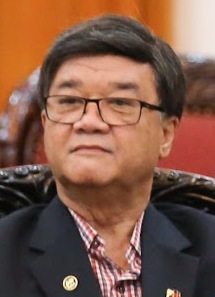
Vitaliano Napeñas Aguirre II is a Filipino lawyer from Quezon. He served as Secretary of Justice under President Rodrigo Duterte from 2016 until his resignation in 2018. He previously served as Vice President and chief legal counsel of Clark Development Corporation under former President Benigno Aquino III. He gained wide public attention in 2012 during the impeachment trial of Supreme Court Chief Justice Renato Corona when he was cited for contempt after he was caught covering his ears while being lectured by the late Senator Miriam Defensor Santiago. Aguirre, during his secretary of justice stint, was highly controversial due to various events such the arrest of opposition senator Leila de Lima, the attempted arrest of opposition senator Risa Hontiveros, the false tagging of opposition senators Bam Aquino and Antonio Trillanes to the Marawi siege, the threatening of Mulanay plantation farmers to pay him 'rent' for land they were given under the Comprehensive Agrarian Reform Program (CARP), a P50 million extortion controversy in his Bureau of Immigration involving Chinese businessman Jack Lam, the downgrading of charges in the Espinosa slay, a P6.4-billion shabu shipment case involving government ally Nicanor Faeldon, the acquittal of drug and criminal cases against government ally Peter Lim and self-confessed drug lord Kerwin Espinosa, and the reinvestigation of the PDAF case which put pork barrel queen Janet Lim-Napoles as a state witness. He has been called the "King of Fake News" and a 'fake news troll' by numerous organizations, students groups, and politicians. He has also been condemned by his own hometown of Mulanay for "bringing shame" to the town. He is currently being investigated by the Hague-based International Criminal Court, which launched a preliminary examination into allegations of crimes against humanity committed by President Rodrigo Duterte in his ferocious war on drugs, which Aguirre was notably a part of.

The Philippine Drug War refers to the drug policy of the Philippine government under President Rodrigo Duterte, who assumed office on June 30, 2016. According to former Philippine National Police Chief Ronald dela Rosa, the policy is aimed at "the neutralization of illegal drug personalities nationwide". Duterte has urged members of the public to kill suspected criminals and drug addicts. Research by media organizations and human rights groups has shown that police routinely execute unarmed drug suspects and then plant guns and drugs as evidence. Philippine authorities have denied misconduct by police.
The New Bilibid Prison drug trafficking scandal is a criminal investigation and political scandal concerning allegations of government involvement in illegal drug trade at the New Bilibid Prison in Muntinlupa, Metro Manila, Philippines. The allegations were made by President Rodrigo Duterte after announcing that the two top convicted drug lords in the country continued to run their drug rings from inside the national penitentiary with former administration officials and their local government cohorts as co-conspirators. On August 25, 2016, Duterte released a drug matrix showing the structure of drug trafficking operations at the New Bilibid Prison and identified the two former top officials of the Department of Justice, the former provincial governor and board member of Pangasinan, and the former Bureau of Corrections director as being involved in the Bilibid narcotics trade.
Rolando Espinosa, then mayor of Albuera, Leyte, died on November 5, 2016, at the Baybay City Provincial Jail. He was detained at the jail due to his arrest for illegal drug possession in October 2016. According to the Criminal Investigation and Detection Group (CIDG), the notorious suspects of the murder, Espinosa was killed during a shootout that he initiated when the CIDG came to the jail to serve him a search warrant. Espinosa's death occurred amid allegations that he was involved in the drug trade by President Rodrigo Duterte, who initiated the Philippine Drug War intending to kill criminals using or distributing drugs. The Commission on Human Rights and Karapatan have held Duterte accountable for Espinosa's death, with Senate condemning the death as an instance of extrajudicial killing.

Bangladesh–North Korea relations refer to the bilateral relations between Bangladesh and North Korea.
At dawn of Sunday, July 30, 2017, Criminal Investigation and Detection Group (CIDG) and the Ozamiz City police conducted a simultaneous raid in the house of the Parojinogs in Ozamiz and other associated properties, leaving 15 person killed including incumbent Mayor Reynaldo Parojinog and his wife. Another member of the Parojinog family died in the hospital three days after the raid. Parojinog is the third mayor to be killed during the course of country's war on drugs after Rolando Espinosa of Albuera, Leyte eight months prior and Samsudin Dimaukom of Datu Saudi-Ampatuan, Maguindanao nine months prior.

On the evening of August 16, 2017, a 17-year-old Filipino student named Kian Loyd delos Santos was fatally shot by police officers conducting an anti-drug operation in Caloocan, Metro Manila. The case became controversial when the official police reports differed from witness accounts and CCTV footage.
BRP Cape San Agustin (MRRV-4408) is the seventh ship of the Parola-class patrol vessels of the Philippine Coast Guard.