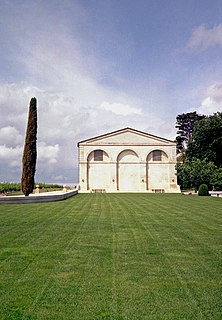
Alexis Lichine's classification of Bordeaux wine

Last updated

In considering the Bordeaux Wine Official Classification of 1855, Alexis Lichine held the opinion that the list, some hundred years after the selection was made, no longer expressed the whole truth concerning the ranking of Bordeaux wine. [1] Working for a reevaluation and change of structure of the classification of Bordeaux estates, he ended up spending much of his professional life on a campaign that lasted more than thirty years to accomplish a revision. [2] Having published his Classification des Grands Crus Rouges de Bordeaux in 1962, with several revisions over the following years, Lichine came to be viewed as "the doyen of unofficial classification compilers". [3]

Bordeaux Wine Official Classification of 1855 classification of wine

The Bordeaux Wine Official Classification of 1855 resulted from the 1855 Exposition Universelle de Paris, when Emperor Napoleon III requested a classification system for France's best Bordeaux wines that were to be on display for visitors from around the world. Brokers from the wine industry ranked the wines according to a château's reputation and trading price, which at that time was directly related to quality.

Alexis Lichine was a Russian wine writer and entrepreneur. He played a key role in promoting varietal labelling of wine, was a masterful salesman of wine, and owned Château Prieuré-Lichine and a share of Château Lascombes in the Médoc. He was married to actress Arlene Dahl from 1964 to 1969.

Bordeaux wine Wine produced in the Bordeaux region of France

A Bordeaux wine is any wine produced in the Bordeaux region of southwest France. Bordeaux is centered on the city of Bordeaux, on the Garonne River. To the north of the city the Dordogne River joins the Garonne forming the broad estuary called the Gironde and covering the whole area of the Gironde department,with a total vineyard area of over 120,000 hectares, making it the largest wine growing area in France. Average vintages produce over 700 million bottles of Bordeaux wine, ranging from large quantities of everyday table wine, to some of the most expensive and prestigious wines in the world. The vast majority of wine produced in Bordeaux is red, with sweet white wines, dry whites, and rosé and sparkling wines collectively making up the remainder. Bordeaux wine is made by more than 8,500 producers or châteaux. There are 54 appellations of Bordeaux wine.

Contents

Reclassification

In 1959, a committee of which Lichine was a member as well as leading Bordeaux growers, shippers and brokers, was formed to decide what was to be done about reclassifying the work of 1855. Investigations revealed to what extent parcels of land had exchanged hands, some were considered insignificant but in other cases important transfers of terrain had taken place. [4] It is acknowledged that at the time the list was compiled in great haste, primarily on the basis of which estates had consistently commanded the highest prices. [5] While there was widespread agreement the 1855 classification had flaws, a general view remained that it was impossible to improve upon it.

The committee made a formal request to proceed with the revision in 1960. Opting for three categories instead of five, removing 18 chateaux and adding 13 new ones with updates every five years provoked reactions of outrage among those who faced great loss, "Château owners demoted or entirely deleted… condemned the ranking as malicious, incompetent and unjust." [2] [6] The Institut National des Appellations d'Origine (INAO) was called to arbitrate, but it became decided that the jurisdiction of INAO was too limited to resolve a matter of this complexity. After two years of efforts, the Bordeaux Chamber of Commerce and Académie des Vins de Bordeaux also became involved in the debate surrounding the reforms. [4] Recognising that the process would take a great deal of time, Lichine decided to publish his own classification.

Goals

In agreement with the committee, Lichine believed that, just as the principal philosophy behind the 1855 classification, price would be the most reliable indicator, but a revision could not let the transfer of first-rate soil go unchallenged. [4] It was also important to identify cases where highly classified estates had become surpassed by those rated Fifth Growth or Cru Bourgeois , and addressing the 1855 classification's neglect of properties from other areas than Médoc, namely those of Graves, Saint-Émilion and Pomerol. [4] Attempting to bring these areas together under one classification was considered unique to the Lichine rating. [3]

Cru Bourgeois

The Cru Bourgeois classification lists some of the châteaux from the Médoc that were not included in the 1855 Classification of Crus Classés, or Classed Growths. Notionally, Cru Bourgeois is a level below Cru Classé, but still of high quality. Many wine writers consider that there is some overlap in quality between the Classed Growths and the Cru Bourgeois, although also saying that by and large the Classed Growths still represent the best wines.

Médoc

The Médoc is a region of France, well known as a wine growing region, located in the département of Gironde, on the left bank of the Gironde estuary, north of Bordeaux. Its name comes from (Pagus) Medullicus, or "country of the Medulli", the local Celtic tribe. The region owes its economic success mainly to the production of red wine; it is home to around 1,500 vineyards.

Graves (wine region) Bordeaux wine region

Graves is an important subregion of the Bordeaux wine region. Graves is situated on the left bank of the Garonne River, in the upstream part of the region, southeast of the city Bordeaux and stretches over 50 kilometres (31 mi). Graves is the only Bordeaux subregion which is famed for all three of Bordeaux' three main wine types—reds, dry whites and sweet wines—although red wines dominate the total production. Graves AOC is also the name of one Appellation d'origine contrôlée (AOC) which covers most, but not all of the Graves subregion.

Lichine also believed that no classification could be planned for a shorter span than 25–50 years since frequent changes would create consumer confusion and loss of public confidence, but saw the 1855 classification as evidence that no ruling can remain valid indefinitely.

Lichine was convinced that rankings of "first", "second", etc. were a mistake that should not be repeated, unfairly implying that there was, for instance, something second-rate about a Second Growth. [4] Choosing to adapt and expand on the ranks used in the classifications of Graves and Saint-Émilion, Lichine arrived at the categories: Outstanding Growths, Exceptional Growths, Great Growths, Superior Growths and Good Growths.

Classification of Graves wine

The wines of Graves in the wine-growing region of Bordeaux were classified in 1953 by a jury appointed by Institute National des Appellations d'Origine, and approved by the Minister of Agriculture in August of that year. The selection was revised with a few additions in February 1959. The classification concerns both red and white wines, and all chateaux belong to the appellation Pessac-Léognan, which eventually came into effect on September 9, 1987.

Classification of Saint-Émilion wine

In 1955 the wines of Saint-Émilion in the wine-growing region of Bordeaux were classified. Unlike the Bordeaux Wine Official Classification of 1855 covering wines from the Médoc and Graves regions, the Saint-Émilion list is updated every 10 years or so. Following the initial classification, the list was updated in 1969, 1986, 1996 and most recently in 2006. However the 2006 classification was declared invalid following a series of legal actions, and the 1996 version of the classification has been reinstated for the vintages from 2006 to 2009.

Lichine, chosen the "1987 Man of the Year" by Decanter for achievements in wine, successfully revising the 1855 classification was not one of them. Decanter-Lichinecover.jpg
Lichine, chosen the "1987 Man of the Year" by Decanter for achievements in wine, successfully revising the 1855 classification was not one of them.

Among the most visible changes was the elevation of Château Mouton Rothschild from its second growth status to Cru Hors Classe, which was the only of his suggestions ever to be realised. [7] Mouton Rothschild was promoted to Premier Cru status in 1973.

Château Mouton Rothschild winery

Château Mouton Rothschild is a wine estate located in the village of Pauillac in the Médoc region, 50 km (30 mi) north-west of the city of Bordeaux, France. Originally known as Château Brane-Mouton, its red wine was renamed by Nathaniel de Rothschild in 1853 to Château Mouton Rothschild. In the 1920s it began the practice of bottling the harvest at the estate itself, rather than shipping the wine to merchants for bottling elsewhere.

Publications

Lichine's classification was published in 1962 and revised in 1966. Later revisions followed until the last version was published in 1985, though the final classification was dated to 1978. [3] Never coming to fruition before Lichine's death, some of the reasons are believed to be the 1855 establishment's political muscle, prosperity and prospects, social status, market clout, professional and personal prestige and conservatism. [6]

Resigned to the fact that no revision would be made, Lichine wrote in 1986, "when one considers the outcry, disputes and lawsuits brought about by a new classification proposed for St.-Emilion in 1985, [8] [9] one must reluctantly conclude that no such new classification - however much needed - is likely to win adoption." [10]

Other published classifications that attempt to revise the 1855 ranking include a top 100 ranking by Robert Parker and L'histoire de la vigne & du vin (English: The History of Wine and the Vine) by Bernard and Henri Enjalbert, efforts by Clive Coates (MW) and David Peppercorn (MW), [3] [5] [10] as well as a 2009 re-calculation by the British wine exchange Liv-ex. [11]

Classification des Grands Crus Rouges de Bordeaux

The final 1978 revision with comparison notes to the 1966 revision.

Haut-Médoc  Graves   Saint-Émilion  Pomerol  
Crus Hors Classe
Château Lafite Rothschild Château Margaux Château Latour
Château Mouton Rothschild Château Haut-Brion Château Cheval Blanc
Château Ausone Château Pétrus
Crus Exceptionnels
Château Beychevelle Château Brane-Cantenac Château Cos d'Estournel [*]
Château Ducru-Beaucaillou [*] Château Gruaud-Larose Château Lascombes
Château Léoville Barton Château Léoville-Las Cases [*] Château Léoville-Poyferré
Château Montrose Château Palmer Château Pichon Lalande
Château Pichon Longueville Domaine de Chevalier [*] Château La Mission Haut-Brion [*]
Château Pape Clément [*] [a] Château Figeac [*] Château Magdelaine [a]
Château La Conseillante Château l'Évangile Château Lafleur [a]
Château La Fleur-Pétrus [a] Château Trotanoy [a]
Grands Crus
Château Branaire Château Calon-Ségur [b] Château Cantemerle [b]
Château Cantenac-Brown Château Dufort Château Giscours [*]
Château d'Issan Château La Lagune Château Lynch-Bages [*] [b]
Château Malescot St. Exupéry Château Mouton-Baron-Philippe Château Prieuré-Lichine [*]
Château Rausan-Ségla Château Rauzan-Gassies Château Talbot
Château Haut-Bailly [*] Château Beau-Séjour Bécot [a] Château Belair [*] [b]
Château Canon [*] [b] Clos Fourtet Château La Gaffelière [b]
Château Pavie Château Trottevieille [a] Château Gazin
Château Latour à Pomerol [a] Château Petit-Village [*] Vieux Château Certan [*] [b]
Château Nenin [a]
Crus Supérieurs
Château Batailley Château Boyd-Cantenac [*] [a] Château Chasse-Spleen
Château Clerc-Milon-Rothschild [a] Château Gloria Château Grand-Puy-Lacoste [b]
Château Haut-Batailley [*] Château Kirwan Château Lagrange [a]
Château Langoa Barton Château Marquis d'Alesme Becker Château Pontet-Canet [b]
Château La Tour Carnet [a] Château Carbonnieux Château de Fieuzal [a]
Château Malartic-Lagravière [*] Château Smith Haut Lafitte Château l'Angélus
Château Balestard-la-Tonnelle [*] [a] Château Beauséjour-Duffau-Lagarrosse   Château Cadet-Piola [a]
Château Canon-la-Gaffelière Château La Clotte [a] Château Croque-Michotte
Château Curé-Bon-la-Madeleine Château La Dominique [a] Château Larcis Ducasse
Château Larmande [a] Château Soutard [a] Château Troplong Mondot [a]
Château Villemaurine Château Beauregard Château Certan-Giraud
Château Certan de May [b] Clos l'Église Château l'Église-Clinet
Château Le Gay [a] Château Lagrange Château La Pointe
Bons Crus
Château d'Agassac [a] Château d'Angludet [*] Château Beau-Site [a]
Château Beau-Site Haut-Vignoble [a] Château Bel-Air-Marquis-d'Aligre [b] Château Belgrave
Château de Camensac [*] [a] Château Citran [a] Château Cos Labory
Château Croizet Bages [*] Château Dauzac Château Ferrière [b]
Château Fourcas Dupré Château Fourcas Hosten Château Grand-Puy-Ducasse [b]
Cru Gressier Grand Poujeaux Château Hanteillan [a] Château Haut-Bages-Libéral
Château Labégorce [a] Château Labégorce Zédé [a] Château Lafon-Rochet [a]
Château Lanessan Château Lynch-Moussas Château Marbuzet [a]
Château Marquis de Terme Château Maucaillou [a] Château Les Ormes-de-Pez
Château Pédesclaux [a] Château de Pez [*] Château Phélan Ségur
Château Pouget [a] Château Poujeaux Château Saint-Pierre [*]
Château Siran Château du Tertre [a] Château La Tour de Mons [b]
Château Villegeorge [a] Château Bouscaut Château Larrivet-Haut-Brion [a]
Château La Louvière [a] Château La Tour Haut-Brion [b] Château La Tour-Martillac [b]
Château l'Arrosée [a] Château Bellevue [a] Château Cap de Mourlin
Domaine du Chatelet Château Corbin (Giraud) Château Corbin (Manuel)
Château Corbin Michotte Château Coutet Château Dassault [a]
Château La Fleur-Pourret [a] Château Franc-Mayne [a] Château Grace-Dieue
Château Grand Barrail-Lamarzelle-Figeac   Château Grand Corbin Château Grand Corbin-Despagne  
Château Grand-Mayne [a] Château Grand Pontet [a] Clos des Jacobins
Couvent-des-Jacobins Château Guadet-St. Julien [a] Château Laroque [a]
Château Moulin-du-Cadet [a] Château Pavie-Decesse [a] Château Pavie-Macquin [a]
Château Saint-Georges-Côte-Pavie Château Tertre-Daugay [a] Château La Tour-Figeac [a]
Château la Tour-du-Pin-Figeac   Château Trimoulet [a] Château Yon-Figeac [a]
Château Bourgneuf-Vayron [a] Château La Cabanne [a] Château Le Caillou [a]
Château Clinet [a] Clos du Clocher [a] Château La Croix
Château La Croix-de-Gay Domaine de l'Église [a] Château l'Enclos [a]
Château Gombaude-Guillot Château La Grave [a] Trignant de Boisset [a]
Château Guillot [a] Château Moulinet [a] Château Rouget
Clos René [*] [a] Château de Sales Château du Tailhas [a]
Château Taillefer [a] Château Vraye-Croix-de-Gay [a]

^ Lichine notes, "These wines are considered better than their peers in this classification".
 a ^ Promoted a tier placement from 1966 to 1978.
 b ^ Relegated a tier placement from 1966 to 1978.

1978 demotions

Château Capbern Château Dutruch-Lambert   Château Paveil
Château Baleau Château Fonroque Château Les Grandes Murailles   Château Ripeau  
Château Feytit-Clinet    Château la Fleur-Porret Château Mazeyres

Related Research Articles

Château Pontet-Canet

Château Pontet-Canet is a winery in the Pauillac appellation of the Bordeaux wine region of France. Chateau Pontet-Canet is also the name of the red wine produced by this property. The wine produced here was classified as one of eighteen Cinquièmes Crus in the Bordeaux Wine Official Classification of 1855.

Château Brane-Cantenac is a winery in the Margaux appellation of the Bordeaux wine region of France. The wine produced here was classified as one of fifteen Deuxièmes Crus in the original Bordeaux Wine Official Classification of 1855.
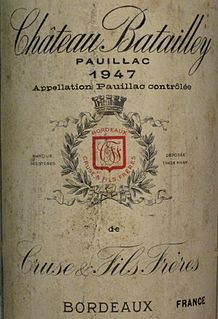
Château Batailley French winery

Château Batailley is a winery in the Pauillac appellation of the Bordeaux region of France. The wine produced at the estate was classified as one of eighteen Cinquièmes Crus in the Bordeaux Wine Official Classification of 1855.

Château Saint-Pierre

Château Saint-Pierre is a winery in the Saint-Julien appellation of the Bordeaux region of France. The wine produced here was classified as one of ten Quatrièmes Crus Classés in the historic Bordeaux Wine Official Classification of 1855.

Château Grand Corbin-Despagne

Château Grand Corbin-Despagne is a wine from the Saint-Émilion appellation of the Bordeaux wine region of France, ranked a Grand Cru in the Classification of Saint-Émilion wine. The winery is located in the northern part of the Saint-Émilion commune, close to the border of Pomerol.

Château Gloria Bordeaux wine

Château Gloria is an unclassed Bordeaux wine from the Saint-Julien appellation. The winery is located in the central part of France’s Bordeaux wine region Haut-Médoc, in the commune of Saint-Julien-Beychevelle.

Château La Mission Haut-Brion

Château la Mission Haut-Brion is a Bordeaux wine from the Pessac-Léognan appellation, classed among the Crus Classés in the Graves classification of 1953. The winery, located in close vicinity of the city of Bordeaux, belongs to the wine region Graves, in the commune of Talence with additional property in Pessac.

Château d'Arche is a sweet white wine ranked as Second Cru Classé in the original Bordeaux Wine Official Classification of 1855. Belonging to the Sauternes appellation in Gironde, in the region of Graves, the winery is located in the commune of Sauternes.

Château Canon, originally Clos St-Martin, is a Bordeaux wine from the Saint-Émilion appellation, ranked among the Premiers grands crus classés B in the Classification of Saint-Émilion wine. The winery is located just southwest of the old town of Saint-Émilion within the commune of the same name, closely neighbouring the estates such as Château Magdelaine, Château La Gaffelière and Château Ausone and has since the early 20th century been considered one of the top Saint-Émilions.

Henri Enjalbert was a French professor of geography at the University of Bordeaux. He was considered an eminent specialist in wine geology, whose expert opinion frequently overlapped into the fields of oenology, and wine and terroir history, within the Bordeaux region and beyond. Among other credits, he has been called "Bordeaux's most diligent geologist" and "the discoverer of Mas de Daumas Gassac. Among his contentions are that Albania, the Ionian Islands of Greece, and southern Dalmatia in present-day Bosnia-Herzegovina may have been the last European refuge of the grape vine after the Ice Age.

Château Beau-Séjour Bécot, formerly Château Beauséjour-Dr-Fagouet, is a Bordeaux wine from the appellation Saint-Émilion, ranked Premier grand cru classé B in the Classification of Saint-Émilion wine. The winery is located in the Right Bank of France’s Bordeaux wine region in the commune of Saint-Émilion, in the department Gironde.

Château Fonroque is a Bordeaux wine from the appellation Saint-Émilion, ranked Grand cru classé in the Classification of Saint-Émilion wine. The winery is located in the Right Bank of France’s Bordeaux wine region in the commune of Saint-Émilion, in the department Gironde.

Château d'Angludet or Château Angludet, is a Bordeaux wine estate in the appellation Margaux, in the commune of Cantenac on the left bank of the Gironde. The estate was classified a Cru Bourgeois Exceptionnel in 1932, and most recently a Cru Bourgeois Supérieur in 2003, in a classification which has been inactive since 2007.

Château Bouscaut is a Bordeaux wine from the Pessac-Léognan appellation, ranked among the Crus Classés for red and dry white wine in the Classification of Graves wine of 1953 and 1959. The winery and vineyards are located south of the city of Bordeaux, in the commune of Cadaujac.
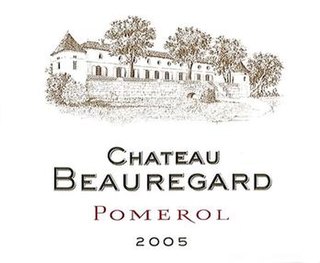
Château Beauregard

Château Beauregard is a Bordeaux wine estate from the appellation Pomerol. The winery is located on the Right Bank of the Bordeaux wine region, in the commune of Pomerol in the department Gironde. As all wine produced in this appellation, Château Beauregard is unclassified but the estate is estimated among the great growths of the region.

Château La Tour de Mons, archaically named Tour de Marsac, is a winery and wine from the appellation Margaux, located in the Left Bank of the Bordeaux wine region of France, in the commune of Soussans. The wine was rated Cru Supérieur in the Cru Bourgeois classification of 1932, and through later revisions until the temporary annulment of the classification in 2007.

Henri Martin was a French winemaker who for forty years served as mayor of Saint-Julien-Beychevelle in Médoc, became cited as the person responsible for reviving the ancient fame of the village, owned and managed a number of prominent French wine estates, and became considered a legendary figure in the Bordeaux wine trade. He has been called l'Ame du Médoc.

References

Footnotes
  1. Lichine, Alexis. Bordeaux Growths: Classification. p. 145.
  2. 1 2 Prial, Frank J. The New York Times (1989-08-20). "The Battle of 1855".
  3. 1 2 3 4 Peppercorn, David (2003). Bordeaux. London: Mitchell Beazley. p. 47. ISBN   1-84000-927-6.
  4. 1 2 3 4 5 Lichine, Alexis. Bordeaux Growths: Classification. p. 146.
  5. 1 2 Prial, Frank J. The New York Times (1991-09-25). "Wine Talk".
  6. 1 2 Goldberg, Howard G. The Wine News Magazine. "Dusting off the 1855 debate". Archived from the original on 2008-01-23.
  7. Prial, Frank J. The New York Times (1991-08-07). "Wine Talk".
  8. Kissack, Chris, thewinedoctor.com. "Chateau Beau-Séjour Bécot".
  9. Peppercorn, David (2003). Bordeaux. London: Mitchell Beazley. p. 394. ISBN   1-84000-927-6.
  10. 1 2 Prial, Frank J. The New York Times (1988-02-17). "Wine Talk".
  11. Liv-ex Fine Wine Market blog (March 10, 2009). The Liv-ex Bordeaux Classification