A circus is a traveling company of performers that may include acrobats, clowns, trained animals, and other novelty acts.
Chicago, Illinois, is the third-most populous city in the United States.
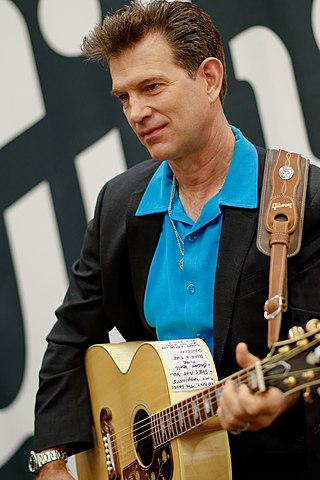
Christopher Joseph Isaak is an American singer, songwriter, guitarist and occasional actor. Noted for his reverb-laden rockabilly revivalist style and wide vocal range, he is popularly known for his breakthrough hit and signature song "Wicked Game"; as well as international hits such as "Blue Hotel", "Baby Did a Bad Bad Thing" and "Somebody's Crying".
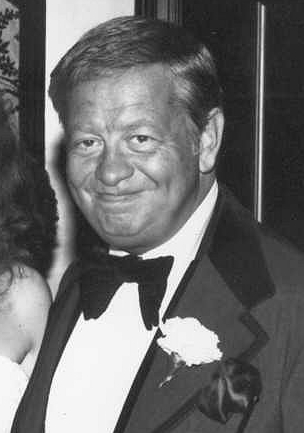
Melvin Howard Tormé, nicknamed "The Velvet Fog", was an American musician, singer, composer, arranger, drummer, actor, and author. He composed the music for "The Christmas Song" and co-wrote the lyrics with Bob Wells. Tormé won 2 Grammy Awards and was nominated a total of 14 times.

Peter Gunn is an American private eye television series, starring Craig Stevens as Peter Gunn with Lola Albright as his girlfriend, Edie Hart. The series aired on NBC from September 22, 1958, to 1960 and on ABC in 1960–1961. The series was created by Blake Edwards, who, on occasion, was also writer and director.

Norman Jeffrey Healey was a Canadian blues, rock and jazz singer, guitarist, and songwriter who attained popularity in the 1980s and 1990s. He reached No. 5 on the U.S. Billboard Hot 100 chart with "Angel Eyes" and reached the Top 10 in Canada with the songs "I Think I Love You Too Much" and "How Long Can a Man Be Strong".
The Real Thing or Real Thing may refer to:

Thomas Adrian Sands is an American pop music singer and actor. Working in show business as a child, Sands became an overnight sensation and instant teen idol when he appeared on Kraft Television Theater in January 1957 as "The Singin' Idol". The song from the show, "Teen-Age Crush", reached No. 2 on the Billboard Hot 100 and No. 1 on Cashbox.

Lee David Loughnane is an American trumpeter, flugelhorn player, vocalist, and songwriter, best known for being a founding member of the rock band Chicago.

"Night and Day" is a popular song by Cole Porter that was written for the 1932 musical Gay Divorce. It is perhaps Porter's most popular contribution to the Great American Songbook and has been recorded by dozens of musicians. NPR says "within three months of the show's opening, more than 30 artists had recorded the song."

Terry Gibbs is an American jazz vibraphonist and band leader.
Arturo "Chico" O'Farrill was a Cuban composer, arranger, and conductor, best known for his work in the Latin idiom, specifically Afro-Cuban jazz or "Cubop", although he also composed traditional jazz pieces and even symphonic works.
Chase were an American jazz rock band led by Bill Chase. They are best known for their 1971 hit single, "Get It On".

Love Jones is an American band from Louisville, Kentucky formed in 1990 and consists of Ben Daughtrey, Barry Thomas (bass), Chris Hawpe, Jonathan Palmer (vocals), and Stuart Johnson (drums).
Out of the Blue may refer to:

Lorez Alexandria was an American jazz singer, described as "one of the most gifted and underrated jazz singers of the twentieth century". She became established in the midwest before moving to Los Angeles in the mid-1960s. Jazz critics have compared her to Dinah Washington, Sarah Vaughan, Carmen McRae, and Ella Fitzgerald.
Nightcrawler or nightcrawlers may refer to:
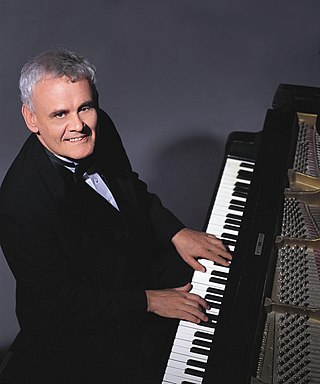
Terry Waldo is an American pianist, composer, and historian of early jazz, blues, and stride music, and is best known for his contribution to ragtime and his role in reviving interest in this form, starting in the 1970s. Says Wynton Marsalis in his introduction to Waldo's book: "He teaches Ragtime, he talks about Ragtime, he plays it, he embodies it, he lives it, and he keeps Ragtime alive." The book, This is Ragtime, published in 1976, grew out of the series of the same title that Waldo produced for NPR in 1974. Waldo is also a theatrical music director, producer, vocalist, and teacher. He is noted for his wit and humor in performance, as "a monologist in the dry, Middle Western tradition." Eubie Blake describes his first impression of Waldo's performance thus: "I died laughing...that's one of the hardest things to do—make people laugh. Terry's ability to do this, combined with his musicianship, actually reminds me of Fats Waller."
Thing or The Thing may refer to:
Joseph Miedzianowski is a former Chicago police officer who was sentenced to life in prison without the possibility of parole for racketeering and drug conspiracy. He is known as Chicago's "most corrupt cop" for his part in a cocaine sales ring with gang members and other corrupt police officers. During his 22-year police career he received 59 citations for valor and arrests and was publicly praised for his high number of drug and illegal weapon busts. During this time he was also secretly revealing the identity of undercover police officers to gang members, protecting drug organizations, distributing crack cocaine, and supplying gang members with ammunition.

