
A general election was held on Sunday, 21 March 2004 for members of the 11th Parliament of Malaysia. Voting took place in all 219 parliamentary constituencies of Malaysia, each electing one Member of Parliament to the Dewan Rakyat, the dominant house of Parliament. State elections also took place in 505 state constituencies in 12 out of 13 states of Malaysia on the same day.

General elections were held in Malawi on 20 May 2004 to elect a President and the National Assembly. The election had originally been scheduled for 18 May but was postponed for two days in response to opposition complaints of irregularities in the voter roll. By 22 May no results had been announced, leading to protests from the opposition and threats of disorder. On 25 May the Malawi Electoral Commission finally announced the results of the election. Bingu wa Mutharika, the candidate of the ruling United Democratic Front, was declared the winner of the presidential poll, whilst the Malawi Congress Party had won most seats in the National Assembly vote. Voter turnout was around 62%.
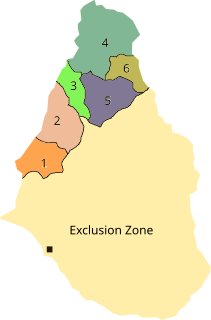
Elections in Montserrat take place within the framework of a multi-party democracy and a parliamentary system. The Legislative Assembly is directly elected, and a Chief Minister is selected by the party or coalition with the most seats in the Assembly.

The Anguilla United Front is an alliance of political parties in Anguilla. At elections, 21 February 2005, the alliance won 38.9% of popular votes and 4 out of 7 elected seats.

The 2005 Anguillan general election was held in Anguilla on 21 February 2005 to elect the seven elected seats in the House of Assembly. The Anguilla United Front, an alliance of the Anguilla National Alliance and the Anguilla Democratic Party, won the election retaining four of the elected seats.

The eleventh legislative assembly election of Tamil Nadu was held on 2 May 1996. The Dravida Munnetra Kazhagam (DMK) led front won the election and its leader M. Karunanidhi, became the chief minister.This was his fourth term in office. S.Balakrishnan, also known as So.Balakrishnan, of Tamil Maanila Congress (TMC) became the Leader of the Opposition. The incumbent Anna Dravida Munnetra Kazhagam (ADMK) government was defeated in a landslide with its leader and outgoing chief minister J. Jayalalitha losing the election from the Bargur constituency.

The 2003 Djiboutian parliamentary election took place in Djibouti on 10 January 2003 to elect the National Assembly of Djibouti. The ruling coalition of President Ismail Omar Guelleh won all 65 seats in the election defeating an opposition coalition.

A parliamentary election was held in Ethiopia on May 23, 2010.
Sandy Hill is a constituency of the Anguillan House of Assembly. The incumbent is Jerome Roberts of the Anguilla Progressive Party.
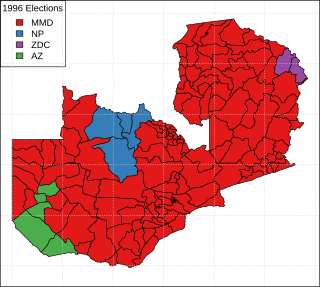
General elections were held in Zambia on 18 November 1996 to elect a President and National Assembly. They were boycotted by the main opposition party, the United National Independence Party, together with five other allied parties, following changes to the constitution which they failed to have reversed following a court challenge. The changes imposed a two-term limit on the presidency, required presidential candidates to be born to two Zambian citizens by birth or descent, and required National Assembly candidates to give up their chieftaincy. UNIP believed these changes were specifically aimed at their longtime leader, Kenneth Kaunda, whose parents were Malawian and had previously served as the country's first president from 1964 to 1991. The changes would have also excluded UNIP's vice president, a chief. Subsequently, the ruling Movement for Multi-Party Democracy won a comfortable victory in both elections, taking 131 of the 150 elected seats in the National Assembly, and its candidate, Frederick Chiluba, winning 73% of the vote in the presidential election.
A general election was held in Anguilla in March 1994. Despite a large drop in the Anguilla United Party's percentage of the vote, the loss of the Road North constituency to the Anguilla Democratic Party gave the second and third parties enough seats to form a coalition government. Hubert Hughes of the Anguilla United Party, who had stood on a pro-independence platform, was appointed Chief Minister following the election. The small Anguilla for Good Government party replaced PACE as the fourth party, but like its predecessor, failed to win representation. The future Chief Minister Osbourne Fleming held his seat of Sandy Hill as an independent.

The sixth Sarawak state election was held between Friday, 27 September and Saturday, 28 September 1991. This election elected 56 state representatives into the Sarawak State Assembly. This election saw 72.8% of the eligible voters to cast their votes.
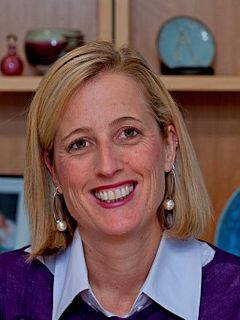
Elections to the Australian Capital Territory Legislative Assembly occurred on Saturday, 20 October 2012. The 11-year incumbent Labor Party, led by Chief Minister Katy Gallagher, won a fourth term over the main opposition Liberal Party, led by opposition leader Zed Seselja.
General elections were held in Anguilla on 22 April 2015. The result was a victory for the Anguilla United Front alliance, which won six of the seven elected seats in the House of Assembly. The ruling Anguilla United Movement failed to win a seat.
The People's Progressive Party (PPP) was a political party in Anguilla.

A Legislative Assembly election was held in 2016 for the 294 seats of the Vidhan Sabha in the state of West Bengal in India.The All India Trinamool Congress under Mamata Banerjee won 211 seats, and thus was reelected with an enhanced majority. Like in the 2011 election, the poll was held in six phases. The first phase was held in Naxalite-Maoist affected Red corridor areas with two polling dates: April 4 and April 11. The other phases were held on April 17, 21, 25, 30 and May 5. The result of the election was declared on May 19.
Elections in the Republic of India in 2018 included by-elections to the Lok Sabha, elections to the Rajya Sabha, elections to legislative assemblies of eight states and numerous other by-elections to state legislative assemblies, councils and local bodies.
Hon. Barbara Webster-Bourne is a former Speaker of the Anguilla House of Assembly, who held the post between 27 February 2010 and 11 May 2015.


