Related Research Articles

Biomedical engineering (BME) or medical engineering is the application of engineering principles and design concepts to medicine and biology for healthcare purposes. BME is also traditionally known as "bioengineering", but this term has come to also refer to biological engineering. This field seeks to close the gap between engineering and medicine, combining the design and problem-solving skills of engineering with medical biological sciences to advance health care treatment, including diagnosis, monitoring, and therapy. Also included under the scope of a biomedical engineer is the management of current medical equipment in hospitals while adhering to relevant industry standards. This involves making equipment recommendations, procurement, routine testing, and preventive maintenance, a role also known as a Biomedical Equipment Technician (BMET) or as clinical engineering.

A cardiac pacemaker, is a medical device that generates electrical impulses delivered by electrodes to cause the heart muscle chambers to contract and therefore pump blood; by doing so this device replaces and/or regulates the function of the electrical conduction system of the heart.
Cranial electrotherapy stimulation (CES) is a form of neurostimulation that delivers a small, pulsed, alternating current via electrodes on the head. CES is used with the intention of treating a variety of conditions such as anxiety, depression and insomnia. CES has been suggested as a possible treatment for headaches, fibromyalgia, smoking cessation, and opiate withdrawal, but there is little evidence of effectiveness for many of these conditions and the evidence for use in acute depression is not sufficient to justify it.

Transcutaneous electrical nerve stimulation is the use of electric current produced by a device to stimulate the nerves for therapeutic purposes. TENS, by definition, covers the complete range of transcutaneously applied currents used for nerve excitation although the term is often used with a more restrictive intent, namely to describe the kind of pulses produced by portable stimulators used to reduce pain. The unit is usually connected to the skin using two or more electrodes which are typically conductive gel pads. A typical battery-operated TENS unit is able to modulate pulse width, frequency and intensity. Generally TENS is applied at high frequency (>50 Hz) with an intensity below motor contraction or low frequency (<10 Hz) with an intensity that produces motor contraction. While the use of TENS has proved effective in clinical studies, there is controversy over which conditions the device should be used to treat.

Artificial ventilation is a means of assisting or stimulating respiration, a metabolic process referring to the overall exchange of gases in the body by pulmonary ventilation, external respiration, and internal respiration. It may take the form of manually providing air for a person who is not breathing or is not making sufficient respiratory effort, or it may be mechanical ventilation involving the use of a mechanical ventilator to move air in and out of the lungs when an individual is unable to breathe on their own, for example during surgery with general anesthesia or when an individual is in a coma or trauma.

The United States Federal Food, Drug, and Cosmetic Act is a set of laws passed by Congress in 1938 giving authority to the U.S. Food and Drug Administration (FDA) to oversee the safety of food, drugs, medical devices, and cosmetics. A principal author of this law was Royal S. Copeland, a three-term U.S. Senator from New York. In 1968, the Electronic Product Radiation Control provisions were added to the FD&C. Also in that year the FDA formed the Drug Efficacy Study Implementation (DESI) to incorporate into FD&C regulations the recommendations from a National Academy of Sciences investigation of effectiveness of previously marketed drugs. The act has been amended many times, most recently to add requirements about bioterrorism preparations.
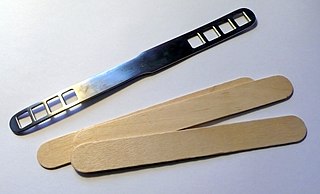
A medical device is any device intended to be used for medical purposes. Medical devices benefit patients by helping health care providers diagnose and treat patients and helping patients overcome sickness or disease, improving their quality of life. Significant potential for hazards are inherent when using a device for medical purposes and thus medical devices must be proved safe and effective with reasonable assurance before regulating governments allow marketing of the device in their country. As a general rule, as the associated risk of the device increases the amount of testing required to establish safety and efficacy also increases. Further, as associated risk increases the potential benefit to the patient must also increase.
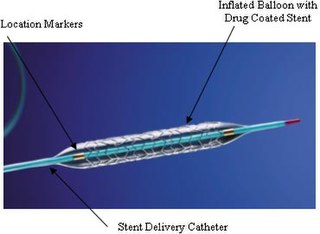
An implant is a medical device manufactured to replace a missing biological structure, support a damaged biological structure, or enhance an existing biological structure. Medical implants are man-made devices, in contrast to a transplant, which is a transplanted biomedical tissue. The surface of implants that contact the body might be made of a biomedical material such as titanium, silicone, or apatite depending on what is the most functional. In some cases implants contain electronics, e.g. artificial pacemaker and cochlear implants. Some implants are bioactive, such as subcutaneous drug delivery devices in the form of implantable pills or drug-eluting stents.
An investigational device exemption (IDE) allows an investigational device to be used in order to collect safety and effectiveness data required to support a premarket approval (PMA) application or a premarket notification [510(k)] submission to Food and Drug Administration (FDA). Clinical studies are most often conducted to support a PMA. Only a small percentage of 510(k)'s require clinical data to support the application. Investigational use also includes clinical evaluation of certain modifications or new intended uses of legally marketed devices. All clinical evaluations of investigational devices, unless exempt, must have an approved IDE before the study is initiated.

Vagus nerve stimulation (VNS) is a medical treatment that involves delivering electrical impulses to the vagus nerve. It is used as an add-on treatment for certain types of intractable epilepsy and treatment-resistant depression. Frequent side effects include coughing and shortness of breath. Serious side effects may include trouble talking and cardiac arrest.
Dr. Bill Dobelle was a biomedical researcher who developed experimental technologies that restored limited sight to blind patients, and also known for the impact he and his company had on the breathing pacemaker industry with the development of the only FDA approved device for phrenic nerve pacing. He was the former director of the Division of Artificial Organs at the Columbia-Presbyterian Medical Center.

The Center for Devices and Radiological Health (CDRH) is the branch of the United States Food and Drug Administration (FDA) responsible for the premarket approval of all medical devices, as well as overseeing the manufacturing, performance and safety of these devices. The CDRH also oversees the radiation safety performance of non-medical devices which emit certain types of electromagnetic radiation, such as cellular phones and microwave ovens.
A hiccup is an involuntary contraction of the diaphragm that may repeat several times per minute. The hiccup is an involuntary action involving a reflex arc. Once triggered, the reflex causes a strong contraction of the diaphragm followed about a quarter of a second later by closure of the vocal cords, which results in the "hic" sound.

Diaphragm pacing,, is the rhythmic application of electrical impulses to the diaphragm to provide artificial ventilatory support for respiratory failure or sleep apnea. Historically, this has been accomplished through the electrical stimulation of a phrenic nerve by an implanted receiver/electrode, though today an alternative option of attaching percutaneous wires to the diaphragm exists.
The United States Food and Drug Administration Modernization Act of 1997 (FDAMA) amended the Federal Food, Drug, and Cosmetic Act. This act is related to the regulation of food, drugs, devices, and biological products by the FDA. These changes were made in order to recognize the changes in the way the FDA would be operating in the 21st century. The main focus of this is the acknowledgment in the advancement of technological, trade, and public health complexities.
Central sleep apnea (CSA) or central sleep apnea syndrome (CSAS) is a sleep-related disorder in which the effort to breathe is diminished or absent, typically for 10 to 30 seconds either intermittently or in cycles, and is usually associated with a reduction in blood oxygen saturation. CSA is usually due to an instability in the body's feedback mechanisms that control respiration. Central sleep apnea can also be an indicator of Arnold–Chiari malformation.
Avita Medical is a clinical and commercial company developing and marketing a range of respiratory and regenerative products. The first regenerative medicine product brought to the market by Avita Medical was ReCell spray-on skin for the treatment of burns. The two latest products are ReNovaCell, for Aesthetics and Plastic applications including skin trauma, and ReGenerCell for the treatment of chronic wounds. The Avita Medical regenerative product range is currently marketed in Europe, the Middle East, Africa (EMEA) and Australia.
Neuromodulation is "the alteration of nerve activity through targeted delivery of a stimulus, such as electrical stimulation or chemical agents, to specific neurological sites in the body". It is carried out to normalize – or modulate – nervous tissue function. Neuromodulation is an evolving therapy that can involve a range of electromagnetic stimuli such as a magnetic field (rTMS), an electric current, or a drug instilled directly in the subdural space. Emerging applications involve targeted introduction of genes or gene regulators and light (optogenetics), and by 2014, these had been at minimum demonstrated in mammalian models, or first-in-human data had been acquired. The most clinical experience has been with electrical stimulation.
Medical device design, as the name suggests, refers to the design of medical devices. Due to the large amount of regulations in the industry, the design of medical devices presents significant challenges from both engineering and legal perspectives.
Bioelectromagnetic medicine deals with the phenomenon of resonance signaling and discusses how specific frequencies modulate cellular function to restore or maintain health. Such electromagnetic (EM) signals are then called "medical information" that is used in health informatics.
References
- ↑ U.S. Food and Drug Administration. "Premarket Approval (PMA)"
- 1 2 "Diaphragm Pacemaker, Phrenic Nerve Stimulator - Avery Biomedical". www.averybiomedical.com.
- ↑ "Premarket Approval (PMA)". US FDA. United States Food and Drug Administration. Retrieved 18 January 2021.
- ↑ Khong, Peter; Lazzaro, Amanda; Mobbs, Ralph (2010). "Phrenic nerve stimulation: The Australian experience". Journal of Clinical Neuroscience. 17: 205–208. doi:10.1016/j.jocn.2009.06.012.
- ↑ "UpToDate". www.uptodate.com.