Related Research Articles
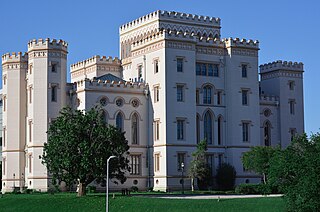
Baton Rouge is the capital city of the U.S. state of Louisiana. Located on the eastern bank of the Mississippi River, it had a population of 227,470 as of 2020; it is the seat of Louisiana's most populous parish (county-equivalent), East Baton Rouge Parish, and the center of Louisiana's second-largest metropolitan area and city, Greater Baton Rouge.
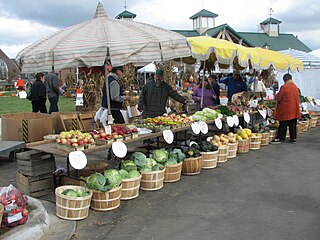
A farmers' market is a physical retail marketplace intended to sell foods directly by farmers to consumers. Farmers' markets may be indoors or outdoors and typically consist of booths, tables or stands where farmers sell their produce, live animals and plants, and sometimes prepared foods and beverages. Farmers' markets exist in many countries worldwide and reflect the local culture and economy. The size of the market may be just a few stalls or it may be as large as several city blocks. Due to their nature, they tend to be less rigidly regulated than retail produce shops.

Street food is food sold by a hawker or vendor on a street or at another public place, such as a market, fair, or park. It is often sold from a portable food booth, food cart, or food truck and is meant for immediate consumption. Some street foods are regional, but many have spread beyond their regions of origin. Most street foods are classified as both finger food and fast food and are typically cheaper than restaurant meals. The types of street food vary between regions and cultures in different countries around the world. According to a 2007 study from the Food and Agriculture Organization, 2.5 billion people eat street food every day. While some cultures consider it to be rude to walk on the street while eating, a majority of middle- to high-income consumers rely on the quick access and cheap service of street food for daily nutrition and job opportunities, especially in developing countries.

WAFB is a television station in Baton Rouge, Louisiana, affiliated with CBS. It is owned by Gray Television alongside low-power, Class A MyNetworkTV affiliate WBXH-CD. The two stations share studios on Government Street in downtown Baton Rouge; WAFB's transmitter is located on River Road near the city's Riverbend section.
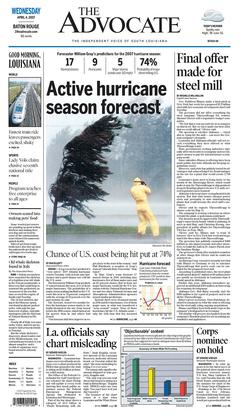
The Advocate is Louisiana's largest daily newspaper. Based in Baton Rouge, it serves the southern portion of the state. Separate editions for New Orleans, The Times-Picayune | The New Orleans Advocate, and for Acadiana, The Acadiana Advocate, are published. It also publishes gambit, about New Orleans food, culture, events, and news, and weekly entertainment magazines: Red in Baton Rouge and Lafayette, and Beaucoup in New Orleans.

Louisiana Highway 1 (LA 1) is a state highway in Louisiana. At 431.88 miles (695.04 km), it is the longest numbered highway of any class in Louisiana. It runs diagonally across the state, connecting the oil and gas fields near the island of Grand Isle with the northwest corner of the state, north of Shreveport.

Sprouts Farmers Market, Inc., is a supermarket chain headquartered in Phoenix, Arizona. The grocer offers a wide selection of natural and organic foods, including fresh produce, bulk foods, vitamins and supplements, packaged groceries, meat, poultry, seafood, deli, baked goods, dairy products, frozen foods, natural body care, and household items. Sprouts employs 35,000 workers and operates more than 400 stores in 23 states.

A marketplace, market place, or just market, is a location where people regularly gather for the purchase and sale of provisions, livestock, and other goods. In different parts of the world, a marketplace may be described as a souk, bazaar, a fixed mercado (Spanish), itinerant tianguis (Mexico), or palengke (Philippines). Some markets operate daily and are said to be permanent markets while others are held once a week or on less frequent specified days such as festival days and are said to be periodic markets. The form that a market adopts depends on its locality's population, culture, ambient, and geographic conditions. The term market covers many types of trading, such as market squares, market halls, food halls, and their different varieties. Thus marketplaces can be both outdoors and indoors, and in the modern world, online marketplaces.

Istrouma High School is an accredited public school located in Baton Rouge, Louisiana, United States. It was founded in 1917, and is located in East Baton Rouge Parish. Its name is a local Indian word meaning "red stick." Red stick is also the English language translation of the French words baton rouge. The area of north Baton Rouge where the school is located is also known as the Istrouma area.
Istrouma Area Council serves Scouts in both Louisiana and Mississippi, primarily in the Greater Baton Rouge Area and Florida Parishes. Specifically, the council includes Scouts from the following parishes: Ascension, East Baton Rouge, West Baton Rouge, East Feliciana, West Feliciana, Iberville, Pointe Coupee, St. Helena, St. James, St. Tammany, Washington, and Tangipahoa. Wilkinson County is the sole Mississippi county in the council.
Rouses Markets is a chain of grocery supermarkets in the U.S. states of Louisiana, Alabama and Mississippi.
The Portland Farmers Market is a farmers market in Portland, Maine, U.S., which has been in continuous operation since 1768. Since 1990, the market has been held place year-round. From May to November, it is held on Wednesdays in Monument Square and on Saturdays in Deering Oaks Park. From December to April, the winter market is held on Saturdays in the former Catherine McAuley High School building.
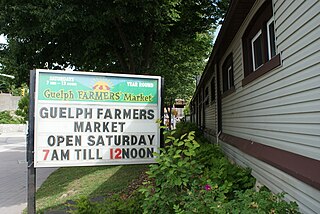
The Guelph Farmers' Market has served as a cultural and commercial anchor in downtown Guelph since the first Market House was built in 1827. After 180 years it is still going strong and remains a popular stop on Saturday mornings for both locals and visitors. The Guelph Farmers' Market's website proclaims "Buy Local - Buy Fresh", reflecting the growing trend to "eat where you live" which is supported by local, national, international organizations and popular opinion.

The Farmers' Market Nutrition Program (FMNP) is a federal assistance program in the United States associated with the Special Supplemental Nutrition Program for Women, Infants and Children that provides fresh, unprepared, locally grown fruits and vegetables and nutrition education to WIC participants. Women, infants and children that have been certified to receive WIC program benefits or who are on a waiting list for WIC certification are eligible to participate in the FMNP.
Florida Certified Organic Growers and Consumers, also known as Florida Organic Growers or FOG, is a non-profit organization founded in 1987. It is classified as a 501(c) corporation. One of the main facets of FOG is Quality Certification Services, a program that extends through 30 states and 14 countries. FOG is also concerned with community outreach and education in order to promote healthy organic lifestyles and social equity.

Red Stick Roller Derby (RSRD) is a women's flat track roller derby league based in Baton Rouge, Louisiana. Founded in 2007, the league currently consists of two teams which compete against teams from other leagues. Red Stick is a member of the Women's Flat Track Derby Association (WFTDA).

The Central New York Regional Market, located on the north side of Syracuse, New York, is a State Authority (public), retail-wholesale, terminal food market complex. Although a State Authority, the Market has not received any public funding for over 20 years. In 2010, the market estimated that it had a hand in hosting sales of nearly $70 million per year in farm products.
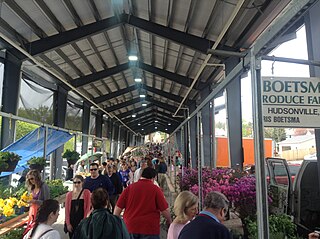
Fulton Street Farmers Market is a farmers market that opened in 1922 in the Grand Rapids, Michigan area.
Farmers' markets are markets in which producers sell directly to consumers. While farmers' markets do not have a measurable impact on the United States economy as a whole, many studies have found that farmers' markets impact state and municipal economies as well as vendors, local businesses, and consumers. These impacts are measured using the IMPLAN Input-Output Model and the Sticky Economic Evaluation Device (SEED), in addition to other methods. The economic impacts that are most frequently measured include effects on the revenue and income of local growers and local businesses, the effects on job creation, and the effects on other sectors of state and local economies. Some obstacles that may reduce impact or create negative economic effects include over-saturation, socioeconomic barriers, the opportunity cost of farmers' markets, and the projected unsustainable growth of farmers' markets in the United States.

In August 2016, prolonged rainfall from an unpredictable storm resulted in catastrophic flooding in the state of Louisiana, United States; thousands of houses and businesses were submerged. Louisiana's governor, John Bel Edwards, called the disaster a "historic, unprecedented flooding event" and declared a state of emergency. Many rivers and waterways, particularly the Amite and Comite rivers, reached record levels, and rainfall exceeded 20 inches (510 mm) in multiple parishes.
References
- 1 2 3 "BREADA" Archived 2013-08-30 at the Wayback Machine 2009. BREADA. 12 Sept. 2012.
- 1 2 3 4 5 6 7 Blitzer, Carol Anne. "Alvarez moves from volunteer to head of BREADA" The Advocate. 2011. Web. 29 Oct. 2012.
- 1 2 3 4 5 6 7 "Red Stick Farmers Market" 2012. BREADA. 19 Sept. 2012.
- 1 2 3 4 5 6 Richardson, Maggie Heyn. "Growing local" Archived 2013-01-18 at archive.today Greater Baton Rouge Business Report. 23 July 2012. Web. 29 Oct. 2012.
- 1 2 Colvin, Beth. "Farmers Market Listings for Nov. 5" The Advocate. 2011. Web. 6 Nov. 2011.
- ↑ Calder, Chad. "Thursday farmers market changing location on Perkins." The Advocate. 21 Apr. 2012. Web. 9 Nov. 2012.
- 1 2 3 4 Richardson, Maggie Heyn. "Fresh Market, New Look." Archived 2013-01-16 at archive.today 31 Oct. 2012. 225 Magazine. 19 Nov. 2012.
- 1 2 "Main Street Market" 2012. BREADA. 12 Sept. 2012
- ↑ "Main Street Market Shops" Archived 2013-01-05 at archive.today 2012. VisitBatonRouge.com. 19 Nov. 2012.
- 1 2 3 Calder, Chad. "Downtown Market Redesign Planned."The Advocate. 18 Sept. 2012. Web. 24 Sept. 2012.
- 1 2 McDaniel, Ferris. "Main Street Market Gets Facelift." The Daily Reveille. 19 Sept. 2012. Web. 28 Oct. 2012
- ↑ Ward, Steven. "Website to push for healthier living." The Advocate. 28 Sept. 2012. Web. 9 Nov. 2012.
- 1 2 Supplemental Nutrition Assistance Program at Farmers Markets: A How-To Handbook. 2012. USDA. Web. 22 Nov. 2012.
- ↑ Buy Fresh, Buy Local. 2012. Web. 21 Nov. 2012.
- ↑ "Farmers Market offers shoppers opportunity to help Isaac Victims." The Advocate. 6 Sept. 2012.
