
The Channel Islands are an archipelago in the English Channel, off the French coast of Normandy. They are divided into two Crown Dependencies: the Bailiwick of Jersey, which is the largest of the islands; and the Bailiwick of Guernsey, consisting of Guernsey, Alderney, Sark, Herm and some smaller islands. Historically, they are the remnants of the Duchy of Normandy. Although they are not part of the United Kingdom, the UK is responsible for the defence and international relations of the islands as it is for the other Crown Dependency, the Isle of Man, and the British Overseas Territories. The Crown Dependencies are neither members of the Commonwealth of Nations, nor part of the European Union. They have a total population of about 171,916, and the bailiwicks' capitals, Saint Helier and Saint Peter Port, have populations of 33,500 and 18,207 respectively.

Politics of the Bailiwick of Guernsey take place in a framework of a parliamentary representative democratic British Crown dependency.

The Bailiwick of Jersey is a British Crown dependency, unitary state and parliamentary representative democracy and constitutional monarchy. Since 2005, Jersey has a system of ministerial government, with a Chief Minister and Council of Ministers appointed from among the 49 elected members of the States Assembly. The Bailiff is chief judge, President of the States Assembly, and civic head. The current monarch and head of state is King Charles III.

A bailiff is a manager, overseer or custodian – a legal officer to whom some degree of authority or jurisdiction is given. There are different kinds, and their offices and scope of duties vary.
The Crown Dependencies are three offshore island territories in the British Islands that are self-governing possessions of the British Crown: the Bailiwick of Guernsey and the Bailiwick of Jersey, both located in the English Channel and together known as the Channel Islands, and the Isle of Man in the Irish Sea between Great Britain and Ireland.
The Bailiff is the chief justice in each of the Channel Island bailiwicks of Guernsey and Jersey, also serving as president of the legislature and having ceremonial and executive functions. Each bailiwick has possessed its own bailiff since the islands were divided into two jurisdictions in the 13th century. The bailiffs and deputy bailiffs are appointed by the Crown on the advice of the Secretary of State for Justice and may hold office until retirement age.
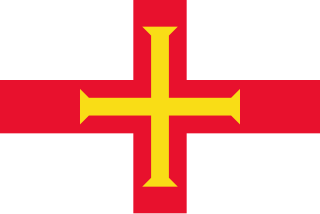
The Bailiwick of Guernsey is a self-governing British Crown Dependency off the coast of Normandy, France, comprising several of the Channel Islands. It has a total land area of 78 square kilometres (30 sq mi) and an estimated total population of 67,334.
The title Bailiff of Guernsey has been used since at least the 13th century and indicated the leading citizen of Guernsey.
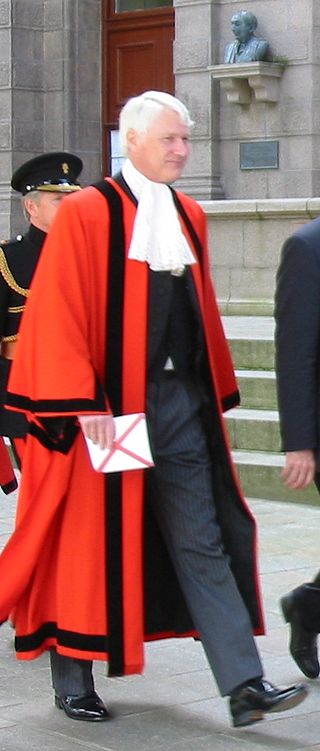
The Bailiff of Jersey has several roles:
A bailiwick is usually the area of jurisdiction of a bailiff, and once also applied to territories in which a privately appointed bailiff exercised the sheriff's functions under a royal or imperial writ.
The word seneschal can have several different meanings, all of which reflect certain types of supervising or administering in a historic context. Most commonly, a seneschal was a senior position filled by a court appointment within a royal, ducal, or noble household during the Middle Ages and early Modern period – historically a steward or majordomo of a medieval great house. In a medieval royal household, a seneschal was in charge of domestic arrangements and the administration of servants, which, in the medieval period particularly, meant the seneschal might oversee hundreds of laborers, servants and their associated responsibilities, and have a great deal of power in the community, at a time when much of the local economy was often based on the wealth and responsibilities of such a household.
The jurats are lay people in Guernsey and Jersey who act as judges of fact rather than law, though they preside over land conveyances and liquor licensing. In Alderney, however, the jurats are judges of both fact and law in both civil and criminal matters.
A bailiff was the king's administrative representative during the ancien régime in northern France, where the bailiff was responsible for the application of justice and control of the administration and local finances in his bailiwick.

Sir Philip Martin Bailhache KC is a Jersey politician and lawyer.

The lieutenant governor of Jersey, properly styled the lieutenant-governor of Jersey, is the representative of the British monarch in the Bailiwick of Jersey, a dependency of the British Crown.

The law of Jersey has been influenced by several different legal traditions, in particular Norman customary law, English common law and modern French civil law. The Bailiwick of Jersey is a separate jurisdiction from that of the United Kingdom, and is also distinct from that of the other Channel Islands such as Guernsey, although they do share some historical developments. Jersey's legal system is 'mixed' or 'pluralistic', and sources of law are in French and English languages, although since the 1950s the main working language of the legal system is English.
The Courts of Guernsey are responsible for the administration of justice in the Bailiwick of Guernsey, one of the Channel Islands. They apply the law of the Island, which is a mixture of customary law dating back as far as the 10th century and legislation passed by the legislature, the States of Deliberation.
The Law of Guernsey originates in Norman customary law, overlaid with principles taken from English common law and French law, as well as from statute law enacted by the competent legislature(s) – usually, but not always, the States of Guernsey.
A bailiff was a high official in the Knights Hospitaller who directed one of its bailiwicks abroad or one of the national associations ("tongues") at its headquarters.
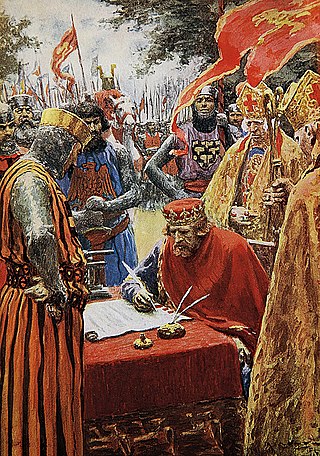
The Bailiwick of Jersey has an unwritten constitution arising from the Treaty of Paris (1259). When Henry III and the King of France came to terms over the Duchy of Normandy, the Norman mainland the suzerainty of the King of France. The Channel Islands however remained loyal to the British crown due to the loyalties of its Seigneurs. But they were never absorbed into the Kingdom of England by any Act of Union and exist as "peculiars of the Crown".

