
ʿAlī ibn Muḥammad al-Hādī was a descendant of the Islamic prophet Muhammad and the tenth Imam in Twelver Shia, succeeding his father, Muhammad al-Jawad. Born in Medina in 828, Ali is known with the titles al-Hādī and al-Naqī. After the death of his father in 835, most followers of al-Jawad readily accepted the imamate of Ali, who was still a child at the time. Drawing parallels with the story of young Jesus in the Quran, Twelver sources attribute an exceptional innate knowledge to Ali which qualified him for the imamate despite his young age.
Muhammad ibn Hasan al-Mahdi is believed by the Twelver Shia to be the last of the Twelve Imams and the eschatological Mahdi, who will emerge in the end of time to establish peace and justice and redeem Islam.
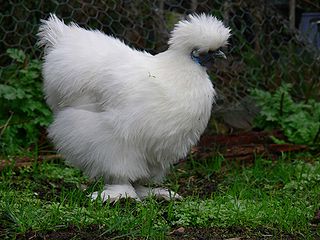
The Silkie is a breed of chicken named for its atypically fluffy plumage, which is said to feel like silk and satin. The breed has several other unusual qualities, such as black skin and bones, blue earlobes, and five toes on each foot, whereas most chickens have only four. They are often exhibited in poultry shows, and also appear in various colors. In addition to their distinctive physical characteristics, Silkies are well known for their calm and friendly temperament. It is among the most docile of poultry. Hens are also exceptionally broody, and care for young well. Although they are fair layers themselves, laying only about three eggs a week, they are commonly used to hatch eggs from other breeds and bird species due to their broody nature. Silkie chickens have been bred to have a wide variety of colors which include but are not limited to: Black, Blue, Buff, Partridge, Splash, White, Lavender, Paint and Porcelain.

Avian influenza, also known as avian flu, is a bird flu caused by the influenza A virus, which can infect people. It is similar to other types of animal flu in that it is caused by a virus strain that has adapted to a specific host. The type with the greatest risk is highly pathogenic avian influenza (HPAI).
In biochemistry, hydrolases constitute a class of enzymes that commonly function as biochemical catalysts that use water to break a chemical bond:

Ubiquitin carboxy-terminal hydrolase L1 is a deubiquitinating enzyme.

Balaji Vishwanath Bhat (1662–1720) was the first of a series of hereditary Peshwas hailing from the Bhat family who gained effective control of the Maratha Empire and the Mughal vassals of the Marathas during the early 18th century. Balaji Vishwanath assisted a young Maratha king Shahu to consolidate his grip on a kingdom that had been racked by civil war and persistently intruded on by the Mughals under Aurangzeb. He was called the Second Founder of the Maratha State. He secured a grant from the Mughal court that confirmed Shahu as the legitimate Mughal vassal, at the expense of his rival Sambhaji. Later, his son Bajirao I became the Peshwa.
Narjis is believed by the Twelvers to have been the mother of their Hidden Imam, Muhammad al-Mahdi. His birth is said to have been providentially concealed by his father, Hasan al-Askari, out of fear of Abbasid persecution as they sought to eliminate an expected child of the eleventh Imam, whom persistent rumors described as a savior. After the death of his father in 260 AH, al-Mahdi is believed by the Twelvers to have entered a state of occultation which continues until his rise in the end of time to establish peace and justice on earth. The origin of Narjis is recorded as the Byzantine or Nubia and her tomb is believed to be located in the al-Askari shrine in Samarra, Iraq.

In biochemistry, glycoside hydrolases are a class of enzymes which catalyze the hydrolysis of glycosidic bonds in complex sugars. They are extremely common enzymes, with roles in nature including degradation of biomass such as cellulose (cellulase), hemicellulose, and starch (amylase), in anti-bacterial defense strategies, in pathogenesis mechanisms and in normal cellular function. Together with glycosyltransferases, glycosidases form the major catalytic machinery for the synthesis and breakage of glycosidic bonds.

Boi is a residential town and one of the 51 union councils of Abbottabad District in the Khyber Pakhtunkhwa province of Pakistan.

Ataur Rahman Khan was a Bangladeshi lawyer, politician and writer, and served as Chief Minister of East Pakistan from 1 September 1956 – March 1958, and as the Prime Minister of Bangladesh from 30 March 1984 to 9 July 1986.
Sri Mohiddin Badsha II, was a scholar in Telugu, Arabic, Urdu, Sanskrit, Parsee and English. Son of Sri Brahmarishi Hussain Sha and Ajeemunnisa Begum. He married Fatima Jaharunnisa Begum on May 19, 1963. He had six sons and three daughters. He took over the Lordship of Peetham as 8th Head on September 25, 1981. Due to the old age and ill health of his father Brahmarishi Hussain Sha Sathguru and as a future Head of the Institution, he had undertaken the preceptive of the Peetham's philosophy from 1969.He delivered speeches at many villages of Andhra Pradesh to promote Jnana yoga.

Leukotriene A4 hydrolase, also known as LTA4H is a human gene. The protein encoded by this gene is a bifunctional enzyme which converts leukotriene A4 to leukotriene B4 and acts as an aminopeptidase.

In enzymology, a glucosylceramidase (EC 3.2.1.45) is an enzyme that catalyzes the chemical reaction
Peeran is a village and union council of Mansehra District in the Khyber-Pakhtunkhwa province of Pakistan. It is located in District Mansehra. It is in an area affected by the 2005 Kashmir earthquake.
Mohammad Tahir Hussain Khan, better known as Tahir Hussain, was an Indian film producer, screenwriter, actor and film director known for his works in Hindi cinema.
Alipur and Farash are two separate villages which are centuries old, whereas "Farash Town" is a settlement on the land acquired by the Capital Development Authority from the people of surrounding villages like Farash and Punjgran. Alipur and Farash, in Islamabad, are located on the Lehtrar road approx. 17km from Rawal lake and 9km from Chak Shahzad. Farash is a Capital Development Authority approved model urban shelter scheme which came into being in 1990. Homeless people from Bari Imam and other Kachi Abadis of Islamabad were settled in Farash.
Sharafat Hussain Khan was an Indian classical vocalist from the Agra Gharana.
Sawar Muhammad Hussain Janjua, was a Pakistani soldier and the 8th recipient of Pakistan's highest military award, the Nishan-e-Haider, and the only soldier of the Pakistan Armoured Corps to be given this award. He is known for destroying 16 tanks with a Recoilless rifle in the Indo-Pakistani War of 1971.
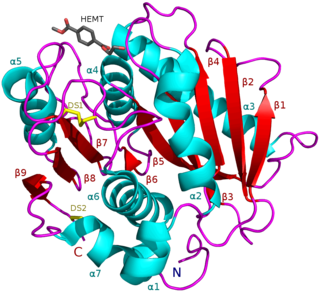
PETases are an esterase class of enzymes that catalyze the breakdown (via hydrolysis) of polyethylene terephthalate (PET) plastic to monomeric mono-2-hydroxyethyl terephthalate (MHET). The idealized chemical reaction is:


