
Midwifery is the health science and health profession that deals with pregnancy, childbirth, and the postpartum period, in addition to the sexual and reproductive health of women throughout their lives. In many countries, midwifery is a medical profession. A professional in midwifery is known as a midwife.
A home birth is a birth that takes place in a residence rather than in a hospital or a birthing center. They may be attended by a midwife, or lay attendant with experience in managing home births. Home birth was, until the advent of modern medicine, the de facto method of delivery. The term was coined in the middle of the 19th century as births began to take place in hospitals.
Gísli Pálsson is an Icelandic anthropologist and academic. He is a Professor Emeritus of Anthropology at the University of Iceland, formerly a professor at the University of Oslo.
Feminist anthropology is a four-field approach to anthropology that seeks to transform research findings, anthropological hiring practices, and the scholarly production of knowledge, using insights from feminist theory. Simultaneously, feminist anthropology challenges essentialist feminist theories developed in Europe and America. While feminists practiced cultural anthropology since its inception, it was not until the 1970s that feminist anthropology was formally recognized as a subdiscipline of anthropology. Since then, it has developed its own subsection of the American Anthropological Association – the Association for Feminist Anthropology – and its own publication, Feminist Anthropology. Their former journal Voices is now defunct.
Childbirth Connection, formerly known as the Maternity Center Association, is an American national nonprofit organization that works to improve the quality of maternity care through research, education, advocacy, and policy. Childbirth Connection promotes safe, effective evidence-based maternity care and is a voice for the interests of childbearing women and families.

A Pinard horn is a type of stethoscope used to listen to the heart rate of a fetus during pregnancy. It is a hollow horn, often made of wood or metal, about 200 millimetres (7.9 in) long. It functions similarly to an ear trumpet by amplifying sound. The user holds the wide end of the horn against the pregnant woman's abdomen, and listens through the other end.
Carolyn Sargent is an American medical anthropologist who is Professor Emerita of Sociocultural Anthropology and of Women, Gender, and Sexuality Studies at Washington University in St. Louis. Sargent was the director of women's studies at Southern Methodist University from 2000-2008. Sargent served as president of the Society for Medical Anthropology for 2008-2010 and 2011-2012.
Mary LeCron Foster was an American anthropological linguist, who spent most of her working life at the Department of Anthropology at the University of California, Berkeley. Foster carried out graduate work in anthropology under the direction of Ruth Benedict. The influence of Franz Boas, whom she also knew at Columbia, may be seen in Foster's interests in symbolism and language origins. In addition to writing grammars of Sierra Popoluca and Purépecha, she published several articles purporting to reconstruct spoken Primordial Language (PL). PL, she maintained, was constructed out of speech sounds she dubbed ‘phememes’ that were at the same time roots, whose meaning was motivated by the shaping and movement of the vocal tract.
Marsden Wagner, was a perinatologist and perinatal epidemiologist from California who served as a Director of Maternal and Child Health for the California State Health Department, Director of the University of Copenhagen-UCLA Health Research Center, and Director of Women's and Children's Health for the World Health Organization. He was an outspoken supporter of midwifery.
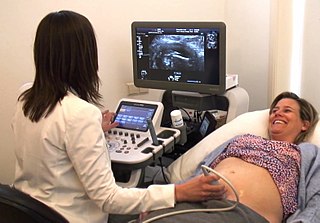
A midwife is a health professional who cares for mothers and newborns around childbirth, a specialization known as midwifery.
Byron Joseph Good is an American medical anthropologist primarily studying mental illness. He is currently on the faculty of Harvard University, where he is Professor of Medical Anthropology at Harvard Medical School and Professor of Cultural Anthropology in the Department of Anthropology.
Rayna Rapp is a professor and associate chair of anthropology at New York University, specializing in gender and health; the politics of reproduction; science, technology, and genetics; and disability in the United States and Europe. She has contributed over 80 published works to the field of anthropology, independently, as a co-author, editor, and foreword-writing, including Robbie Davis-Floyd and Carolyn Sargent's Childbirth and Authoritative Knowledge. Her 1999 book, Testing Women, Testing the Fetus: the Social Impact of Amniocentesis in America, received multiple awards upon release and has been praised for providing "invaluable insights into the first generation of women who had to decide whether or not to terminate their pregnancies on the basis of amniocentesis result". She co-authored many articles with Faye Ginsburg, including Enabling Disability: Rewriting Kinship, Reimagining Citizenship, a topic the pair has continued to research.
Sobada is a therapeutic massage that was developed in the Central and South America. Sobada is divided into two general categories. One type of sobada, which is done by midwives, helps with the reproductive cycle when a woman is pregnant. The second type of sobada, which is performed by los sobadores, or people who specialize in sobada, helps to reposition organs or parts of the body that are considered out of alignment. Sobada is part of the system of values and is part of the local language. There is a known difference between what sobada is and what a light massage is.
Birth as an American Rite of Passage is a book written by Robbie Davis-Floyd and published in 1992. It combines anthropology and first-hand accounts from mothers and doctors into a critical analysis of childbirth in America from a feminist perspective.
Childbirth and Authoritative Knowledge: Cross-Cultural Perspectives is a collection of anthropological essays that study birth and authoritative knowledge across sixteen different cultures that was first published in 1998 in the Journal of Gender Studies. It "extends and enriches" anthropologist Brigitte Jordan's work in the anthropology of birth. In 2003, it won the Council on Anthropology and Reproduction book award.
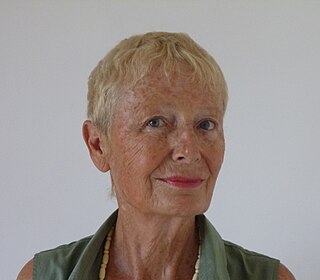
Brigitte Jordan was a German-American professor, scientist, and consultant who was described as the midwife to the "Anthropology of Birth". She attended Sacramento State College where she received her bachelor's and master's degrees, and later attended the University of California, Irvine where she completed her PhD.
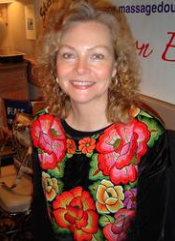
Robbie Davis-Floyd is an American cultural, medical, and reproductive anthropologist, researcher, author, and international speaker primarily known for her research on childbirth, midwifery, and obstetrics. She chose to study women's birth experiences due to her own birth experiences and espouses the viewpoint that midwives play an important role in safeguarding positive outcomes for women giving birth. Beginning in 1983, she has given over 1000 presentations at universities and childbirth, midwifery, and obstetric conferences around the world.
Elizabeth Davis is an author, women's health care specialist, educator, consultant, and Certified Professional Midwife (CPM). She is a resident of Sebastopol, California and a mother of three children. Since 1977, Davis has pioneered a professional path for midwives in the United States while educating women around the world. Davis is globally active as an expert on midwifery and reproductive health issues. She has been involved with midwifery education, legalization, and the battle for professional autonomy. She lectures on reproductive rights, sexuality, and healing birth trauma.
Serena Nanda is an American author, anthropologist, and professor emeritus. She received the Ruth Benedict Prize in 1990 for her monograph, Neither Man nor Woman: The Hijras of India.
Solitary birth is the relatively unusual circumstance of human women delivering babies alone. Solitary birth is typically unplanned and thus is distinct from the unassisted birth movement.
