Related Research Articles

A roller coaster is a type of amusement ride employing a form of elevated railroad track that carries passengers on a train through tight turns, steep slopes, and other elements designed to produce a thrilling experience. Trains consist of open cars connected in a single line, and the rides are often found in theme parks around the world. Roller coasters first appeared in the 17th century, and LaMarcus Adna Thompson obtained one of the first known patents for a roller coaster design in 1885, based on the Switchback Railway which opened a year earlier at Coney Island.

A steel roller coaster is a roller coaster that is defined by having a track made of steel. Steel coasters have earned immense popularity in the past 50 years throughout the world. Incorporating tubular steel track and polyurethane-coated wheels, the steel roller coasters can provide a taller, smoother, and faster ride with more inversions than a traditional wooden roller coaster.

A roller coaster inversion is a roller coaster element in which the track turns riders upside-down and then returns them to an upright position. Early forms of inversions were circular in nature and date back to 1848 on the Centrifugal railway in Paris. These vertical loops produced massive g-force that was often dangerous to riders. As a result, the element eventually became non-existent with the last rides to feature the looping inversions being dismantled during the Great Depression. In 1975, designers from Arrow Development created the corkscrew, reviving interest in the inversion during the modern age of steel roller coasters. Elements have since evolved from simple corkscrews and vertical loops to more complex inversions such as Immelmann loops and cobra rolls. The Smiler at Alton Towers holds the world record for the number of inversions on a roller coaster with 14.

Arrow Dynamics was an American manufacturing and engineering company that specialized in designing and building amusement park rides, especially roller coasters. Based in Clearfield, Utah, the company was the successor to Arrow Development (1946–1981) and Arrow Huss (1981–1986), which were responsible for several influential advancements in the amusement and theme park industries. Among the most significant was tubular steel track, which provided a smoother ride than the railroad style rails commonly used prior to the 1960s on wooden roller coasters. The Matterhorn Bobsleds at Disneyland, built in 1959, was Arrow's first roller coaster project.
Arrow Development was an amusement park ride and roller coaster design and manufacturing company, incorporated in California on November 16, 1945, and based in Mountain View. It was founded by Angus "Andy" Anderson, Karl Bacon, William Hardiman and Edgar Morgan. Originally located at 243 Moffett Boulevard, it moved to a larger facility at 1555 Plymouth Street after Walt Disney Productions purchased one third of the business in 1960. Arrow also had offices at 820 Huff Avenue.

Matterhorn Bobsleds are a pair of intertwined steel roller coasters at Disneyland in Anaheim, California. It is modeled after the Matterhorn, a mountain in the Alps on the border between Switzerland and Italy. It is the first known tubular steel track roller coaster. Located on the border between Tomorrowland and Fantasyland, it employs forced perspective to seem larger.
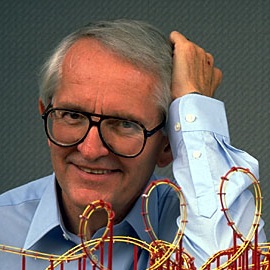
Ronald Valentine Toomer was an American roller coaster designer credited for designing 93 roller coasters around the world. He graduated from the University of Nevada, Reno in 1961 with a degree in mechanical engineering and was a part of the design team responsible for the Apollo spacecraft heat shield.

Expedition Everest – Legend of the Forbidden Mountain, also known as Expedition Everest, is a steel roller coaster built by Vekoma at Disney's Animal Kingdom at the Walt Disney World Resort in Lake Buena Vista, Florida. The ride is themed around the Yeti protecting the Forbidden Mountain next to Mount Everest. It is the only roller coaster at Disney's Animal Kingdom, and the tallest roller coaster at any Disney theme park.

Nara Dreamland, or just simply Dreamland, was a theme park near Nara, Japan, heavily inspired by Disneyland in California. It opened in 1961 and was in continuous operation until its permanent closure in 2006 as a result of falling attendance. The park was left abandoned until it was demolished between October 2016 and December 2017.

Seabreeze Amusement Park (Seabreeze) is a historic family amusement park located in Irondequoit, New York, a suburb of Rochester, where Irondequoit Bay meets Lake Ontario. According to the National Amusement Park Historical Association (NAPHA), Seabreeze is the fourth-oldest operating amusement park in the United States and the thirteenth-oldest operating amusement park in the world, having opened in 1879. The park features roller coasters, a variety of other rides, a midway, and a water park.
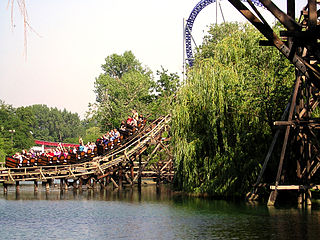
Cedar Creek Mine Ride is a mine train roller coaster at Cedar Point amusement park in Sandusky, Ohio. Built by Arrow Development, the roller coaster opened in 1969 in the Frontiertown section of the park. It is the second oldest roller coaster in operation at Cedar Point behind Blue Streak.

The Bat was a suspended roller coaster located at Kings Island amusement park in Mason, Ohio. Designed by Arrow Development, it was billed as the "first of its kind" in the world when it opened to the public on April 26, 1981. The suspended coaster concept was a radical departure from traditional roller coaster design, where guests ride below the track instead of above. Previous attempts to build coasters that hang from the track were unsuccessful and date as far back as the early 20th century. Arrow solved issues by utilizing modern technology in the design, including its tubular steel track developed in 1959 for Disneyland's Matterhorn Bobsleds.
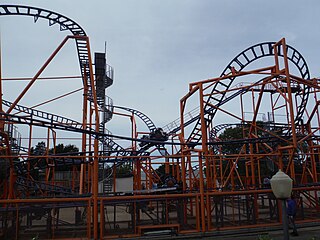
The WhirlWind is a steel spinning roller coaster at Seabreeze Amusement Park in Rochester, New York. It is where Quantum Loop stood until Winter 2004 when the WhirlWind was added.

Runaway Mine Train is a steel roller coaster located in the Boomtown section of Six Flags Over Texas in Arlington, Texas. Built in 1966, Runaway Mine Train is the oldest roller coaster in the park.

New Texas Giant is a steel roller coaster located at Six Flags Over Texas in Arlington, Texas. It originally opened as Texas Giant, which was the tallest wooden coaster in the world when it debuted in 1990. Manufactured by Dinn Corporation and designed by Curtis D. Summers, Texas Giant operated for nearly two decades and was highly-ranked in Amusement Today magazine's annual Golden Ticket Awards. The ride's popularity declined over the years as it gained a negative reputation for increasing roughness.
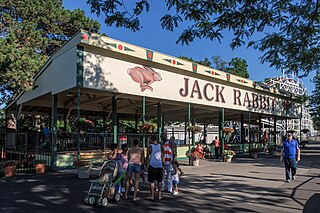
Jack Rabbit is an "out and back" wooden roller coaster located at Seabreeze Amusement Park in Irondequoit, New York. The Jack Rabbit is a terrain coaster that features seven dips, a helix, and a tunnel. It opened on May 31, 1920. Jack Rabbit is the fourth oldest operating roller coaster in the world and the second oldest in the United States. The oldest, Leap-The-Dips in Altoona, Pennsylvania, was closed from 1985 to 1999, making Jack Rabbit the oldest continuously operating coaster in the country.
The National Roller Coaster Museum and Archives (NRCMA) is a United States 501(c)(3) nonprofit organization dedicated to the protection and preservation of historic roller coasters and amusement park artifacts and memorabilia.

A mine train roller coaster is a steel roller coaster whose trains often depict a set of mine carts, with the forward-most car or portions of it sometimes resembling a small steam locomotive. Most mine train roller coasters are themed in the style of a mine, a Western scene, or simply a mountain range.
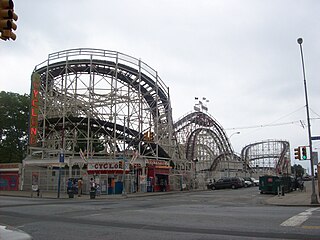
Roller coaster amusement rides have origins back to ice slides constructed in 18th-century Russia. Early technology featured sleds or wheeled carts that were sent down hills of snow reinforced by wooden supports. The technology evolved in the 19th century to feature railroad track using wheeled cars that were securely locked to the track. Newer innovations emerged in the early 20th century with side friction and underfriction technologies to allow for greater speeds and sharper turns. By the mid-to-late 20th century, these elements intensified with the introduction of steel roller coaster designs and the ability to invert riders.
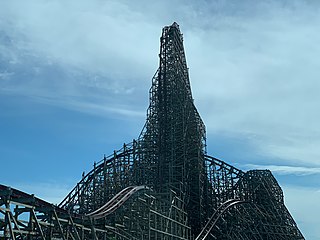
A hybrid roller coaster is a category of roller coasters where the track is made out of one material, either steel or wood, and the support structure is made from another. Early hybrid coasters include mine train roller coasters from Arrow Development, which feature a steel track with a wooden support structure. Becoming increasingly more common are hybrids with wooden tracks and steel supports, such as The Voyage at Holiday World.
References
- 1 2 3 "Bobsleds - Seabreeze (Rochester, New York, United States)". Rcdb.com.
- 1 2 "BOBSLEDS : Seabreeze Amusement Park". Ultimaterollercoaster.com. Retrieved January 11, 2022.
- 1 2 "Bobsleds - Coasterpedia - The Roller Coaster and Flat Ride Wiki". Coasterpedia.net.
- 1 2 "Seabreeze Timeline" (PDF). Seabreeze.com. Retrieved January 11, 2022.
- 1 2 3 4 "Amuse works to refurbish classic Bobsleds coaster at Seabreeze". Amusementtoday.com. September 3, 2019.