It was built on September 25, 1946 by Jeon Se-Jin. From only six classes in 1953, the number increased to 18 by 1970. Then, in 1984, a sisterhood relationship with Nagoya-Odani High School in Japan was established. Throughout the 1990s, the school continued to be developed as it increased in size. By the end of 1991, there were 30 classes in total. The main hall and the Buddhist sanctuary were completed on November 24, 1995. It also opened its library which has 208 seats on August 7, 1997, and a multipurpose room on February 2, 2005. The school currently has 36 classes.
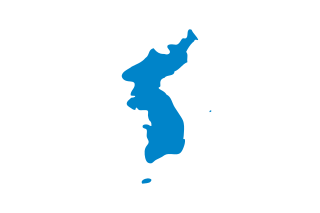
Korea is a peninsular region in East Asia consisting of the Korean Peninsula, Jeju Island, and smaller islands. Since the end of World War II in 1945, it has been politically divided at or near the 38th parallel; in 1948, two states declared independence, both claiming sovereignty over the entire region: North Korea in its northern half and South Korea in the south, which fought the Korean War from 1950 to 1953. The region is bordered by China to the north and Russia to the northeast, across the Amnok (Yalu) and Duman (Tumen) rivers, and is separated from Japan to the southeast by the Korea Strait.
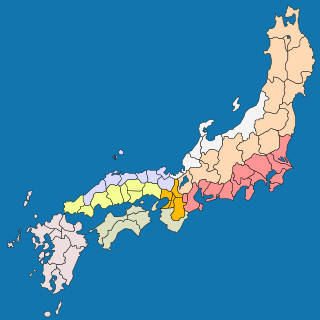
The Nara period of the history of Japan covers the years from 710 to 794. Empress Genmei established the capital of Heijō-kyō. Except for a five-year period (740–745), when the capital was briefly moved again, it remained the capital of Japanese civilization until Emperor Kanmu established a new capital, Nagaoka-kyō, in 784, before moving to Heian-kyō, modern Kyoto, a decade later in 794.
Hanja, alternatively known as Hancha, are Chinese characters used to write the Korean language. After characters were introduced to Korea to write Literary Chinese, they were adapted to write Korean as early as the Gojoseon period.
The Edo period, also known as the Tokugawa period, is the period between 1603 and 1868 in the history of Japan, when Japan was under the rule of the Tokugawa shogunate and the country's 300 regional daimyo. Emerging from the chaos of the Sengoku period, the Edo period was characterized by economic growth, strict social order, isolationist foreign policies, a stable population, overall peace, and popular enjoyment of arts and culture, colloquially referred to as Ōedo.
Korean Buddhism is distinguished from other forms of Buddhism by its attempt to resolve what its early practitioners saw as inconsistencies within the Mahayana Buddhist traditions that they received from foreign countries. To address this, they developed a new holistic approach to Buddhism that became a distinct form, an approach characteristic of virtually all major Korean thinkers. The resulting variation is called Tongbulgyo, a form that sought to harmonize previously arising disputes among scholars.
Buddhism was first established in Japan in the 6th century CE. Most of the Japanese Buddhists belong to new schools of Buddhism which were established in the Kamakura period (1185-1333). During the Edo (Tokugawa)-period (1603–1868), Buddhism was controlled by the feudal Shogunate. The Meiji-period (1868–1912) saw a strong response against Buddhism, with persecution and a forced separation between Buddhism and Shinto.
Daegu, formerly spelled Taegu and officially Daegu Metropolitan City, is a city in southeastern South Korea.
The traditional culture of Korea is the shared cultural and historical heritage of Korea before the division of Korea in 1945.
Korean Confucianism is the form of Confucianism that emerged and developed in Korea. One of the most substantial influences in Korean intellectual history was the introduction of Confucian thought as part of the cultural influence from China.
The practice of Christianity in Korea is marginal in North Korea, but significant in South Korea, where it revolves around Protestantism and Catholicism, accounting for 8.6 million and 5.8 million members, respectively. Christianity in the form of Catholicism was first introduced during the late Joseon Dynasty period by Confucian scholars who encountered it in China. In 1603, Yi Su-gwang, a Korean politician, returned from Beijing carrying several theological books written by Matteo Ricci, an Italian Jesuit missionary to China. He began disseminating the information in the books, introducing Christianity to Korea. In 1787, King Jeongjo of Joseon officially outlawed Catholicism as an "evil practice," declaring it heretical and strictly banned. Catholicism was reintroduced in 1785 by Yi Seung-hun and French and Chinese Catholic priests were soon invited by the Korean Christians.
Buddhist texts are religious texts that belong to, or are associated with, Buddhism and its traditions. There is no single textual collection for all of Buddhism. Instead, there are three main Buddhist Canons: the Pāli Canon of the Theravāda tradition, the Chinese Buddhist Canon used in East Asian Buddhist tradition, and the Tibetan Buddhist Canon used in Indo-Tibetan Buddhism.
The history of Buddhism can be traced back to the 5th century BCE. Buddhism arose in Ancient India, in and around the ancient Kingdom of Magadha, and is based on the teachings of the renunciate Siddhārtha Gautama. The religion evolved as it spread from the northeastern region of the Indian subcontinent throughout Central, East, and Southeast Asia. At one time or another, it influenced most of Asia.
Education in South Korea is provided by both public schools and private schools. Both types of schools receive funding from the government, although the amount that the private schools receive is less than the amount of the state schools.
Korea University is a private university in Seoul, South Korea. Established in 1905, the university was named after Goguryeo. The university is one of the SKY universities.
Korean poetry is poetry performed or written in the Korean language or by Korean people. Traditional Korean poetry is often sung in performance. Until the 20th century, much of Korean poetry was written in Hanja.
Korean literature is the body of literature produced by Koreans, mostly in the Korean language and sometimes in Classical Chinese. For much of Korea's 1,500 years of literary history, it was written in Hanja. It is commonly divided into classical and modern periods, although this distinction is sometimes unclear.
Buddhist art is visual art produced in the context of Buddhism. It includes depictions of Gautama Buddha and other Buddhas and bodhisattvas, notable Buddhist figures both historical and mythical, narrative scenes from their lives, mandalas, and physical objects associated with Buddhist practice, such as vajras, bells, stupas and Buddhist temple architecture. Buddhist art originated in the north of the Indian subcontinent, in modern India, Pakistan and Afghanistan, with the earliest survivals dating from a few centuries after the historical life of Siddhartha Gautama from the 6th to 5th century BCE.
The structure of social class in Cambodia has altered several times throughout its history. The traditional hereditary elites were marginalised in the 1970s, when military leaders gained prominence, before the Khmer Rouge attempted to dramatically eliminate existing class structures in the late 1970s. Since the emergence of peace in the early 1990s, social inequality has increased in Cambodia.
Hankuk Academy of Foreign Studies is a private boarding school located in the northern part of Yongin, South Korea, and is the first Korean high school formed by a collaboration between the government and a university. It is the most selective and prestigious boarding school in Korea, renowned for its high academic levels and successful college admission results.
Seon or Sŏn Buddhism is the Korean name for Chan Buddhism, a branch of Mahāyāna Buddhism commonly known in English as Zen Buddhism. Seon is the Sino-Korean pronunciation of Chan an abbreviation of 禪那 (chánnà), which is a Chinese transliteration of the Sanskrit word of dhyāna ("meditation"). Seon Buddhism, represented chiefly by the Jogye and Taego orders, is the most common type of Buddhism found in Korea.
This page is based on this Wikipedia article Text is available under the CC BY-SA 4.0 license; additional terms may apply. Images, videos and audio are available under their respective licenses.