Some victims of rape or other sexual violence incidents are male. It is estimated that approximately one in six men experienced sexual abuse during childhood. Historically, rape was thought to be, and defined as, a crime committed solely against females. This belief is still held in some parts of the world, but rape of males is now commonly criminalized and has been subject to more discussion than in the past.

The Inter-American Court of Human Rights is an international court based in San José, Costa Rica. Together with the Inter-American Commission on Human Rights, it was formed by the American Convention on Human Rights, a human rights treaty ratified by members of the Organization of American States (OAS).
Sexual violence is any harmful or unwanted sexual act or attempt to obtain a sexual act by violence or coercion, act to traffic a person, regardless of the relationship to the victim. This includes forced engagement in sexual acts, attempted or completed acts and occur without the consent of the victim. It occurs in times of peace and armed conflict situations, is widespread, and is considered to be one of the most traumatic, pervasive, and most common human rights violations.
Marital rape or spousal rape is the act of sexual intercourse with one's spouse without the spouse's consent. The lack of consent is the essential element and need not involve physical violence. Marital rape is considered a form of domestic violence and sexual abuse. Although, historically, sexual intercourse within marriage was regarded as a right of spouses, engaging in the act without the spouse's consent is now widely classified as rape by many societies around the world, and increasingly criminalized. However it is repudiated by some more conservative cultures.

Violence against women (VAW), also known as gender-based violence and sexual and gender-based violence (SGBV), are violent acts primarily or exclusively committed by men or boys against women or girls. Such violence is often considered a form of hate crime, committed against women or girls specifically because they are female, and can take many forms.
Equality Now is a non-governmental organization founded in 1992 to advocate for the protection and promotion of the human rights of women and girls. Through a combination of regional partnerships, community mobilization and legal advocacy the organization works to encourage governments to adopt, improve and enforce laws that protect and promote women and girls' rights around the world.
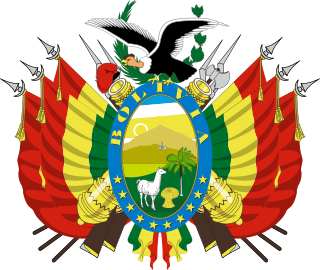
Bolivia's constitution and laws technically guarantee a wide range of human rights, but in practice these rights very often fail to be respected and enforced. “The result of perpetual rights violations by the Bolivian government against its people,” according to the Foundation for Sustainable Development, “has fueled a palpable sense of desperation and anger throughout the country.”
Rape by gender classifies types of rape by the sex and/or gender of both the rapist and the victim. This scope includes both rape and sexual assault more generally. Most research indicates that rape affects women disproportionately, with the majority of people convicted being men; however, since the broadening of the definition of rape in 2012 by the FBI, more attention is being given to male rape, including females raping males.
Statistics on rape and other sexual assaults are commonly available in industrialized countries, and have become better documented throughout the world. Inconsistent definitions of rape, different rates of reporting, recording, prosecution and conviction for rape can create controversial statistical disparities, and lead to accusations that many rape statistics are unreliable or misleading.
Rape in the Philippines is considered a criminal offense. In Philippine jurisprudence, it is a heinous crime punishable by reclusión perpetua when committed against women. Rape of males is also legally recognized as rape by sexual assault, which is penalized by imprisonment of six to twelve years.

The Democratic Republic of the Congo, and the east of the country in particular, has been described as the "Rape Capital of the World", and the prevalence and intensity of all forms of sexual violence has been described as the worst in the world. Human Rights Watch defines sexual violence as "an act of a sexual nature by force, or by threat of force or coercion", and rape as "a form of sexual violence during which the body of a person is invaded, resulting in penetration, however slight, of any part of the body of the victim, with a sexual organ, or of the anal or genital opening of the victim with any object or other part of the body."

Women in Malaysia receive support from the Malaysian government concerning their rights to advance, to make decisions, to health, education and social welfare, and to the removal of legal obstacles. The Malaysian government has ensured these factors through the establishment of Ministry of National Unity and Social Development in 1997. This was followed by the formation of the Women's Affairs Ministry in 2001 to recognise the roles and contributions of Malaysian women.
Punishment for rape in Pakistan under the Pakistani laws is either death penalty or imprisonment of between ten and twenty-five years. For cases related to gang rape, the punishment is either death penalty or life imprisonment. DNA test and other scientific evidence are used in prosecuting rape cases in Pakistan.
Rape is the fourth most common crime against women in India. According to the 2021 annual report of the National Crime Records Bureau (NCRB), 31,677 rape cases were registered across the country, or an average of 86 cases daily, a rise from 2020 with 28,046 cases, while in 2019, 32,033 cases were registered. Of the total 31,677 rape cases, 28,147(nearly 89%) of the rapes were committed by persons known to the victim. The share of victims who were minors or below 18 – the legal age of consent – stood at 10%.

Women in Kosovo are women who live in or are from the Republic of Kosovo. As citizens of a post-war nation, some Kosovar women have become participants in the process of peace-building and establishing pro-gender equality in Kosovo's rehabilitation process. Women in Kosovo have also become active in politics and law enforcement in the Republic of Kosovo. An example of which is the election of Atifete Jahjaga as the fourth President of Kosovo. She was the first female, the first non-partisan candidate, and the youngest to be elected to the office of the presidency in the country. Before becoming president, she served as Deputy Director of the Kosovo Police, holding the rank of major general, the highest among women in Southeastern Europe.
After a sexual assault or rape, victims are often subjected to scrutiny and, in some cases, mistreatment. Victims undergo medical examinations and are interviewed by police. If there is a criminal trial, victims suffer a loss of privacy, and their credibility may be challenged. Victims may also become the target of slut-shaming, abuse, social stigmatization, sexual slurs and cyberbullying. These factors, contributing to a rape culture, are among some of the reasons that may contribute up to 80% of all rapes going unreported in the U.S, according to a 2016 study done by the U.S. Department of Justice.

Human rights in Suriname are currently recognised under the Constitution of the Republic of Suriname of 1987. Suriname is a constitutional democracy with a president elected by the unicameral National Assembly. The National Assembly underwent elections in 2020, electing Chan Santokhi as president. The National Assembly has a commission pertaining to issues regarding the country's human rights. The Human Rights Office of the Ministry of Justice and Police is responsible for advising the government on regional and international proceedings against the state concerning human rights. Human rights in Suriname is periodically reviewed by the United Nations Human Rights Committee (UNHRC), on which it is often believed the level of human rights do not yet meet international standards.
Sexual consent plays an important role in laws regarding rape, sexual assault and other forms of sexual violence. In a court of law, whether or not the alleged victim had freely given consent, and whether or not they were deemed to be capable of giving consent, can determine whether the alleged perpetrator is guilty of rape, sexual assault or some other form of sexual misconduct.
Sexual violence in the Russian invasion of Ukraine has been committed by Armed Forces of Russia, including the use of mass rape as a weapon of war. According to the Independent International Commission of Inquiry on Ukraine, the victims of sexual assault by Russian soldiers ranged from 4 years old to over 80 years old.
A Breeze of Hope is a Bolivian nonprofit 501(c)(3) charitable organization that provides free legal, social, and psychological support to victims of sexual violence. The charitable organization is globally partnered with Equality Now. Over the course of 14 years, the organization's legal team, has prosecuted 500 abuse cases.

