Related Research Articles

Lieutenant-General Sir Herbert Taylor Macpherson was a Scottish recipient of the Victoria Cross, the highest and most prestigious award for gallantry in the face of the enemy that can be awarded to British and Commonwealth forces.

Lieutenant-General Sir Herbert Charles Chermside, was a British Army officer who served as Governor of Queensland from 1902 to 1904.
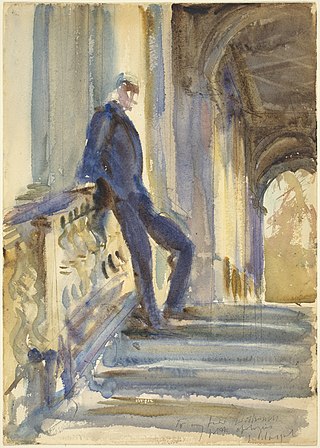
Major Sir Nevile Rodwell Wilkinson, KCVO was a British officer of arms, British Army officer, author and a dollhouse designer.

The Honourable Charles Herbert Mackintosh was a Canadian journalist and author, newspaper owner and editor, and politician. He served as mayor of Ottawa from 1879 to 1881, represented the City of Ottawa as a Liberal-Conservative Member of Parliament in the House of Commons of Canada from 1882 to 1887, and from 1890 to 1893, and served as Lieutenant Governor of the North-West Territories from 1893 to 1898, as it underwent a major transition toward responsible government.
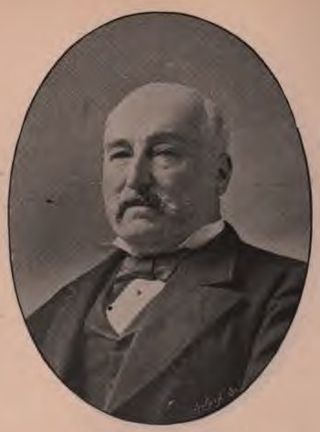
Sir Charles Mark Palmer, 1st Baronet was an English shipbuilder born in South Shields, County Durham, England. He was also a Liberal Party politician and Member of Parliament. His father, originally the captain of a whaler, moved in 1828 to Newcastle upon Tyne, where he owned a ship owning and ship-broking business.

Major-General Sir Guy Campbell, 1st Baronet, was a British Army officer. His branch of the Campbell baronets is referred to as St Cross Mede.

Lieutenant-General Sir Richard Hieram Sankey was an officer in the Royal (Madras) Engineers in the East India Company's army in British India, later transferring to the British Army after the Indian Rebellion of 1857 and the assumption of Crown rule in India. Sankey Tank which he constructed to meet the water demands of Bangalore is named after him. The high court building in Bangalore, Attara Kacheri, was designed by him and built by Arcot Narrainswamy Mudaliar.

Bedford Clapperton Trevelyan Pim was a Royal Navy officer, Arctic explorer, barrister, and author. He was the first man who travelled from a ship on the eastern side of the Northwest Passage to one on the western side.
Richard Hugh Stotherd (1828–1895) was a British Army officer, a major-general in the Royal Engineers and the director-general of the Ordnance Survey of the United Kingdom,
The King's Birthday Honours 1943 were appointments by King George VI to various orders and honours to reward and highlight good works by people of the British Empire. They were published on 2 June 1943 for the United Kingdom and Canada.
The 1915 Birthday Honours were appointments by King George V to various orders and honours to reward and highlight good works by citizens of the British Empire. The appointments were made to celebrate the official birthday of The King, and were published in The London Gazette and in The Times on 3 June 1915.
The 1916 Birthday Honours were appointments by King George V to various orders and honours to reward and highlight good works by citizens of the British Empire. The appointments were made to celebrate the official birthday of The King, and were published in The London Gazette and in The Times on 3 June 1916.
The 1919 Birthday Honours were appointments by King George V to various orders and honours to reward and highlight good works by citizens of the British Empire. The appointments were made to celebrate the official birthday of The King, and were published in The London Gazette from 3 June to 12 August. The vast majority of the awards were related to the recently ended War, and were divided by military campaigns. A supplementary list of honours, retroactive to the King's birthday, was released in December 1919.
The 1917 New Year Honours were appointments by King George V to various orders and honours to reward and highlight good works by citizens of the British Empire. The appointments were published in several editions of The London Gazette in January and February.
The 1918 New Year Honours were appointments by King George V to various orders and honours to reward and highlight good works by citizens of the British Empire. The appointments were published in The London Gazette and The Times in January, February and March 1918.

Lieutenant-Colonel The Hon. Milo George Talbot, CB, was an Anglo-Irish aristocrat and a British Army officer. The fourth son of the 4th Baron Talbot of Malahide, he was born into an Anglo-Irish family and attended Wellington College and the Royal Military Academy, Woolwich, before being commissioned as an officer in the British Army's Royal Engineers. He played a single match of first-class cricket as a young man for the Gentlemen of the South against the Players of the North. Talbot served on the staff of General Ross during the Second Anglo-Afghan War and remained in that country as a member of the Afghan Boundary Commission. He returned to Britain as a staff officer before returning to active duty during the Anglo-Egyptian conquest of the Sudan. During this time, he was present at the Battle of Omdurman in September 1898 and served on secondment to the Egyptian Army as a Major-General. Talbot retired in 1905, but was recalled to duty during the First World War, when he gave advice on plans for the Gallipoli Campaign and the defence of the Anglo-Egyptian Sudan.

The PEF Survey of Palestine was a series of surveys carried out by the Palestine Exploration Fund (PEF) between 1872 and 1877 for the completed Survey of Western Palestine and in 1880 for the soon abandoned Survey of Eastern Palestine. The survey was carried out after the success of the Ordnance Survey of Jerusalem by the newly-founded PEF, with support from the War Office. Twenty-six sheets were produced for "Western Palestine" and one sheet for "Eastern Palestine". It was the first fully scientific mapping of Palestine.
Colonel Robert Hamilton Vetch CB was a British Army officer and biographer who contributed to the Encyclopædia Britannica and the Dictionary of National Biography.
Lieutenant-General Charles Alexander McMahon FRS FGS was an Anglo-Irish soldier, geologist, and administrator in British India.
The Royal West Middlesex Militia, later the Edmonton Royal Rifle Regiment, was an auxiliary regiment reorganised in Middlesex in the Home counties of England during the 18th Century from earlier precursor units. It later became part of the King's Royal Rifle Corps (KRRC). Primarily intended for home defence, it served in England and Ireland during Britain's major wars. It was converted to the Special Reserve under the Haldane Reforms and supplied reinforcements to the KRRC's fighting battalions during World War I. After a shadowy postwar existence the unit was finally disbanded in 1953.
References
1. Hector Willoughby Charlesworth A Cyclopædia of Canadian Biography: Being Chiefly Men of the Time, 1919, p. 56
2. Nicholas Flood Davin, The Irishman in Canada 1877, p. 604
3. Morgan, Canadian Men and Women of the Time (1912), p. 704, col.
4. History of the County of Middlesex, Canada: From the Earliest Time to the Present, 1889, p. 175
5. Charles Herbert Mackintosh & John Alexander Gemmill (eds.), The Canadian Parliamentary Companion, 1883, p. 135