Related Research Articles
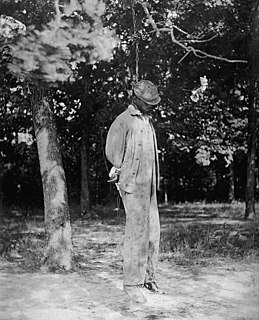
Lynching is an extrajudicial killing by a group. It is most often used to characterize informal public executions by a mob in order to punish an alleged transgressor, punish a convicted transgressor, or intimidate. It can also be an extreme form of informal group social control, and it is often conducted with the display of a public spectacle for maximum intimidation. Instances of lynchings and similar mob violence can be found in every society.

Viduthalai Chiruthaigal Katchi formerly known as the Dalit Panthers of India or the Dalit Panthers Iyyakkam is an Indian social movement and political party that seeks to combat caste based discrimination, active in the state of Tamil Nadu. The party also has a strong emphasis on Tamil nationalism. Its chairman is Thol. Thirumavalavan, a lawyer from Chennai and its general secretary is the writer Ravikumar.
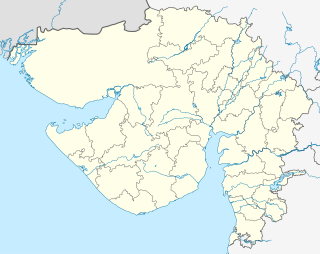
Una is a city and a municipality in Gir Somnath district of the Saurashtra region in the state of Gujarat, India.
Caste related violence has occurred and occurs in India in various forms. According to a report by Human Rights Watch, "Discriminatory and cruel, inhuman, and degrading treatment of over 165 million people in India has been justified on the basis of caste. Caste is descent-based and hereditary in nature. It is a characteristic determined by one's birth into a particular caste, irrespective of the faith practiced by the individual. Caste denotes a traditional system of rigid social stratification into ranked groups defined by descent and occupation. Caste divisions in India dominate in housing, marriage, employment, and general social interaction-divisions that are reinforced through the practice and threat of social ostracism, economic boycotts, and physical violence."

The Kilvenmani massacre was an incident in Kizhavenmani village, Tamil Nadu on 25 December 1968 in which a group of around 44 people, the families of striking Dalit village labourers, were murdered by a gang, allegedly led by their landlords.

The Vishva Hindu Parishad (VHP) is an Indian right-wing Hindu organiSation based on Hindu nationalism.
Rape is the fourth most common crime against women in India. According to the 2019 annual report of the National Crime Records Bureau(NCRB), 32033 rape cases were registered across the country, or an average of 88 cases daily,slightly lower than 2018 when 91 cases were registered daily.Of these, 30,165 rapes were committed by perpetrators known to the victim, a high number similar to 2018. The share of victims who were minors or below 18 - the legal age of consent - stood at 15.4%, down from 27.8% in 2018. On the other hand, rapes by juveniles remained high in India with 3 minors being arrested for rape, assault and attempted violence on women and girls each day in 2019.

Ulidavaru Kandante is a 2014 Indian Kannada neo-noir crime drama anthology film written and directed by debutant Rakshit Shetty. Shetty appears in the lead role, along with Kishore, Tara, Achyuth Kumar, Rishab Shetty, and Yagna Shetty playing supporting roles. The film involves an anthology of five stories connected to an incident of a person's murder, with the each character narrating it in his own perspective.
On 27 May 2014, a gang rape and murder of two teenage girls was reported in the Katra village of Budaun district, Uttar Pradesh, India. It was widely reported in the press in India as well as overseas. After an extensive investigation, CBI concluded that there was no gang rape and the suspects were released. However, on 28 October 2015 the POCSO court rejected the CBI closure report; it was a major setback for CBI.
Rahul Sharma is an ex-Indian Police Service (IPS) officer of the Gujarat cadre turned practicing lawyer with Gujarat High Court. He was inducted into the service in 1992. He played a crucial role in policing operations during the 2002 Gujarat riots. He was seconded to the Central Bureau of Investigation (CBI) in 2004, and served there for the next three years. Later, he served as the DIG at Rajkot, Gujarat until seeking voluntary retirement from active service in 2015.

Black Lives Matter (BLM) is a decentralized political and social movement advocating for non-violent civil disobedience in protest against incidents of police brutality and all racially motivated violence against black people. While there are specific organizations like the Black Lives Matter Global Network that label themselves simply as "Black Lives Matter", the Black Lives Matter movement is comprised of a broad array of people and organizations. The slogan "Black Lives Matter" itself remains untrademarked by any group. The broader movement and its related organizations typically advocate against police violence towards black people as well as for various other policy changes considered to be related to black liberation.

Ni una menos is a Latin American fourth-wave grassroots feminist movement, which started in Argentina and has spread across several Latin American countries, that campaigns against gender-based violence. In its official website, Ni una menos defines itself as a "collective scream against machista violence." The campaign was started by a collective of Argentine female artists, journalists and academics, and has grown into "a continental alliance of feminist forces". The movement regularly holds protests against femicides, but has also touched on topics such as gender roles, sexual harassment, gender pay gap, sexual objectification, legality of abortion, sex workers' rights and transgender rights.
Nakul Singh Sawhney is an Indian documentary filmmaker who has extensively worked on issues of communalism, honour killing, labour rights and social justice. He runs Chalchitra Abhiyaan, a film and media collective in Western Uttar Pradesh in North India, with a special focus on local caste, class and gender issues through film screenings in rural areas, training local people to make their own films and news features.
The murder of Prashanth Poojary refers to the killing of Prashanth Poojary, a Hindu man in Moodabidri a town in Dakshina Kannada district of the Indian state of Karnataka. Poojary, a 29 year old flower seller, a member of Bajrang Dal, was stabbed with blades by six assailants on 9 October 2015 at about 7.00 am IST. As of 29 October 2015, ten people have been arrested in connection with the attack, allegedly motivated by Poojary's activism against the illegal slaughter of cows. One suspect Mohammad Imtiaz Gantalkatte was arrested from Mumbai airport as he was attempting to flee India for Dubai.
Sudama Prasad is and Indian politician and member of the Bihar Legislative Assembly. He was elected as the representative of the Tarari constituency in 2015. Prasad is a member of principal state committee of the Communist Party of India (Marxist–Leninist) Liberation.

Jignesh Mevani is an Indian politician. He is a member representing Vadgam constituency in Gujarat Legislative Assembly. He has worked as a social activist and lawyer. He had led protests by Dalits, considered 'lower castes' in the Indian caste hierarchy, in Gujarat in 2016.
In July 2016, seven members of a Dalit family were assaulted by a group of people in pretext of cow protection in Una in Gujarat, India. The video of the incident was circulated on the social media resulting in statewide protests in following months. Forty-three people including four police officers were arrested and the case is under trial since August 2018.
In India, cow vigilante violence is the use of physical force in the name of "cow protection". Since 2014, mob attacks targeting mostly illegal cow smugglers, but in some cases even licensed cow traders, have become prominent. There is a debate on whether there has actually been any change in the number of such incidences, as Government Data points out to reduced communal tensions post 2014. Cattle slaughter is banned in most states of India. Recently emerged cow vigilante groups, claiming to be protecting cattle, have been violent leading to a number of deaths. Cow-protection groups see themselves as preventing theft, protecting the cow or upholding the law in an Indian state which bans cow slaughter. According to a Reuters report, a total of 63 cow vigilante attacks had occurred in India between 2010 and mid 2017, mostly since the Modi government came to power in 2014. In these attacks between 2010 and June 2017, "28 Indians – 24 of them Muslims – were killed and 124 injured", states the Reuter's report.
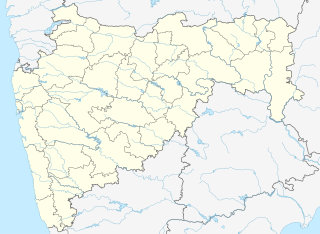
The 2018 Bhima Koregaon violence refers to violence during an annual celebratory gathering on 1 January 2018 at Bhima Koregaon to mark the 200th anniversary of the Battle of Bhima Koregaon. The violence and stone pelting by anti-social elements on the gathering resulted in death of a 28-year old youth and injury to five others. The annual celebration also called Elgar Parishad convention was organised by retired justices B.G Kolte-Patil and P. B. Sawant. Justice P. B. Sawant claimed that the term "Elgar" meant loud invitation or loud declaration.
The Uthapuram caste wall, called by various names as the wall of shame, the wall of untouchability is a 12 ft high and 600 meter long wall built by upper caste villagers reportedly to segregate the Dalit population in the Village of Uthapuram in Tamil Nadu. The village witnessed violence between Dalits and the upper castes during 1948, 1964 and 1989 and was also known for it's caste based discrimination.
References
- ↑ The Quint Chalo Una: Hundreds of Dalits Vow Never to Dispose off Dead Cattle
- ↑ Harsh, Mander (2019). "India's Lynchings: Ordinary Crimes, Rough Justice, or Command Hate Crimes.", Violence in South Asia: Contemporary Perspectives. Taylor and Francis. pp. Chapter 10. ISBN 9781000733402.
- ↑ "Chalo Udupi: A Fight To Make Voices of Dalit Women Heard". The Wire.
- ↑ The Hindu August 21, 2016 Three more arrested in Praveen Poojary murder case
- ↑ Times of India Oct 17, 2016, 08:19 IST After chalo Una, dalits now plan chalo Trivandrum