
Alexander Crichlow Barker Jr. was an American actor best known for playing Tarzan of the Apes and leading characters from Karl May's novels under the stage name Lex Barker.

Lee Patrick was an American actress whose career began in 1922 on the New York stage with her role in The Bunch and Judy which headlined Adele Astaire and featured Adele's brother Fred Astaire.

Virginia Huston was an American actress.

Robert Lowery was an American motion picture, television, and stage actor who appeared in more than 70 films.

Faith Marie Domergue was an American film and television actress. Discovered at age sixteen by media and aircraft mogul Howard Hughes, she was signed to a contract with Hughes' RKO Radio Pictures and cast as the lead in the studio's thriller Vendetta, which had a troubled four-year production before finally being released in 1950.
Clarence Greene was an American screenwriter and film producer who is noted for the "offbeat creativity and originality of his screenplays and for films noir and television episodes produced in the 1950s.

Carl Benton Reid was an American actor.

Brave Warrior is a 1952 Technicolor American Western film, directed by Spencer Gordon Bennet. It stars Jon Hall and Christine Larsen. The story is based on events during the War of 1812 and the Battle of Tippecanoe, but contains historical inaccuracies, mainly in that Tecumseh is depicted as siding with the Americans and not the British.
A breakthrough role, also known as a breakout role, is a term in the film industry to describe the performance of an actor or actress in a performance which contributed significantly to the development of their career and beginning of critical recognition. The similar term "big break" indicates the occurrence for the performer and not the role itself. Such a moment in an actor's career may often occur some time after they begin acting, as their roles become more substantial. A breakthrough role is often a significant increase in importance in the actor's part in the film, such as moving up from a minor character to one of the main cast or a "high impact" role in a film which has mainstream success and results in the actor's widespread recognition and popularity. A breakthrough performance has also been defined as one which "attracts the attention of film critics, or receives rave reviews and is subsequently nominated for many major film awards".
Russell Rouse was an American screenwriter, director, and producer who is noted for the "offbeat creativity and originality" of his screenplays and for film noir movies and television episodes produced in the 1950s.
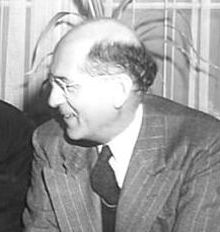
Albert E. Lewis was a Polish-born Broadway and film producer. His family emigrated to the Lower East Side of Manhattan, New York, when he was a boy. He became a vaudeville comedian, then started a partnership producing one-act plays for vaudeville. Around 1930 he moved to Hollywood, and worked as a film producer with Paramount, RKO and MGM until after World War II.

A Bullet for Joey is a 1955 film noir directed by Lewis Allen and starring Edward G. Robinson and George Raft. The picture involves a gangster who sneaks into Canada to kidnap a scientist for the communists. The supporting cast features Audrey Totter, Peter van Eyck, George Dolenz, and Peter Hansen.
This is a bibliography of reference works on film by genre.
A list of reference works on the film noir genre of film. See Bibliography of film by genre for other genres.

Florence Marly was a Czech-born French film actress. During World War II, Marly moved to neutral Argentina with her Jewish husband, film director Pierre Chenal, where she appeared in several films. She also acted in two of her husband's films while they were in Chile.
Gordon Avil was an American cinematographer. He worked in Billy the Kid (1930), The Champ (1931), A Miracle Can Happen (1948), Robot Monster (1953), Shield for Murder (1954), King Dinosaur (1955), Big House, U.S.A. (1955), The Black Sleep (1956) and The Underwater City (1962). According to Robert Clary, he was one of the most patient and endearing people he ever met. He died in April 1970 of a heart attack while shooting the TV series Hogan's Heroes.

Nigel Fraser Neilson was a British television and film actor of the 1940s and 50s.
Geneviève Kervine (1931–1989) was a French film actress. Born in Dakar in French Senegal, she emerged as a star in the 1950s and was awarded with the Prix Suzanne Bianchetti for the most promising actress in 1955. She was married to the singer and actor Jean Bretonnière.
Donna Joyce Sellers is an American actress and model, who enjoyed a career in film during the Golden Age of Hollywood.
Jean Charlotte Austin is an American actress and model, known for her performance in a number of classic horror, sci-fiction and cult films, as well as The Bride and the Beast.
