
Calvin Coolidge was the 30th president of the United States, serving from 1923 to 1929. A Republican lawyer from Massachusetts, he previously served as the 29th vice president from 1921 to 1923 under President Warren G. Harding, and as the 48th governor of Massachusetts from 1919 to 1921. Coolidge gained a reputation as a small-government conservative with a taciturn personality and dry sense of humor that earned him the nickname "Silent Cal".

Plymouth is a town in Windsor County, Vermont, United States. The population was 641 at the 2020 census. Calvin Coolidge, the 30th president of the United States, was born and raised in Plymouth and is buried there in the Plymouth Notch cemetery. The State of Vermont Division for Historic Preservation owns and maintains the Coolidge Homestead and the village of Plymouth Notch.
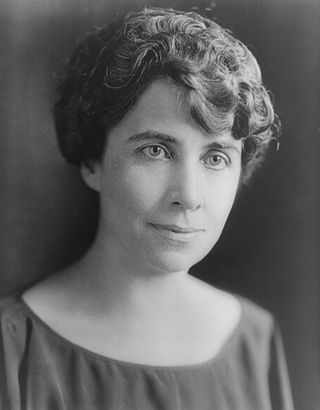
Grace Anna Coolidge was the first lady of the United States from 1923 to 1929 as the wife of the 30th president of the United States, Calvin Coolidge. She was previously the second lady of the United States from 1921 to 1923 and the first lady of Massachusetts from 1919 to 1921.
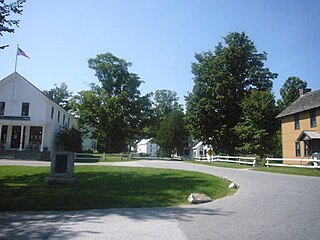
Plymouth Notch is an unincorporated community in the town of Plymouth, Windsor County, Vermont, United States. All or most of the village is included in the Calvin Coolidge Homestead District, a National Historic Landmark.

John Coolidge was an American executive, businessman, and entrepreneur with the New York, New Haven and Hartford Railroad. He was the first son of Calvin Coolidge, the 30th president of the United States (1923–1929) and Grace Coolidge, the First Lady of the United States from 1923 to 1929.
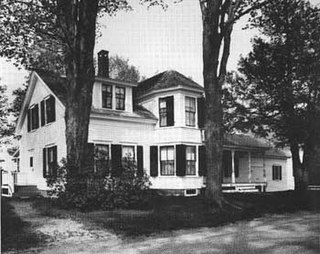
The Coolidge Homestead, also known as Calvin Coolidge Homestead District or President Calvin Coolidge State Historic Site, was the childhood home of the 30th president of the United States, Calvin Coolidge and the place where he first took the presidential oath of office. Located in Plymouth Notch, Vermont, Coolidge lived there from age four in 1876 to 1887, when he departed for Black River Academy for education. He is buried in Plymouth Notch Cemetery not far from the home.

The Brave Little State of Vermont speech is a name given to remarks delivered by Vermont native and U.S. President Calvin Coolidge at Bennington on September 21, 1928. Coolidge was touring his home state by train to assess progress of recovery following the devastating 1927 flood. Considered taciturn and nicknamed "Silent Cal," Coolidge demonstrated unusual emotion in delivering his extemporaneous response to the human suffering and loss he had witnessed.

William Wallace Stickney was an American lawyer and politician. A Republican, he served as the 48th governor of Vermont from October 4, 1900, to October 3, 1902.

The first inauguration of Calvin Coolidge as the 30th president of the United States was held on Friday, August 3, 1923, at the Coolidge Homestead in Plymouth Notch, Vermont, following the death of President Warren G. Harding the previous evening. The inauguration – the sixth non-scheduled, extraordinary inauguration to ever take place – marked the commencement of the first term of Calvin Coolidge as president. The presidential oath of office was administered to the new president by his father, John Calvin Coolidge Sr., who was a Vermont notary public and justice of the peace. On Tuesday, August 21, 1923, President Coolidge repeated the oath before Justice Adolph A. Hoehling Jr. of the Court of the District of Columbia at the Willard Hotel, Washington, D.C.

The Plymouth Notch Cemetery in Plymouth Notch, Vermont, is noted as the burial place for 30th President of the United States Calvin Coolidge, as well as his wife Grace, children, and other members of the Coolidge family.

Coolidge State Park is a Vermont State Park located in Plymouth, Vermont, United States. The park is named after Calvin Coolidge, the 30th President of the United States, who was born and raised in Plymouth and is buried there as well. It is the primary recreational center for Calvin Coolidge State Forest, the largest state forest in Vermont. The park's facilities, built by the Civilian Conservation Corps (CCC) in the 1930s, are listed on the National Register of Historic Places.

John Calvin Coolidge Sr. was an American politician and businessman from Vermont, and the father of Calvin Coolidge, the 30th president of the United States. The senior Coolidge administered the presidential oath of office to his son at their family homestead in the early morning hours of August 3, 1923, following the death of President Warren G. Harding.

The 1924 United States presidential election in Massachusetts took place on November 4, 1924, as part of the 1924 United States presidential election, which was held throughout all contemporary 48 states. Voters chose 18 representatives, or electors to the Electoral College, who voted for president and vice president.
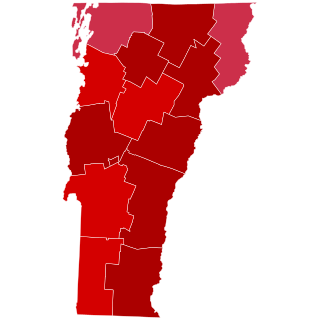
The 1924 United States presidential election in Vermont took place on November 4, 1924, as part of the 1924 United States presidential election which was held throughout all contemporary 48 states. Voters chose four representatives, or electors to the Electoral College, who voted for president and vice president.

The 1920 United States presidential election in Vermont took place on November 2, 1920, as part of the 1920 United States presidential election which was held throughout all contemporary 48 states. Voters chose four representatives, or electors to the Electoral College, who voted for president and vice president.

Calvin Galusha Coolidge was an American farmer and politician.

The 1920 United States presidential election in Connecticut took place on November 2, 1920, as part of the 1920 United States presidential election which was held throughout all contemporary 48 states. Voters chose seven representatives, or electors to the Electoral College, who voted for president and vice president.

The 1920 United States presidential election in Rhode Island took place on November 2, 1920, as part of the 1920 United States presidential election which was held throughout all contemporary 48 states. Voters chose five representatives, or electors to the Electoral College, who voted for president and vice president.

The 1924 United States presidential election in Maine took place on November 4, 1924, as part of the 1924 United States presidential election which was held throughout all contemporary 48 states. Voters chose six representatives, or electors to the Electoral College, who voted for president and vice president.
