
David M. Wiener | |
|---|---|
 The artist and serial entrepreneur David Wiener | |
| Born | January 1958 |
| Known for | Digital Art, Design, NFT |
David Michel Wiener (New York City, January 1958) is an American artist and serial entrepreneur.
David M. Wiener | |
|---|---|
| The artist and serial entrepreneur David Wiener | |
| Born | January 1958 |
| Known for | Digital Art, Design, NFT |
David Michel Wiener (New York City, January 1958) is an American artist and serial entrepreneur.
David Michel Wiener is an American artist and serial entrepreneur. His father, Sam Wiener, [1] is also an artist, and his grandfather Samuel G. Wiener was an architect featured in the documentary “Unexpected Modernism” [2] and an artist (painter). David worked as an apprentice to George Silk to become one of the youngest professional photographers shooting Formula One, Indianapolis 500, America's Cup, [3] and US Open Events during his teenage years. David was represented at that time by Focus On Sports, A New York City-based agency. Before graduating from Hampshire College, [4] he was the subject of a PBS documentary, “Human Power”, featuring the vehicles he designed and built for the Human Power World Speed Championship in 1981. When he was at college, he invented a low-slung three-wheel bicycle that could go 60 miles an hour. [5] For David, art represents many things such as aesthetics, self-expression, and something to share. His creative and entrepreneurial work has crossed diverse industries such as fashion for sportswear, avant-garde furniture, audio, encryption technology, aircraft, custom Porsches, [6] manufacturing and designing audio speakers, founding SoundTube Entertainment and also for important brands such as Ferrari. In recent years, David has turned his creative attention to produce artwork. He channeled his photography as the source medium to create modern abstract pieces with specific subject matter that brings the detail of life into critical focus.

Modern art includes artistic work produced during the period extending roughly from the 1860s to the 1970s, and denotes the styles and philosophies of the art produced during that era. The term is usually associated with art in which the traditions of the past have been thrown aside in a spirit of experimentation. Modern artists experimented with new ways of seeing and with fresh ideas about the nature of materials and functions of art. A tendency away from the narrative, which was characteristic of the traditional arts, toward abstraction is characteristic of much modern art. More recent artistic production is often called contemporary art, which includes what is termed postmodern art.

Land art, variously known as Earth art, environmental art, and Earthworks, is an art movement that emerged in the 1960s and 1970s, largely associated with Great Britain and the United States but that also includes examples from many countries. As a trend, "land art" expanded boundaries of art by the materials used and the siting of the works. The materials used were often the materials of the Earth, including the soil, rocks, vegetation, and water found on-site, and the sites of the works were often distant from population centers. Though sometimes fairly inaccessible, photo documentation was commonly brought back to the urban art gallery.
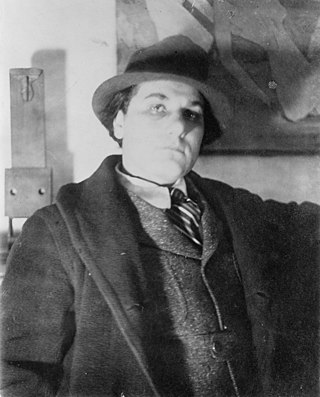
William Zorach was an American sculptor, painter, printmaker, and writer. He won the Logan Medal of the Arts in 1927. He was at the forefront of American artists embracing cubism.
Events from the year 1934 in art.

Alan Berliner is an American independent filmmaker. The New York Times has described Berliner's work as "powerful, compelling and bittersweet... full of juicy conflict and contradiction, innovative in their cinematic technique, unpredictable in their structures... Alan Berliner illustrates the power of fine art to transform life."
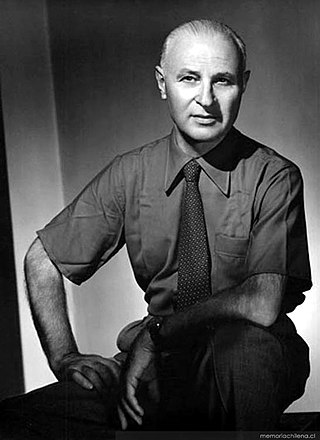
Emilio Pettoruti (1892–1971) was an Argentine painter, who caused a scandal with his avant-garde cubist exhibition in 1924 in Buenos Aires. At the beginning of the twentieth century, Buenos Aires was a city full of artistic development. Pettoruti's career was thriving during the 1920s when "Argentina witnessed a decade of dynamic artistic activity; it was an era of euphoria, a time when the definition of modernity was developed." While Pettoruti was influenced by Cubism, Futurism, Constructivism, and Abstraction, he did not claim to paint in any of those styles in particular. Exhibiting all over Europe and Argentina, Emilio Pettoruti is remembered as one of the most influential artists in Argentina in the 20th century for his unique style and vision.

Everett Longley Warner was an American Impressionist painter and printmaker, as well as a leading contributor to US Navy camouflage during both World Wars.
Karl Zerbe was a German-born American painter and educator.
Raghubir Singh (1942–1999) was an Indian photographer, most known for his landscapes and documentary-style photographs of the people of India. He was a self-taught photographer who worked in India and lived in Paris, London and New York. During his career he worked with National Geographic Magazine, The New York Times, The New Yorker and Time. In the early 1970s, he was one of the first photographers to reinvent the use of color at a time when color photography was still a marginal art form.

Francesco Pesellino, also known as Francesco di Stefano, was an Italian Renaissance painter active in Florence. His father was the painter Stefano di Francesco, and his maternal grandfather was the painter Giuliano Pesello (1367–1446), from whose name the diminutive nickname "Pesellino" arose. After the death of his father in 1427, the young Pesellino went to live with his grandfather whose pupil he became. Pesellino remained in his grandfather's studio until the latter's death, when he began to form working partnerships with other artists, such as Zanobi Strozzi and Fra Filippo Lippi. He married in 1442, and probably joined the Florentine painters' guild in 1447. In the following years he made for reputation with small, highly-finished works for domestic interiors, including religious panels for private devotional use and secular subjects for pieces of furniture.
Preston Byron Henn was an American entrepreneur who founded the Fort Lauderdale Swap Shop in 1963.
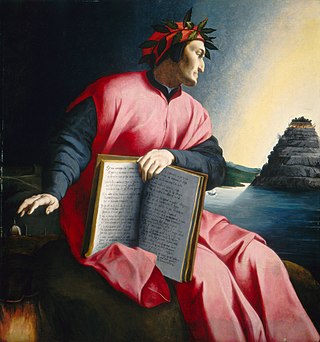
Italophilia is the admiration, appreciation or emulation of Italy, its people, culture and its contributions to Western civilization. Its opposite is Italophobia.
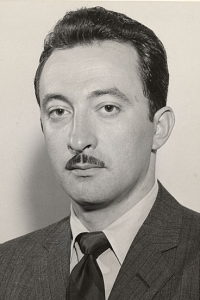
David Aronson was a painter and Professor of Art at Boston University.
Elaine Mayes is an American photographer and a retired professor at New York University's Tisch School of the Arts.

Wilhelmina Weber Furlong was a German American artist and teacher.
Hugo Markl is a contemporary American artist, curator, and creative director. He studied Visual communication at the University of Applied Arts Vienna (1985–90) where he graduated with an M.A. in fine arts. His practice spans a broad range of media including sculpture, photography, video, drawing, printmaking, installation art, and performance. Markl lives in New York City.
James Hayward is a contemporary abstract painter who lives and works in Moorpark, California. Hayward's paintings are usually divided in two bodies of work: flat paintings (1975-1984) and thick paintings. He works in series, some of which are ongoing, and include The Annunciations, The Stations of the Cross, the Red Maps, Fire Paintings, Smoke Paintings, Sacred and Profane and Nothing's Perfect series.
Karl Joseph Maria Drerup was a leading figure in the mid-twentieth-century American enamels field. Trained as a painter, Drerup taught himself to enamel in the early 1940s, fusing glass to metal through a high-temperature firing process. Through his inventive, "painterly" approach to the medium, he advanced enameling to new levels of beauty, power, and expressiveness. Drerup's love of nature is apparent in every detail of his intimate woodland scenes, just as his depictions of humble workers in natural settings reveal his profound respect for humanity. A modest, self-deprecating individual, he exerted an enormous impact on the generation of enamel artists that emerged in the United States in the period immediately following World War II.
Luca Pignatelli is an Italian artist.
Torrick Ablack, also known as Toxic, is an American artist who was part of the graffiti movement of the early 1980s in New York City. He transitioned from street art to exhibiting his paintings in galleries and museums internationally.
| International | |
|---|---|
| National | |
| Other | |
