The American Association of Petroleum Geologists (AAPG) is one of the world's largest professional geological societies with more than 40,000 members across 129 countries as of 2021. The AAPG works to "advance the science of geology, especially as it relates to petroleum, natural gas, other subsurface fluids, and mineral resources; to promote the technology of exploring for, finding, and producing these materials in an economically and environmentally sound manner; and to advance the professional well-being of its members." The AAPG was founded in 1917 and is headquartered in Tulsa, Oklahoma; currently almost one-third of its members live outside the United States.
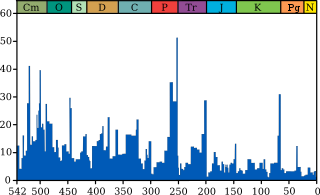
The Late Devonian extinction consisted of several extinction events in the Late Devonian Epoch, which collectively represent one of the five largest mass extinction events in the history of life on Earth. The term primarily refers to a major extinction, the Kellwasser event, also known as the Frasnian-Famennian extinction, which occurred around 372 million years ago, at the boundary between the Frasnian stage and the Famennian stage, the last stage in the Devonian Period. Overall, 19% of all families and 50% of all genera became extinct. A second mass extinction called the Hangenberg event, also known as the end-Devonian extinction, occurred 359 million years ago, bringing an end to the Famennian and Devonian, as the world transitioned into the Carboniferous Period.
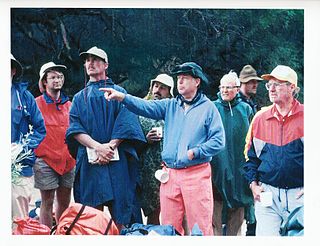
Fred F. Meissner was an American geologist and engineer who contributed to the fields of geology, geophysics, engineering, petroleum engineering, geochemistry, mineralogy, physics, mining, economic geology, and fishing.
The Leduc Formation is a stratigraphic unit of Late Devonian (Frasnian) age in the Western Canada Sedimentary Basin. It takes its name from the city of Leduc, and it was formally described from the B.A. Pyrz No. 1 well in central Alberta, between the depths of 1,623.7 m (5,327 ft) and 1,807.5 m (5,930 ft), by Imperial Oil Limited in 1950. Supplementary information came from a complete section of the formation that was cored in Imperial Oil's Leduc No. 530 well between 1,633 m (5,358 ft) and 1,863 m (6,112 ft).
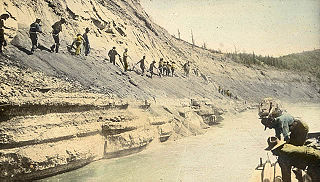
The McMurray Formation is a stratigraphic unit of Early Cretaceous age of the Western Canada Sedimentary Basin in northeastern Alberta. It takes the name from Fort McMurray and was first described from outcrops along the banks of the Athabasca River 5 kilometres (3.1 mi) north of Fort McMurray by F.H. McLearn in 1917. It is a well-studied example of fluvial to estuarine sedimentation, and it is economically important because it hosts most of the vast bitumen resources of the Athabasca Oil Sands region.
The Wabamun Formation is a stratigraphic unit of Late Devonian (Famennian) age in the Western Canada Sedimentary Basin. It takes the name from Wabamun Lake and was first described in the Anglo Canadian Wabamun Lake No. 1 well by Imperial Oil in 1950.
The Exshaw Formation is a stratigraphic unit in the Western Canada Sedimentary Basin. It takes the name from the hamlet of Exshaw, Alberta in the Canadian Rockies, and was first described from outcrops on the banks of Jura Creek north of Exshaw by P.S. Warren in 1937. The formation is of Late Devonian to Early Mississippian age as determined by conodont biostratigraphy, and it straddles the Devonian-Carboniferous boundary.

The Canadian Society of Petroleum Geologists (CSPG) is a professional geological society in Canada. The CSPG works to advance the science of geology, foster professional development of members and promote community awareness of the profession. The organization was founded on December 17, 1927 as the Alberta Society of Petroleum Geologists in Calgary and was modelled after the American Association of Petroleum Geologists. It is based in Calgary, Alberta.
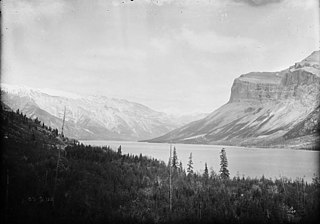
The Palliser Formation is a stratigraphic unit of Late Devonian (Famennian) age in the Western Canada Sedimentary Basin. It is a thick sequence of limestone and dolomitic limestone that is present in the Canadian Rockies and foothills of western Alberta. Tall cliffs formed of the Palliser Formation can be seen throughout Banff and Jasper National Parks.
The Beaverhill Lake Group is a geologic unit of Middle Devonian to Late Devonian age in the Western Canada Sedimentary Basin that is present in the southwestern Northwest Territories, northeastern British Columbia and Alberta. It was named by the geological staff of Imperial Oil in 1950 for Beaverhill Lake, Alberta, based on the core from a well that they had drilled southeast of the lake, near Ryley, Alberta.
The Woodbend Group is a stratigraphical unit of Frasnian age in the Western Canadian Sedimentary Basin.
The Duvernay Formation is a stratigraphical unit of Frasnian age in the Western Canadian Sedimentary Basin.
The Winterburn Group is a stratigraphical unit of Frasnian age in the Western Canadian Sedimentary Basin.
The Slave Point Formation is a stratigraphical unit of Middle Devonian age in the Western Canadian Sedimentary Basin.
The Alexo Formation a stratigraphic unit of Late Devonian age. It is present on the western edge of the Western Canada Sedimentary Basin in the central Rocky Mountains and foothills of Alberta. The formation consists primarily of dolomite. It is locally fossiliferous and includes remains of marine animals such as brachiopods and conodonts.

The Cairn Formation is a geologic formation of Late Devonian (Frasnian) age in the Western Canada Sedimentary Basin. It was named for the Cairn River near its junction with the Southesk River in Jasper National Park by D.J. McLaren in 1955.
The Flume Formation is a geologic formation in the Western Canada Sedimentary Basin in Alberta, Canada. It was deposited as an extensive carbonate platform along the western edge of the basin during Late Devonian (Frasnian) time and the reefs of the Cairn Formation subsequently developed on it.
The Southesk Formation is a stratigraphic unit of Late Devonian age. It is present on the western edge of the Western Canada Sedimentary Basin in the Rocky Mountains and foothills of Alberta and southeastern British Columbia. It was named for the Southesk River in Jasper National Park by D.J. McLaren in 1955.
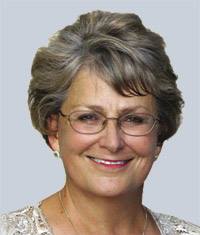
Robbie Rice Gries is an American petroleum geologist who was the first female president (2001–02) of the American Association of Petroleum Geologists (AAPG), president of the Geological Society of America (2018–19), and founder of Priority Oil & Gas LLC. Gries is noted to have made some influential progress for women in this field. In 2017, Gries published the book titled Anomalies—Pioneering Women in Petroleum Geology: 1917-2017. Gries is recognized as an unconventional thinker when approaching geological concepts and applications.
The Sassenach Formation is a stratigraphic unit of Late Devonian age. It is present on the western edge of the Western Canada Sedimentary Basin in the Rocky Mountains and foothills of Alberta. It consists primarily of mudstone, siltstone, and silty carbonate rocks, and was named for Mount Sassenach in Jasper National Park by D. J. McLaren and E. W. Mountjoy in 1962.
