Related Research Articles
The English language was introduced to the Americas by the arrival of the British, beginning in the late 16th and early 17th centuries. The language also spread to numerous other parts of the world as a result of British trade and settlement and the spread of the former British Empire, which, by 1921, included 470–570 million people, about a quarter of the world's population. In England, Wales, Ireland and especially parts of Scotland there are differing varieties of the English language, so the term 'British English' is an oversimplification. Likewise, spoken American English varies widely across the country. Written forms of British and American English as found in newspapers and textbooks vary little in their essential features, with only occasional noticeable differences.

A dictionary is a listing of lexemes from the lexicon of one or more specific languages, often arranged alphabetically, which may include information on definitions, usage, etymologies, pronunciations, translation, etc. It is a lexicographical reference that shows inter-relationships among the data.
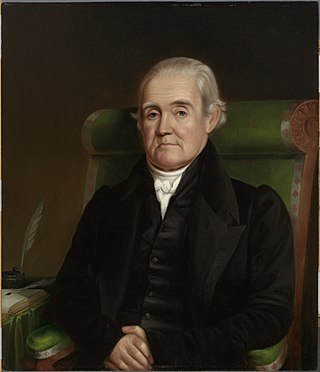
Noah Webster Jr. was an American lexicographer, textbook pioneer, English-language spelling reformer, political writer, editor, and author. He has been called the "Father of American Scholarship and Education". His "Blue-backed Speller" books taught five generations of American children how to spell and read. Webster's name has become synonymous with "dictionary" in the United States, especially the modern Merriam-Webster dictionary that was first published in 1828 as An American Dictionary of the English Language.
Singular they, along with its inflected or derivative forms, them, their, theirs, and themselves, is a gender-neutral third-person pronoun. It typically occurs with an indeterminate antecedent, in sentences such as:
A split infinitive is a grammatical construction in which an adverb or adverbial phrase separates the "to" and "infinitive" constituents of what was traditionally called the "full infinitive", but is more commonly known in modern linguistics as the to-infinitive. In the history of English language aesthetics, the split infinitive was often deprecated, despite its prevalence in colloquial speech. The opening sequence of the Star Trek television series contains a well-known example, "to boldly go where no man has gone before", wherein the adverb boldly was said to split the full infinitive, to go. Multiple words may split a to-infinitive, such as: "The population is expected to more than double in the next ten years."
Cunt is a vulgar word for the vulva. It is used in a variety of ways, including as a term of disparagement. "Cunt" is often used as a disparaging and obscene term for a woman in the United States, an unpleasant or objectionable man or woman in the United Kingdom and Ireland, or a contemptible man in Australia and New Zealand. In Australia and New Zealand, it can also be a neutral or positive term when used with a positive qualifier. The term has various derivative senses, including adjective and verb uses.

Pussy is a term used as a noun, an adjective, and—in rare instances—a verb in the English language. It has several meanings, as slang, as euphemism, and as vulgarity. Most commonly, it is used as a noun with the meaning "cat", "coward", or "weakling". In slang usage, it can mean "vulva or vagina" and less commonly, as a form of synecdoche, meaning "sexual intercourse with a woman". Because of its multiple senses including both innocent and vulgar connotations, pussy is often the subject of double entendre.
Webster's Dictionary is any of the English language dictionaries edited in the early 19th century by Noah Webster (1758–1843), an American lexicographer, as well as numerous related or unrelated dictionaries that have adopted the Webster's name in his honor. "Webster's" has since become a genericized trademark in the United States for English dictionaries, and is widely used in dictionary titles.

Owing to the dominance of the Google search engine, to google has become a transitive verb. The neologism commonly refers to searching for information on the World Wide Web, typically using the Google search engine. The American Dialect Society chose it as the "most useful word of 2002". It was added to the Oxford English Dictionary on June 15, 2006, and to the eleventh edition of the Merriam-Webster Collegiate Dictionary in July 2006.

Joseph Emerson Worcester was an American lexicographer who was the chief competitor to Noah Webster of Webster's Dictionary in the mid-nineteenth-century. Their rivalry became known as the "dictionary wars". Worcester's dictionaries focused on traditional pronunciation and spelling, unlike Noah Webster's attempts to Americanize words. Worcester was respected by American writers and his dictionary maintained a strong hold on the American marketplace until a later, posthumous version of Webster's book appeared in 1864. After Worcester's death in 1865, their war ended.
A possessive or ktetic form is a word or grammatical construction indicating a relationship of possession in a broad sense. This can include strict ownership, or a number of other types of relation to a greater or lesser degree analogous to it.

Random House Webster's Unabridged Dictionary is a large American dictionary, first published in 1966 as The Random House Dictionary of the English Language: The Unabridged Edition. Edited by Editor-in-chief Jess Stein, it contained 315,000 entries in 2256 pages, as well as 2400 illustrations. The CD-ROM version in 1994 also included 120,000 spoken pronunciations.
Possessive determiners are determiners which express possession. Some traditional grammars of English refer to them as possessive adjectives, though they do not have the same syntactic distribution as bona fide adjectives.
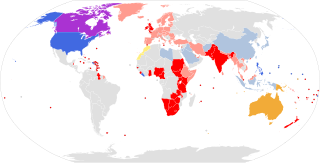
Despite the various English dialects spoken from country to country and within different regions of the same country, there are only slight regional variations in English orthography, the two most notable variations being British and American spelling. Many of the differences between American and British/English in the Commonwealth of Nations date back to a time before spelling standards were developed. For instance, some spellings seen as "American" today were once commonly used in Britain, and some spellings seen as "British" were once commonly used in the United States.

Webster's Third New International Dictionary of the English Language, Unabridged is an American English-language dictionary published in September 1961. It was edited by Philip Babcock Gove and a team of lexicographers who spent 757 editor-years and $3.5 million. The most recent printing has 2,816 pages, and as of 2005, it contained more than 476,000 vocabulary entries, 500,000 definitions, 140,000 etymologies, 200,000 verbal illustrations, 350,000 example sentences, 3,000 pictorial illustrations and an 18,000-word Addenda section.
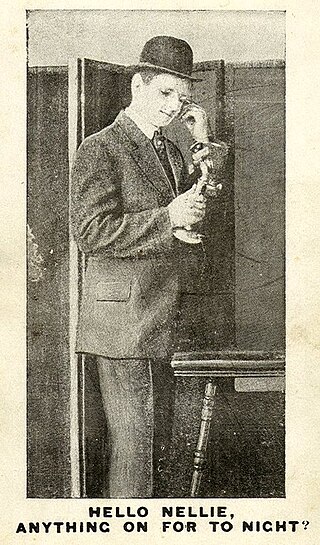
Hello is a salutation or greeting in the English language. It is first attested in writing from 1826.

English is a West Germanic language in the Indo-European language family, whose speakers, called Anglophones, originated in early medieval England. The namesake of the language is the Angles, one of the ancient Germanic peoples that migrated to the island of Great Britain.

Richard Webster was a British author. His five published books deal with subjects such as the controversy over Salman Rushdie's novel The Satanic Verses (1988), Sigmund Freud and psychoanalysis, and the investigation of sexual abuse in Britain. Born in Newington, Kent, Webster studied English literature at the University of East Anglia and lived in Oxford, England. He became interested in the problem of false allegations partly due to reading the work of historian Norman Cohn.
E. Jennifer Monaghan, also known as Jennifer Monaghan, was an educator and historian. She was regarded as the leading expert on literacy education in early America. She published three books and dozens of book chapters and journal articles.
ain't is a negative inflection for am, is, are, has, and have in informal English. In some dialects, it is also used for do, does, did, and will. The development of ain't for the various forms of be, have, will and do occurred independently, at different times. The use of ain't for the forms of be was established by the mid-18th century and for the forms of have by the early 19th century.
References
- Tottie, Gunnel (2002), An Introduction to American English, Blackwell Publishing, ISBN 978-0-631-19792-8
