Related Research Articles
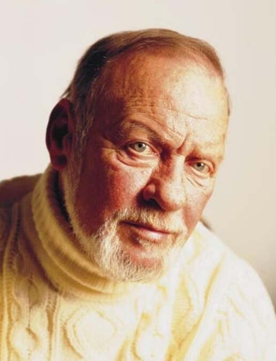
Napoleon Alphonseau Chagnon was an American cultural anthropologist, professor of sociocultural anthropology at the University of Missouri in Columbia and member of the National Academy of Sciences. Chagnon was known for his long-term ethnographic field work among the Yanomamö, a society of indigenous tribal Amazonians, in which he used an evolutionary approach to understand social behavior in terms of genetic relatedness. His work centered on the analysis of violence among tribal peoples, and, using socio-biological analyses, he advanced the argument that violence among the Yanomami is fueled by an evolutionary process in which successful warriors have more offspring. His 1967 ethnography Yanomamö: The Fierce People became a bestseller and is frequently assigned in introductory anthropology courses.

The Ik people are an ethnic group or tribe native to northeastern Uganda, near the Kenyan border. Primarily subsistence farmers, most Ik live in small clan villages, or odoks, in the area surrounding Mount Morungole in the Kaabong district. Their estimated population is between 10,000 and 15,000.

Visual anthropology is a subfield of social anthropology that is concerned, in part, with the study and production of ethnographic photography, film and, since the mid-1990s, new media. More recently it has been used by historians of science and visual culture. Although sometimes wrongly conflated with ethnographic film, visual anthropology encompasses much more, including the anthropological study of all visual representations such as dance and other kinds of performance, museums and archiving, all visual arts, and the production and reception of mass media. Histories and analyses of representations from many cultures are part of visual anthropology: research topics include sandpaintings, tattoos, sculptures and reliefs, cave paintings, scrimshaw, jewelry, hieroglyphics, paintings and photographs. Also within the province of the subfield are studies of human vision, properties of media, the relationship of visual form and function, and applied, collaborative uses of visual representations.
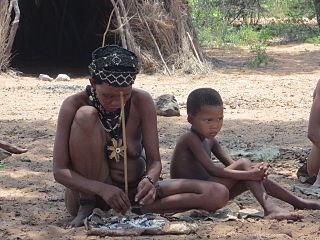
The ǃKung are one of the San peoples who live mostly on the western edge of the Kalahari desert, Ovamboland, and Botswana. The names ǃKung (ǃXun) and Ju are variant words for 'people', preferred by different ǃKung groups. This band level society used traditional methods of hunting and gathering for subsistence up until the 1970s. Today, the great majority of ǃKung people live in the villages of Bantu pastoralists and European ranchers.
Timothy Asch was an American anthropologist, photographer, and ethnographic filmmaker. Along with John Marshall and Robert Gardner, Asch played an important role in the development of visual anthropology. He is particularly known for his film The Ax Fight and his role with the USC Center for Visual Anthropology.
Jay Ruby was an American scholar who was a professor in the Department of Anthropology at Temple University until his retirement in 2003. He received his B.A. in History (1960) and Ph.D. in Anthropology (1969) from the University of California, Los Angeles.
The USC Center for Visual Anthropology (CVA) is a center located at the University of Southern California. It is dedicated to the field of visual anthropology, incorporating visual modes of expression in the academic discipline of anthropology. It does so in conjunction with faculty in the anthropology department through five types of activities: training, research and analysis of visual culture, production of visual projects, archiving and collecting, and the sponsorship of conferences and film festivals. It offers a B.A. and an MVA in Visual Anthropology.
The Human Studies Film Archives (HSFA) is a sister archive to the National Anthropological Archives within the Smithsonian's National Museum of Natural History. HSFA preserves and provides access to ethnographic films and anthropological moving image materials. It is located at the Smithsonian Museum Support Center in Suitland, Maryland.
The Margaret Mead Film Festival is an annual film festival held at the American Museum of Natural History in New York City. It is the longest-running, premiere showcase for international documentaries in the United States, encompassing a broad spectrum of work, from indigenous community media to experimental nonfiction. The Festival is distinguished by its outstanding selection of titles, which tackle diverse and challenging subjects, representing a range of issues and perspectives, and by the forums for discussion with filmmakers and speakers.
The Ax Fight (1975) is an ethnographic film by anthropologist and filmmaker Tim Asch and anthropologist Napoleon Chagnon about a conflict in a Yanomami village called Mishimishimabowei-teri, in southern Venezuela. It is best known as an iconic and idiosyncratic ethnographic film about the Yanomamo and is frequently shown in classroom settings.
Robert Grosvenor Gardner was an American academic, anthropologist, and documentary filmmaker who was the Director of the Film Study Center at Harvard University from 1956 to 1997. He is known for his work in the field of visual anthropology and films like the National Film Registry inductee Dead Birds and Forest of Bliss. In 2011, a retrospective of his work was held at Film Forum, New York.
A Man Called "Bee": Studying the Yanomamo is a 1974 film by ethnographic filmmakers Tim Asch and Napoleon Chagnon. While he was studying the Yanomamo people, Napoleon Chagnon used many different ethnographic research methods. Some of those methods included participant observation, key informants, tape recording and in depth interviews. Ethnography is based on fieldwork. In order for Chagnon to create this film about the Yanomamo people, he had to take part in their events he was observing, describing, and analyzing.
Lina Fruzzetti is an American cultural anthropologist and documentary filmmaker. Since 1975, she has been a professor of anthropology at Brown University in the United States. Apart from having published ethnographic studies about rural communities and gender relations in East Africa, India and Tanzania, she is the author of several ethnographic films. These films were written and co-directed with her husband, Ákos Östör, cultural anthropologist and professor emeritus of anthropology at Wesleyan University. Since 2016 Fruzzetti is also a Fellow at the Jawaharlal Nehru University Institute for Advanced Studies (JNIAS) in New Delhi, India.
A Balinese Trance Seance is a 1979 documentary film by ethnographic filmmaker Tim Asch and anthropologist Linda Connor that profiles Jero Tapakan, a Balinese spirit medium. It was one of five films that were made with Jero Tapakan and were considered to be exemplary ethnographic films.
Documentary Educational Resources (DER), originally called the Center for Documentary Anthropology, is a US non-profit producer and distributor of film and video in anthropology and ethnology. It has been described by the Harvard Film Archive as "one of the most historically important resources of ethnographic film in the world today".
An ethnographic film is a non-fiction film, often similar to a documentary film, historically shot by Western filmmakers and dealing with non-Western people, and sometimes associated with anthropology. Definitions of the term are not definitive. Some academics claim it is more documentary, less anthropology, while others think it rests somewhere between the fields of anthropology and documentary films.
John Kennedy Marshall was an American anthropologist and acclaimed documentary filmmaker best known for his work in Namibia recording the lives of the Juǀʼhoansi.
Ethnocinema, from Jean Rouch’s cine-ethnography and ethno-fictions, is an emerging practice of intercultural filmmaking being defined and extended by Melbourne, Australia-based writer and arts educator, Anne Harris, and others. Originally derived from the discipline of anthropology, ethnocinema is one form of ethnographic filmmaking that prioritises mutuality, collaboration and social change. The practice's ethos claims that the role of anthropologists, and other cultural, media and educational researchers, must adapt to changing communities, transnational identities and new notions of representation for the 21st century.
Linda Helen Connor is an Australian anthropologist. She is Emeritus Professor of Anthropology at the University of Sydney.
References
- ↑ Finnegan, Gregory A. (1979). "Dodoth Morning . Timothy Asch, Anne Fischel". American Anthropologist. 81 (1–2): 206–207. doi:10.1525/aa.1979.81.1.02a01180.
- 1 2 Lewis, E. (2003). Timothy Asch and Ethnographic Film . New York: Routledge. p. 2. ISBN 0-415-32774-1.
- 1 2 "Documentary Educational Resources". Documentary Educational Resources. Retrieved 2024-03-20.
- "Tim Asch & Napoleon Chagnon: Dodoth Morning". www.der.org. Retrieved 2007-03-30.[ dead link ]
 | This article about a scientific documentary film is a stub. You can help Wikipedia by expanding it. |
 | This article about cultural anthropology is a stub. You can help Wikipedia by expanding it. |