
Dorset is a ceremonial county in South West England. It is bordered by Somerset to the north-west, Wiltshire to the north and the north-east, Hampshire to the east, the Isle of Wight across the Solent to the south-east, the English Channel to the south, and Devon to the west. The largest settlement is Bournemouth, and the county town is Dorchester.

Somerset is a ceremonial county in South West England. It is bordered by the Bristol Channel, Gloucestershire, and Bristol to the north, Wiltshire to the east and the north-east, Dorset to the south-east, and Devon to the south-west. The largest settlement is the city of Bath, and the county town is Taunton.

South West England, or the South West of England, is one of the nine official regions of England in the United Kingdom. It consists of the counties of Cornwall, Dorset, Devon, Gloucestershire, Somerset and Wiltshire. Cities and large towns in the region include Bath, Bristol, Bournemouth, Cheltenham, Exeter, Gloucester, Plymouth and Swindon. It is geographically the largest of the nine regions of England with a land area of 9,203 square miles (23,836 km2), but the third-least populous, with an estimated 5,764,881 residents in 2022.

Sherborne is a market town and civil parish in north west Dorset, in South West England. It is sited on the River Yeo, on the edge of the Blackmore Vale, 6 miles east of Yeovil. The parish includes the hamlets of Nether Coombe and Lower Clatcombe. The A30 road, which connects London to Penzance, runs through the town. In the 2011 census the population of Sherborne parish and the two electoral wards was 9,523. 28.7% of the population is aged 65 or older.
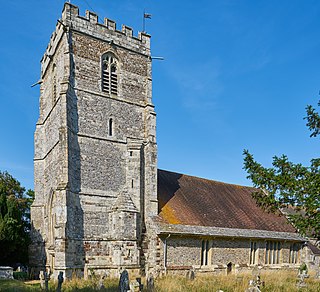
Cranborne is a village in East Dorset, England. At the 2011 census, the parish had a population of 779, remaining unchanged from 2001.
A ridgeway (road) is a road or path that follows a ridge, or the highest part of the landscape.
Coombe is an alternate spelling of combe, a dry valley.

The Weymouth and Portland National Sailing Academy is a centre for the sport of sailing on the Isle of Portland, Dorset, on the south coast of England. The academy building is located in Osprey Quay on the northern tip of the island, and the waters of Portland Harbour and Weymouth Bay, adjacent to the site, are the main areas used for sailing. Local, national and international sailing events have been held at the site since it was opened in 2000, and in 2005 WPNSA was selected to host the sailing events at the 2012 Olympic and Paralympic Games.

Collegiate School is a private day school in Bristol, England, and is a member of the Headmasters' and Headmistresses' Conference.
Wessex Water Services Limited, known as Wessex Water, is a water supply and sewerage utility company serving an area of South West England, covering 10,000 square kilometres including Bristol, most of Dorset, Somerset and Wiltshire and parts of Gloucestershire and Hampshire. Wessex Water supplies 1.3 million people with around 285 million litres of water a day.
Edward Prioleau Warren was a British architect and archaeologist.

The Thomas Hardye School is a secondary academy school in Dorchester, Dorset, England. It is also part of the DASP group.
Benjamin Ferrey FSA FRIBA was an English architect who worked mostly in the Gothic Revival.
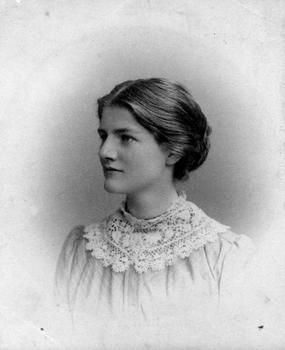
Elizabeth Casson OBE was a British medical doctor and an occupational therapy pioneer. Initially training as a secretary, Casson began studying medicine at the University of Bristol when she was 32. She received her medical degree in 1926, becoming the first woman to receive one from the University of Bristol. She also attained the Gaskell prize from the Royal Medico-Psychological Association and a diploma in psychological medicine from the University of London.
Charles Edwin Ponting, F.S.A., (1850–1932) was a Gothic Revival architect who practised in Marlborough, Wiltshire.

John Norton was an English architect who designed country houses, churches and a number of commercial buildings.
Portland most commonly refers to:

Dorset House is an historic building at Litfield Place on Clifton Down, Bristol, England. The building, which was used as a school of occupational therapy and then as the regional headquarters of the Royal Marines Reserve, is a Grade II* listed building.
