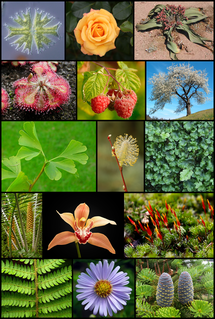
The United Nations Development Programme (UNDP) is the United Nations' global development network.

The International Union for Conservation of Nature is an international organization working in the field of nature conservation and sustainable use of natural resources. It is involved in data gathering and analysis, research, field projects, advocacy, and education. IUCN's mission is to "influence, encourage and assist societies throughout the world to conserve nature and to ensure that any use of natural resources is equitable and ecologically sustainable".
Diversitas was an international research programme aiming at integrating biodiversity science for human well-being. In December 2014 its work was transferred to the programme called Future Earth, which was sponsored by the Science and Technology Alliance for Global Sustainability, comprising the International Council for Science (ICSU), the International Social Science Council (ISSC), the Belmont Forum of funding agencies, the United Nations Educational, Scientific, and Cultural Organization (UNESCO), the United Nations Environment Programme (UNEP), the United Nations University (UNU) and the World Meteorological Organization (WMO).

The American Society for Microbiology (ASM), originally the Society of American Bacteriologists, is a professional organization for scientists who study viruses, bacteria, fungi, algae, and protozoa as well as other aspects of microbiology. Founded in 1899, ASM has grown into the largest life science professional organization in the world. The Society publishes a variety of scientific journals, textbooks, and other educational materials related to microbiology and infectious diseases. Additionally, ASM organizes several large annual meetings, as well as workshops and professional development opportunities for its members.
Mankombu Sambasivan Swaminathan is an Indian geneticist and international administrator, renowned for his leading role in India's Green Revolution, a program under which high-yield varieties of wheat and rice seedlings were planted in the fields of poor farmers. Swaminathan is known as the "Father of Green Revolution in India" for his leadership and success in introducing and further developing high-yielding varieties of wheat in India. He is the founder of the MS Swaminathan Research Foundation. His stated vision is to rid the world of hunger and poverty. Swaminathan is an advocate of moving India to sustainable development, especially using environmentally sustainable agriculture, yipee sustainable food security and the preservation of biodiversity, which he calls an "evergreen revolution."
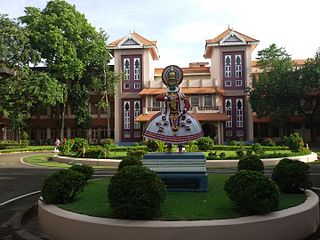
Cochin University of Science and Technology (CUSAT) is a government-owned autonomous science and technology university in Kochi, Kerala, India. Founded in 1971, it has three campuses: two in Kochi and one in Kuttanad, Alappuzha, 66 km inland. The university awards degrees in engineering and science subjects at the undergraduate, postgraduate and doctoral levels.
The International Fellowship of Reconciliation (IFOR) is a non-governmental organization founded in 1914 in response to the horrors of war in Europe. Today IFOR counts 72 branches, groups and affiliates in 48 countries on all continents. IFOR members promote nonviolence, human rights and reconciliation through public education efforts, training programs and campaigns. The IFOR International Secretariat in Alkmaar, Netherlands facilitates communication among IFOR members, links branches to capacity building resources, provides training in gender-sensitive nonviolence through the Women Peacemakers Program, and helps coordinate international campaigns, delegations and urgent actions. IFOR has ECOSOC status at the United Nations.
The International Federation of Library Associations and Institutions (IFLA) is the leading international body representing the interests of people who rely on libraries and information professionals. An independent, non-governmental, not-for-profit organization, IFLA was founded in Scotland in 1927 and maintains headquarters at the National Library of the Netherlands in The Hague. IFLA sponsors the annual IFLA World Library and Information Congress, promoting universal and equitable access to information, ideas, and works of imagination for social, educational, cultural, democratic, and economic empowerment.

The L'Oréal-UNESCO For Women in Science Awards aim to improve the position of women in science by recognizing outstanding women researchers who have contributed to scientific progress. The awards are a result of a partnership between the French cosmetics company L'Oréal and the United Nations Educational, Scientific and Cultural Organization (UNESCO) and carry a grant of $100,000 USD for each laureate.
South–South Cooperation is a term historically used by policymakers and academics to describe the exchange of resources, technology, and knowledge between developing countries, also known as countries of the Global South.

Science and technology is a growing field in Pakistan and has played an important role in the country's development since its founding. Pakistan has a large pool of scientists, engineers, doctors, and technicians assuming an active role in science and technology. Liaquat Ali Khan the first Prime Minister of Pakistan, made various reforms to initiate improvement in higher education and scientific research. The real growth in science in Pakistan occurred after the establishment of the Higher education Commission in 2002 which supported science in a big way and also became the major sponsor of the Pakistan Academy of Sciences under the leadership of Prof. Atta-ur-Rahman. The first IT policy and implementation strategy was approved under the leadership of Prof. Atta-ur-Rahman, then Federal Minister of Science & technology, in August 2000 which laid the foundations of the development of this sector On the request of Prof. Atta-ur-Rahman, Intel initiated a nation wide programme to train school teachers in Information and Communication technologies in March 2002 which has led to the training of 220,000 school teachers in 70 districts and cities across Pakistan. A 15 year tax holiday was approved on the recommendation of Prof. Atta-ur-Rahman which has resulted in growth of IT business from $ 30 million in 2001 to over $ 3 billion.The Pakistan Austria University of Applied Engineering (Fachhochschule) is now being established in Haripur Hazara under the Chairmanship of Prof. Atta-ur-Rahman in which students will get degrees from several Austrian universities

The United Nations University Institute on Comparative Regional Integration Studies (UNU-CRIS) is a Research and Training Institute of the United Nations University (UNU). Based in Bruges, (Belgium) since 2001, UNU-CRIS specializes in the comparative study of regional integration and the provision of global and regional public goods, including environmental stability, poverty reduction, peace and justice.

The Commission on Science and Technology for Sustainable Development in the South (COMSATS) is an inter-governmental organization, having a membership of 25 developing countries and one non-state member from three continents, Latin America, Africa and Asia. Twenty two S&T/R&D institutions of developing countries are affiliated with COMSATS as its Network of International S&T Centers of Excellence for Sustainable Development in the South. The organization aims at sustainable socio-economic uplift of the developing countries through appropriate applications of science and technology using the approach of South-South cooperation.
Dr. Abdallah Daar is Emeritus Professor of Clinical Public Health and Global Health at the Dalla Lana Faculty of Public Health, University of Toronto, and Emeritus Professor of Surgery in the Faculty of Medicine, University of Toronto. His appointments in Toronto have included being Senior Scientist at University Health Network/Toronto General Hospital Research Institute; Senior Scientist at the Hospital for Sick Kids Research Institute; and Associate Scientist at the Samuel Lunenfeld Research Institute of Mount Sinai Hospital. Also in Toronto, at the University of Toronto Joint Centre for Bioethics, from 2001 to 2007 he was Co-Director of Canadian Program on Genomics and Global Health, and Director of the University of Toronto Program in Applied Ethics and Biotechnology. More recently he has been Director of Ethics and Commercialization at the Sandra Rotman Centre, University Health Network and University of Toronto; and Member of the Governing Board, Chief Scientific and Ethics Officer and Chair of the International Scientific Advisory Board of Grand Challenges Canada, which he co-founded with Peter Singer in 2010. Professor Daar was the founding Chair of the Board of the Global Alliance for Chronic Diseases (2009-2011); and Founding Chair of the Advisory Board of the United Nations University International Institute of Global Health. He was also until recently a member of the Board of Directors of Genome Canada; and a Member of the United Nations Secretary-General's Scientific Advisory Board.[1] Professor Daar is a Permanent Visiting Fellow of the Stellenbosch Institute for Advanced Study.

The Global Universities Partnership on Environment for Sustainability (GUPES) is a United Nations Environment Program (UNEP) flagship programme, hosted by the Environmental Education and Training Unit (EETU), at the UNEP Headquarters in Nairobi, Kenya. The partnership seeks to increase active environmental commitment and action with higher education institutions and policy institutions globally.

Ashok Khosla is an Indian environmentalist currently based in Delhi. He received his PhD in experimental physics from Harvard University with a doctoral dissertation in the hyperfine structure of hydrogen halide isotopes. He is the co-chair of United Nations Environment Programme’s International Resource Panel (UNEP-IRP) and is internationally known for pioneering and contributing to sustainable development. He is recognized for popularizing the word and concept of "sustainability" in international forums. He was actively involved in various projects that defined the environmental views and activities of institutions such as UNEP, UNESCO, UNU, the U.S. Academy of Sciences, IUCN, and the ICSU/SCOPE.. He was also the President of IUCN and Club of Rome. Ashok Khosla is member of the World Future Council.
South-South cooperation is cooperation between two or more developing countries. This article monitors recent developments in South-South cooperation in the field of science and technology.
Action for Climate Empowerment (ACE) is a term adopted by the United Nations Framework Convention on Climate Change (UNFCCC). It refers to Article 6 of the Convention’s original text (1992), focusing on six priority areas: education, training, public awareness, public participation, public access to information, and international cooperation on these issues. The implementation of all six areas has been identified as the pivotal factor for everyone to understand and participate in solving the complex challenges presented by climate change. The importance of ACE is reflected in other international frameworks such as the Sustainable Development Goals ; the Global Action Programme for Education for Sustainable Development ; the Aarhus Convention (2011); and the Bali Guidelines (2010).
Deepak Gaur is an Indian molecular biologist, and an associate professor at the School of Biotechnology of Jawaharlal Nehru University. Known for his studies on Plasmodium falciparum, Gaur is a recipient of the N-Bios Prize. The Council of Scientific and Industrial Research, the apex agency of the Government of India for scientific research, awarded him the Shanti Swarup Bhatnagar Prize for Science and Technology, one of the highest Indian science awards, for his contributions to medical sciences in 2017.