Bethlehem is a city in the Israeli-occupied West Bank, Palestine, located about 10 kilometres (6.2 mi) south of Jerusalem. It is the capital of the Bethlehem Governorate, and has a population of approximately 25,000 people. The city's economy is largely tourist-driven; international tourism peaks around and during Christmas, when Christians embark on a pilgrimage to the Church of the Nativity, revered as the location of the Nativity of Jesus.

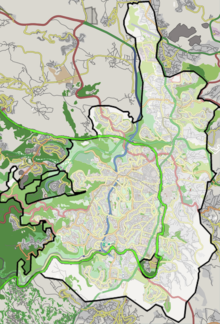
Jerusalem is an ancient city in West Asia, on a plateau in the Judaean Mountains between the Mediterranean and the Dead Sea. It is one of the oldest cities in the world, and is considered holy to the three major Abrahamic religions—Judaism, Christianity, and Islam. Both Israel and Palestine claim Jerusalem as their capital; Israel maintains its primary governmental institutions there, and the State of Palestine ultimately foresees it as its seat of power. Neither claim, however, is widely recognized internationally.

Jericho is a city in the West Bank; it is the administrative seat of the Jericho Governorate of the State of Palestine. Jericho is located in the Jordan Valley, with the Jordan River to the east and Jerusalem to the west. In 2017, it had a population of 20,907.

The Western Wall, known in the West as the Wailing Wall, and in Islam as the Buraq Wall, is a portion of ancient limestone wall in the Old City of Jerusalem that forms part of the larger retaining wall of the hill known to Jews and Christians as the Temple Mount. Just over half the wall's total height, including its 17 courses located below street level, dates from the end of the Second Temple period, and is believed to have been begun by Herod the Great. The very large stone blocks of the lower courses are Herodian, the courses of medium-sized stones above them were added during the Umayyad period, while the small stones of the uppermost courses are of more recent date, especially from the Ottoman period.

Caesarea, also Caesarea Maritima, Caesarea Palaestinae or Caesarea Stratonis, was an ancient and medieval port city on the coast of the Eastern Mediterranean, and later a small fishing village. It was the capital of Roman Judaea, Syria Palaestina and Palaestina Prima, successively, for a period of c.650 years, and a major intellectual hub of the Mediterranean, from the time of Herod I until the Muslim conquest of the Levant. Today, the site is part of the Caesarea National Park, on the western edge of the Sharon plain in Israel.

Tiberias is an Israeli city on the western shore of the Sea of Galilee. A major Jewish center during Late Antiquity, it has been considered since the 16th century one of Judaism's Four Holy Cities, along with Jerusalem, Hebron, and Safed. In 2021, it had a population of 46,698.

This is a timeline of major events in the history of Jerusalem; a city that had been fought over sixteen times in its history. During its long history, Jerusalem has been destroyed twice, besieged 23 times, attacked 52 times, and captured and recaptured 44 times.

East Jerusalem is the sector of Jerusalem that was held by Jordan after the 1948 Arab–Israeli War, as opposed to the western sector of the city, West Jerusalem, which was held by Israel. Under international law, East Jerusalem is considered a part of the West Bank and, therefore, of the Palestinian territories. A number of states recognize East Jerusalem as the capital of the State of Palestine, whereas other states assert that East Jerusalem "will be the capital of Palestine", while referring to it as "an occupied territory".
During its long history, Jerusalem has been attacked 52 times, captured and recaptured 44 times, besieged 23 times, and destroyed twice. The oldest part of the city was settled in the 4th millennium BCE, making Jerusalem one of the oldest cities in the world.

Syria Palaestina, or Roman Palestine, was a Roman province in the Palestine region between the early 2nd and late 4th centuries AD. The provincial capital was Caesarea Maritima.

The Greek Orthodox Patriarchate of Jerusalem, also known as the Greek Orthodox Church of Jerusalem, is an autocephalous church within the wider communion of Eastern Orthodox Christianity. Established in the mid-fifth century as one of the oldest patriarchates in Christendom, it is headquartered in the Church of the Holy Sepulchre in Jerusalem and led by the patriarch of Jerusalem, currently Theophilos III. The patriarchate's ecclesiastical jurisdiction includes roughly 200,000 to 500,000 Orthodox Christians across the Holy Land in Palestine, Jordan and Israel.
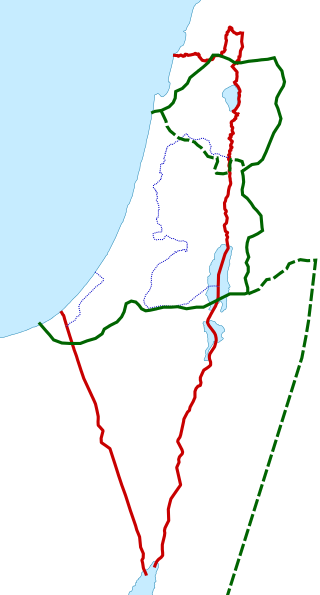
Palestine is a geographical region in West Asia. Situated in the Southern Levant, it is usually considered to include Israel and the State of Palestine, though some definitions also include parts of northwestern Jordan. Other historical names for the region include Canaan, the Promised Land, the Land of Israel, or the Holy Land.

Sepphoris, known in Hebrew as Tzipori and in Arabic as Saffuriya is an archaeological site located in the central Galilee region of Israel, 6 kilometres (3.7 mi) north-northwest of Nazareth. It lies 286 meters (938 ft) above sea level and overlooks the Beit Netofa Valley. The site holds a rich and diverse historical and architectural legacy that includes Hellenistic, ancient Jewish, Roman, Byzantine, early Islamic, Crusader, Mamluk and Ottoman remains. In the Roman period, it was also called Diocaesaraea. In Mandatory Palestine, Saffuriya was a Palestinian Arab town with a population of approximately 5000 people at the time of its depopulation in 1948.

Judaea was a Roman province from 6 to 132 CE, which incorporated the Levantine regions of Judea, Samaria and Idumea, extending over parts of the former regions of the Hasmonean and Herodian kingdoms of Judea. The name Judaea was derived from the Iron Age Kingdom of Judah.
The history of the Jews and Judaism in the Land of Israel begins in the 2nd millennium BCE, when Israelites emerged as an outgrowth of southern Canaanites, During biblical times, a postulated United Kingdom of Israel existed but then split into two Israelite kingdoms occupying the highland zone: the Kingdom of Israel (Samaria) in the north, and the Kingdom of Judah in the south. The Kingdom of Israel was conquered by the Neo-Assyrian Empire, and the Kingdom of Judah by the Neo-Babylonian Empire. Initially exiled to Babylon, upon the defeat of the Neo-Babylonian Empire by the Achaemenid Empire under Cyrus the Great, many of the Jewish exiles returned to Jerusalem, building the Second Temple.
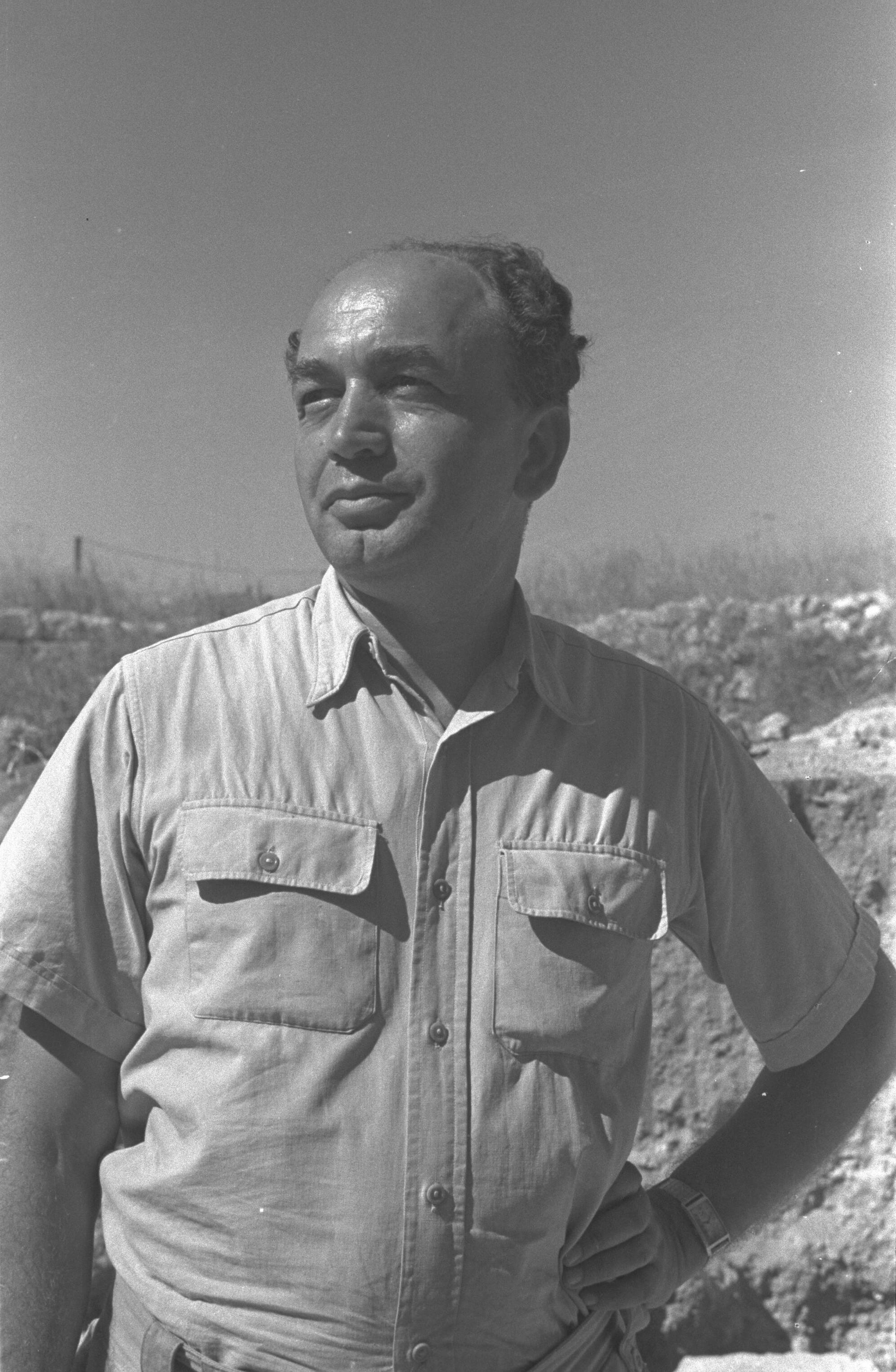
Nahman Avigad, born in Zawalow, Galicia, was an Israeli archaeologist.

Herod's Gate is one of the seven open Gates of the Old City of Jerusalem. It connects the Muslim Quarter inside of the old city to the eponymic Palestinian neighbourhood of Bab az-Zahra, situated just outside. It is a short distance to the east of the Damascus Gate. Its elevation is 755 meters above sea level.

Strategically situated between three continents, the region of Palestine has a tumultuous history as a crossroads for religion, culture, commerce, and politics. Palestine is the birthplace of Judaism and Christianity, and has been controlled by many kingdoms and powers, including Ancient Egypt, Ancient Israel and Judah, the Persian Empire, Alexander the Great and his successors, the Hasmoneans, the Roman Empire, several Muslim caliphates, and the crusaders. In modern times, the area was ruled by the Ottoman Empire, then the British Empire and since 1948 it has been divided into Israel, the West Bank, and the Gaza Strip.

Judea or Judaea is a mountainous region of the Levant. Traditionally dominated by the city of Jerusalem, it is now part of Palestine and Israel. The name's usage is historic, having been used in antiquity and still into the present day; it originates from Yehudah, a Hebrew name. Yehudah was a son of Jacob, who was later given the name "Israel" and whose sons collectively headed the Twelve Tribes of Israel. Yehudah's progeny among the Israelites formed the Tribe of Judah, with whom the Kingdom of Judah is associated. Related nomenclature continued to be used under the rule of the Babylonians, the Persians, the Greeks, and the Romans. Under the Hasmoneans, the Herodians, and the Romans, the term was applied to an area larger than the historical region of Judea. In 132 CE, the Roman province of Judaea was merged with Galilee to form the enlarged province of Syria Palaestina.
The timeline of the Palestine region is a timeline of major events in the history of Palestine. For more details on the history of Palestine see History of Palestine. In cases where the year or month is uncertain, it is marked with a slash, for example 636/7 and January/February.