Fulton Heights Historic District

Last updated

Fulton Heights Historic District
FultonHeightsSign.jpg
Fulton Heights Neighborhood Sign, Trolley Fare, Salisbury NC by artist Jeanette Brossart
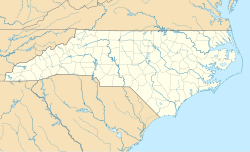
USA North Carolina location map.svg
Red pog.svg
Usa edcp location map.svg
Red pog.svg
LocationRoughly bounded by Fulton St., Heilig Ave., Ridge Ave., and Boyden St., Salisbury, North Carolina
Coordinates 35°39′40″N80°29′25″W / 35.66111°N 80.49028°W / 35.66111; -80.49028
Area122 acres (49 ha)
Built1904 (1904)
Architectural styleColonial Revival, Bungalow/craftsman, et al.
NRHP reference No. 99000394 [1]
Added to NRHPMarch 25, 1999

Fulton Heights Historic District is a national historic district located at Salisbury, Rowan County, North Carolina. The district encompasses 439 contributing buildings and 2 contributing structures in predominantly residential section of Salisbury. It largely developed between about 1903 and 1948, and includes notable examples of Colonial Revival and Bungalow / American Craftsman style architecture. Notable buildings include the T.A. Ludwick House, Choate-Blount House, Lauriston Hardin House, Williams-Kesler House, Lewis D. Peeler House, F.W. Kirk House, Second Reformed Presbyterian Church (1913), First Associate Reformed Presbyterian Church (1939), Calvin H. Wiley School (1916), R. L. Foil and Company Grocery (1905), the Albright Cash Store, and the Piggly Wiggly Grocery. [2]

It was listed on the National Register of Historic Places in 1999. [1]

Related Research Articles

<span class="mw-page-title-main">Livingstone College</span> Historically black institution in North Carolina, U.S.

Livingstone College is a private historically black Christian college in Salisbury, North Carolina. It is affiliated with the African Methodist Episcopal Zion Church. Livingstone College is accredited by the Southern Association of Colleges and Schools to award bachelor's degrees.

<span class="mw-page-title-main">Elizabeth (Charlotte neighborhood)</span> Historic district in North Carolina, United States

Elizabeth takes its name from Elizabeth College, a small Lutheran women's college founded in 1897 on the present-day site of Presbyterian Hospital. The community began in 1891 when a streetcar was established along East Trade Street to the area, making it the second oldest streetcar suburb in Charlotte. Elizabeth began to develop rapidly after 1902, when a trolley line was completed, and was annexed in 1907. Home of Independence Park, the first public park in the city, Elizabeth became one of the most fashionable residential areas in Charlotte in its early days. In 2006 Elizabeth had a population of 3,908.

<span class="mw-page-title-main">La Grange Historic District (North Carolina)</span> Historic district in North Carolina, United States

The La Grange Historic District is a national historic district located in La Grange, North Carolina, United States. The district, originally encompassing 225 buildings and 1 structure, includes the historic commercial, residential, and industrial center of La Grange. The buildings include notable examples of Gothic Revival, Queen Anne and Bungalow/American Craftsman styles of architecture and date between the 1850s and the 1940s. Located in the district is the separately listed La Grange Presbyterian Church. Other notable buildings include the Sutton-Kinsey House, Walter Pace House, Sutton-Fields House, Colonel A. C. Davis House (1887), and the Rouse Banking Company Building (1908). The historic district was added to the National Register of Historic Places in May 2000.

<span class="mw-page-title-main">Hillsborough Historic District</span> Historic district in North Carolina, United States

Hillsborough Historic District is a national historic district located at Hillsborough, Orange County, North Carolina. The district encompasses 529 contributing buildings, 9 contributing sites, 13 contributing structures, and 2 contributing objects in the central business district and surrounding residential sections of Hillsborough. The district includes buildings dating to the late-18th and early-20th century and includes notable examples of Federal, Greek Revival, and Italianate style architecture. Located in the district are the separately listed Burwell School, Eagle Lodge, Hazel-Nash House, Heartsease, Montrose, Nash Law Office, Nash-Hooper House, Old Orange County Courthouse, Poplar Hill, Ruffin-Roulhac House, Sans Souci, and St. Matthew's Episcopal Church and Churchyard. Other notable buildings include Seven Hearths, the Presbyterian Church (1815-1816), Methodist Church (1859-1860), First Baptist Church (1862-1870), Twin Chimneys, and the Berry Brick House.

<span class="mw-page-title-main">Ebenezer Academy, Bethany Presbyterian Church and Cemetery</span> Historic site in Iredell County, North Carolina

Ebenezer Academy, Bethany Presbyterian Church and Cemetery is a historic school building, Presbyterian church, and cemetery located six miles north of Statesville in Bethany Township, Iredell County, North Carolina. The log building was constructed in 1823 and housed Ebenezer Academy. The church building was built about 1855, and is a one-story, three bay by five bay, vernacular Greek Revival style frame building with a low gable roof. Also on the property is the contributing church cemetery with burials dating to about 1785.

<span class="mw-page-title-main">North Union Street Historic District</span> Historic district in North Carolina, United States

North Union Street Historic District is a national historic district located at Concord, Cabarrus County, North Carolina. The district encompasses 150 contributing buildings in a predominantly residential section of Concord. The area developed after 1870 and includes notable examples of Greek Revival and Late Victorian style architecture. Located in the district are the First Presbyterian Church, the Associate Reformed Presbyterian Church, Forest Hill Methodist Church, the First Baptist Church, the (Former) All Saints Episcopal Church, and the First United Presbyterian Church.

<span class="mw-page-title-main">Milton Historic District (Milton, North Carolina)</span> Historic district in North Carolina, United States

Milton Historic District is a national historic district located at Milton, Caswell County, North Carolina. It encompasses 15 contributing buildings in the town of Milton. The district includes notable examples of Federal and Greek Revival style architecture. In addition to the separately listed Milton State Bank and Union Tavern, other notable buildings include the Clay-Lewis-Irvine House, Winstead House, Presbyterian Church, Baptist Meeting House, Old Shops, Old Stores, and row houses. Fittings in the Presbyterian Church and Baptist Meeting House are attributed to noted African-American cabinetmaker Thomas Day.

East Durham Historic District is a national historic district located at Durham, Durham County, North Carolina. The district encompasses 731 contributing buildings and 1 contributing site in a predominantly residential section of Durham. The buildings primarily date between about 1890 and 1955 and include notable examples of Classical Revival and Queen Anne architecture. Notable buildings include the Holloway Street School (1928), East Durham Junior High School, Advent Christian Church (1920s), John Cheek House (1899), Community Groceries (1900), George Brown Grocery Store (1920), Seagroves Grocery Store (1915), and The People's Bank (1921).

<span class="mw-page-title-main">Trinity Historic District</span> Historic district in North Carolina, United States

Trinity Historic District, also called Trinity Park, is a national historic district and residential area located near the East Campus of Duke University in Durham, North Carolina. The district encompasses 751 contributing buildings in a predominantly residential section of Durham. They were built between the 1890s and 1960 and include notable examples of Queen Anne and Bungalow / American Craftsman style architecture. Located in the district are the separately listed "Faculty Row" cottage: the Bassett House, Cranford-Wannamaker House, Crowell House, and Pegram House. Other notable buildings include the George W. Watts School (1917), Julian S. Carr Junior High School (1922), Durham High School (1923), Durham Alliance Church (1927), Trinity Presbyterian Church (1925), Great A & P Tea Company (1927-1929), Grace Lutheran Church, and the former Greek Orthodox Community Church.

Stokesdale Historic District is a national historic district located at Durham, Durham County, North Carolina. The district encompasses 227 contributing buildings, 1 contributing site, and 1 contributing structure in a historically African-American residential section of Durham. The buildings primarily date between about 1912 and 1960 and include notable examples of Queen Anne, Colonial Revival, Tudor Revival, and Bungalow / American Craftsman architecture. Notable buildings include Page's Grocery, College Inn, Covenant United Presbyterian Church (1948), and Seventh Day Adventist Church (1954).

West End Historic District is a national historic district located at Winston-Salem, Forsyth County, North Carolina. The district encompasses 508 contributing buildings and 7 contributing structures, in a predominantly residential section of Winston-Salem. It was a planned picturesque streetcar suburb developed at the turn of the 20th century. The buildings date from about 1887 to 1930, and include notable examples of Classical Revival, Colonial Revival, Queen Anne, and Bungalow / American Craftsman style architecture. Located in the district are the separately listed H. D. Poindexter Houses and Zevely House. Other notable buildings include the St. Paul's Episcopal Church (1928-1929) designed by Ralph Adams Cram, Augsburg Lutheran Church (1926), Friends Meeting House (1927), the First Church of Christ, Scientist (1924), and Joyner's West End Grocery.

Snow Hill Historic District is a national historic district located at Snow Hill, Greene County, North Carolina. The district encompasses 229 contributing buildings, a contributing site, two contributing structures, and a contributing object in the central business district and surrounding residential sections of Snow Hill. The buildings are in a variety of popular 19th and early-20th century architectural styles including Greek Revival, Gothic Revival, Colonial Revival, and, Bungalow / American Craftsman. Located in the district are the separately listed Greene County Courthouse and St. Barnabas Episcopal Church. Other notable buildings include J. Exum & Co. Grocery building, Harper Drugstore, Sugg-Harper House, Williams-Exum Housem, Murphrey-Morrill House (1885), Josiah Exum House (1887-1888), Alfred Warren House (1912-1915), Calvary Memorial Methodist Church (1928), Snow Hill Presbyterian Church (1935), and former First Baptist Church.

<span class="mw-page-title-main">Fisher Park Historic District</span> Historic district in North Carolina, United States

Fisher Park Historic District is a national historic district in the Fisher Park neighborhood, Greensboro, Guilford County, North Carolina. The district encompasses 541 contributing buildings, 2 contributing sites, and 44 contributing structures in a predominantly residential section of Greensboro. The houses were largely built between the 1900s and 1930s and include notable examples of Queen Anne, Colonial Revival, Gothic Revival, American Foursquare, and Bungalow / American Craftsman-style architecture. Located in the district are the separately listed Dixon-Leftwich-Murphy House, John Marion Galloway House, Julian Price House, and Latham-Baker House. Other notable buildings include the First Presbyterian Church (1928), Holy Trinity Episcopal Church (1922), Gant-McAlister House, and A.J. Schlosser House.

<span class="mw-page-title-main">Davidson Historic District</span> Historic district in North Carolina, United States

Davidson Historic District is a national historic district located at Davidson, Mecklenburg County, North Carolina. The district encompasses 394 contributing buildings, 2 contributing sites, and 2 contributing structures in the central business district and surrounding residential neighborhoods of Davidson and campus of Davidson College. It was developed after 1837 and includes notable examples of Italianate, Greek Revival, and Gothic Revival style architecture. Located in the district are the separately listed Eumenean Hall and Philanthropic Hall. Other notable buildings include the Maxwell Chambers Building, Jackson Row (1928), Helper Hotel (1848), Johnston Grocery Store (1912), Southern Railway Depot (1897), Linden Cotton Factory (1890), Delburg Cotton Mills (1908), Davidson United Methodist Church (1908), Davidson College Presbyterian Church (1951), and Carnegie Library (1909).

<span class="mw-page-title-main">Aberdeen Historic District (Aberdeen, North Carolina)</span> Historic district in North Carolina, United States

Aberdeen Historic District is a national historic district located at Aberdeen, Moore County, North Carolina. The district encompasses 101 contributing buildings, 1 contributing site, and 2 contributing structures in the town of Aberdeen. It was developed between 1880 and 1940 and includes notable examples of Queen Anne, Classical Revival, and Bungalow / American Craftsman style architecture. Located in the district is the separately listed John Blue House. Other notable buildings include the Postmaster's House, Aberdeen and Asheboro Railroad Building, Page Memorial Library (1907), (former) Union Station (1906), Aberdeen and Rockfish Railroad Building (1904), Bank of Aberdeen, Page Memorial United Methodist Church (1913), (former) Bethesda Presbyterian Church (1906-1907), and Faith Presbyterian Church.

<span class="mw-page-title-main">Carolina Heights Historic District</span> Historic district in North Carolina, United States

Carolina Heights Historic District is a national historic district located at Wilmington, New Hanover County, North Carolina. The district encompasses 421 contributing buildings, 1 contributing site, and 1 contributing object in a predominantly residential section of Wilmington. The district developed as planned suburban areas between about 1908 and 1950 and includes notable examples of Queen Anne, Classical Revival, Colonial Revival, and Bungalow / American Craftsman style architecture. Notable buildings include the New Hanover High School (1922), the Trinity Methodist Episcopal Church (1921), St. Paul's Episcopal Church (1927/1956-1958), First Church of Christ, Scientist (1928), Sinclair Service Station, and Yopp Funeral Home (1936).

Burgaw Historic District is a national historic district located at Burgaw, Pender County, North Carolina. The district encompasses 130 contributing buildings, 1 contributing structure, and 1 contributing object in the central business district and surrounding residential sections of Burgaw. The district developed from the mid-19th to mid-20th century, and includes notable examples of Gothic Revival and Queen Anne style architecture. Located in the district are the separately listed Burgaw Depot and Pender County Courthouse. Other notable contributing buildings include the M. M. Moore House, Murphy-Sasser House, Dr. H. B. Thomas House, Burton-Noel House (1917), Burgaw Presbyterian Church, Macedonia African Methodist Episcopal (AME) Church, Burgaw Methodist Church (1928), the Burgaw Baptist Church (1948), Bank of Pender (1907), Pender County Jail (1924), and R.H. Holland Motor Company Building (1924).

<span class="mw-page-title-main">Saluda Main Street Historic District</span> Historic district in North Carolina, United States

Saluda Main Street Historic District is a national historic district located at Saluda, Polk County, North Carolina. The district encompasses 16 contributing buildings, 1 contributing site, and 1 contributing structure in the central business district of Saluda. It includes buildings dated from about 1878 to 1946 and notable examples of Late Gothic Revival and Stick style / Eastlake movement architecture. Notable buildings include the Saluda Presbyterian Church (1895-1896), former Saluda Depot, the Saluda City Hall (1896-1907), the M. A. Pace Store (1905-1910), Thompson's Store (1905-1910), Pebbledash Building (1911-1916), Top Service Station (1930s), and the former United States Post Office.

<span class="mw-page-title-main">Salisbury Historic District</span> Historic district in North Carolina, United States

Salisbury Historic District is a national historic district located at Salisbury, Rowan County, North Carolina. The district encompasses 348 contributing buildings and 1 contributing site in the central business district and surrounding residential sections of Salisbury. It includes notable examples of Late Victorian, Colonial Revival, and Bungalow / American Craftsman style architecture. Located in the district are the separately listed Maxwell Chambers House, McNeely-Strachan House, Archibald Henderson Law Office, and the former Rowan County Courthouse. Other notable buildings include the tower of the former First Presbyterian Church (1891-1893), Rowan County Courthouse (1914), Conrad Brem House, Kluttz's Drug Store, Bell Building, Washington Building, Grubb-Wallace Building, Hedrick Block, Empire Hotel, St. Luke's Episcopal Church (1827-1828), Soldiers Memorial A.M.E. Zion Church (1910-1913), U.S. Post Office and Courthouse (1909), City Hall (1926), Salisbury Fire House and City Building (1897).

<span class="mw-page-title-main">Danbury Historic District</span> Historic district in North Carolina, United States

Danbury Historic District is a national historic district located at Danbury, Stokes County, North Carolina. The district encompasses 44 contributing buildings in the central business district and surrounding residential section of Danbury. They were built between about 1860 and 1930 and include notable examples of Queen Anne, Romanesque Revival, and Bungalow architecture. Located in the district and separately listed is the Stokes County Courthouse. Other notable buildings include the County Jail (1904), Petree Store, the Martin Store, Stack-Bickett Law office (1888), Bank of Stokes County, McCannless Hotel, James Pepper House, Wilson Fulton brick house, Samuel H. Taylor House/Hotel, the N. E. Wall House, Baptist Mission Church, Clark Memorial Presbyterian Church, and the Methodist Church.

References

  1. 1 2 "National Register Information System". National Register of Historic Places . National Park Service. July 9, 2010.
  2. Kaye Graybeal (August 1998). "Fulton Heights Historic District" (pdf). National Register of Historic Places - Nomination and Inventory. North Carolina State Historic Preservation Office. Retrieved February 1, 2015.