
Ganoderiols are bio-active sterols isolated from Ganoderma lucidum . [1]
| Molecular Formula | |
| Molecular Weight | 474.7 g/mol |
| Covalently-Bonded Unit Count | 1 |
| Complexity | 860 |
Ganoderiols are bio-active sterols isolated from Ganoderma lucidum . [1]
| Molecular Formula | |
| Molecular Weight | 474.7 g/mol |
| Covalently-Bonded Unit Count | 1 |
| Complexity | 860 |

Lingzhi, Ganoderma sichuanense, also known as reishi or Ganoderma lingzhi is a polypore fungus native to East Asia belonging to the genus Ganoderma.
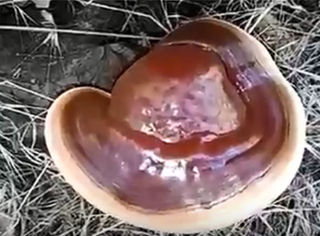
Ganoderma lucidum is a red-colored species of Ganoderma with a limited distribution in Europe and parts of China, where it grows on decaying hardwood trees. Wild populations have been found in the United States in California and Utah, but were likely introduced anthropogenically and naturalized.

Ganoderma applanatum is a bracket fungus with a cosmopolitan distribution.

Ganoderma is a genus of polypore fungi in the family Ganodermataceae that includes about 80 species, many from tropical regions. They have a high genetic diversity and are used in traditional Asian medicines. Ganoderma can be differentiated from other polypores because they have a double-walled basidiospore. They may be called shelf mushrooms or bracket fungi.
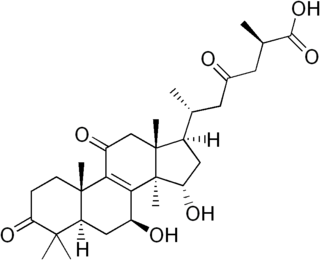
Ganoderic acids are a class of closely related triterpenoids found in Ganoderma mushrooms. For thousands of years, the fruiting bodies of Ganoderma fungi have been used in traditional medicines in East Asia. Consequently, there have been efforts to identify the chemical constituents that may be responsible for the putative pharmacological effects. The two most well described ganoderic acids out of the many that have been identified and characterized are ganoderic acids A and B. Some ganoderic acids have been found to possess biological activities including hepatoprotection, anti-tumor effects, and 5-alpha reductase inhibition.

Ganoderma tsugae, also known as hemlock varnish shelf, is a flat polypore mushroom of the genus Ganoderma.
Lingzhi may refer to:

Ganoderma multipileum, commonly known as lingzhi or chizhi, is a species of polypore mushroom found in tropical Asia. It has been used as a medicinal mushroom for over 2000 years. Formerly known as Ganoderma lucidum, phylogenetic analyses published in 2009 revealed that G. lucidum is primarily a European species, and that the name has been incorrectly applied to Asian collections.

Lingzhi station is an interchange station for Line 5 and Line 12 of the Shenzhen Metro. Line 5 platforms opened on 22 June 2011 and Line 12 platforms opened on 28 November 2022. This station is an underground station. Its Chinese name may have come from 灵芝.

Ganoderma curtisii is a wood-decaying polypore whose distribution is primarily in the Southeastern United States. Craig and Levetin claim to have observed it in Oklahoma.

Bolitotherus cornutus is a North American species of darkling beetle known as the horned fungus beetle or forked fungus beetle. All of its life stages are associated with the fruiting bodies of a wood-decaying shelf fungus, commonly Ganoderma applanatum, Ganoderma tsugae, and Ganoderma lucidum.

Scytalidocarboxyl peptidase B, also known as Scytalidoglutamic peptidase and Scytalidopepsin B is a proteolytic enzyme. It was previously thought to be an aspartic protease, but determination of its molecular structure showed it to belong a novel group of proteases, glutamic protease.

Ganoderols are triterpenes isolated from Ganoderma lucidum.

Ganoderenic acids are bio-active sterols isolated from Ganoderma lucidum.

Ganodermanontriol is a lanostanoid triterpene isolated from Ganoderma lucidum.
Medicinal fungi are fungi that contain metabolites or can be induced to produce metabolites through biotechnology to develop prescription drugs. Compounds successfully developed into drugs or under research include antibiotics, anti-cancer drugs, cholesterol and ergosterol synthesis inhibitors, psychotropic drugs, immunosuppressants and fungicides.
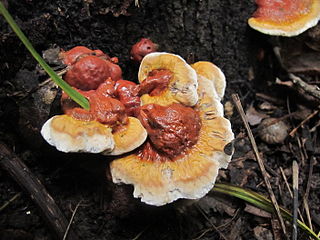
Ganoderma sessile is a species of polypore fungus in the Ganodermataceae family. This wood decay fungus is found commonly in Eastern North America, and is associated with declining or dead hardwoods. There is taxonomic uncertainty with this fungus since its circumscription in 1902.
Scytalidium ganodermophthorum is an anthroconidial ascomycete fungus in the Scytalidium genus. It is also known by its teleomorph name Xylogone ganodermophthora. It is the cause of yellow rot in lingzhi mushrooms and it is used in spalting as a pigmenting fungi.
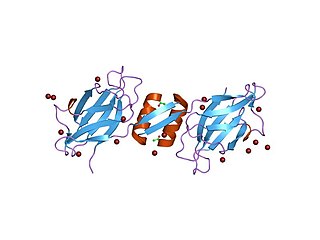
Fungal immunomodulatory proteins (FIPs) are a type of functional compound found in various species of fungi. FIPs are part of the immunoglobulin (ig) family, which are structurally similar to human antibodies, and can interact with human peripheral blood mononuclear cells (PBMCs), causing these cells to secrete different types of hormones and regulate cellular activity.
 | This article about a steroid is a stub. You can help Wikipedia by expanding it. |
