Related Research Articles

Grigory Isaakovich Barenblatt was a Russian mathematician.
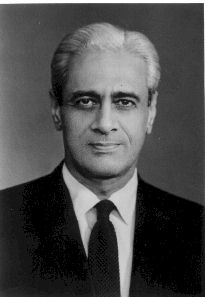
Satish Dhawan was an Indian mathematician and aerospace engineer, widely regarded as the father of experimental fluid dynamics research in India. Born in Srinagar, Dhawan was educated in India and further on in United States. Dhawan was one of the most eminent researchers in the field of turbulence and boundary layers, leading the successful and indigenous development of the Indian space programme. He succeeded M. G. K. Menon, as the third chairman of the Indian Space Research Organisation (ISRO) in 1972. The second launch pad of ISRO, Satish Dhawan space centre is named after him. He is greatly regarded as the man behind A. P. J. Abdul Kalam.

The University of California, San Diego School of Medicine is the graduate medical school of the University of California, San Diego, a public land-grant research university in La Jolla, California. It was the third medical school in the University of California system, after those established at UCSF and UCLA, and is the only medical school in the San Diego metropolitan area. It is closely affiliated with the medical centers that are part of UC San Diego Health.

Roddam Narasimha FRS was an Indian aerospace scientist and fluid dynamicist. He was a professor of Aerospace Engineering at the Indian Institute of Science (1962–1999), director of the National Aerospace Laboratories (1984–1993) and the chairman of the Engineering Mechanics Unit at Jawaharlal Nehru Centre for Advanced Scientific Research. He was the DST Year-of-Science Chair Professor at JNCASR and concurrently held the Pratt & Whitney Chair in Science and Engineering at the University of Hyderabad. Narasimha was awarded the Padma Vibhushan, India's second-highest civilian award, in 2013. for his contributions to advance India's aerospace technology.
Hassan Aref, was the Reynolds Metals Professor in the Department of Engineering Science and Mechanics at Virginia Tech, and the Niels Bohr Visiting Professor at the Technical University of Denmark.
Steven Alan Orszag was an American mathematician.
A. K. M. Fazle Hussain is a professor of mechanical engineering at Texas Tech University.

Katepalli Raju Sreenivasan is an aerospace scientist, fluid dynamicist, and applied physicist whose research includes physics and applied mathematics. He studies turbulence, nonlinear and statistical physics, astrophysical fluid mechanics, and cryogenic helium. He was the dean of engineering and executive vice provost for science and technology of New York University. Sreenivasan is also the Eugene Kleiner Professor for Innovation in Mechanical Engineering at New York University Tandon School of Engineering and a professor of physics and mathematics professor at the New York University Graduate School of Arts and Science and Courant Institute of Mathematical Sciences.

Shu Chien is a Chinese–American physiologist and bioengineer. His work on the fluid dynamics of blood flow has had a major impact on the diagnosis and treatment of cardiovascular diseases such as atherosclerosis. More recently, Chien's research has focused on the mechanical forces, such as pressure and flow, that regulate the behaviors of the cells in blood vessels. Chien is currently President of the Biomedical Engineering Society.
John Wilder Miles was a research professor emeritus of applied mechanics and geophysics at Scripps Institution of Oceanography, University of California, San Diego. He was well regarded for his pioneering work in theoretical fluid mechanics, and made fundamental contributions to understanding how wind energy transfers to waves.
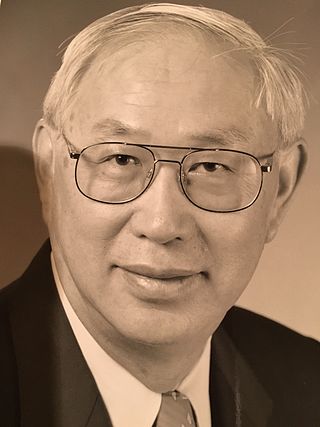
Van C. Mow is a Chinese-born-American bioengineer, known as one of the earliest researchers in the field of biomechanics.
Robert D. Moser is an American Professor of engineering, noted for his studies of spectral methods, turbulence, and uncertainty quantification. He is the W. A. “Tex” Moncrief Jr. Chair in Computational Engineering and Sciences and is professor of mechanical engineering in thermal fluid systems at the University of Texas at Austin. Before coming to The University of Texas at Austin, he was a research scientist at the NASA-Ames Research Center and then a professor of theoretical and applied mechanics at the University of Illinois.
Rama Govindarajan is an Indian scientist specialized in the field of fluid dynamics. She previously worked at the Engineering Mechanics Unit of the Jawaharlal Nehru Centre for Advanced Scientific Research from 1998 to 2012 and as a professor at the TIFR Hyderabad Centre for Interdisciplinary Sciences from 2012 to 2016. As of 2019 she is working as a professor at International Centre for Theoretical Sciences (ICTS), Bengaluru. Govindarajan is a recipient of the Shanti Swarup Bhatnagar Award for the year 2007.
Viswanathan Kumaran is an Indian chemical engineer, rheologist and a professor at the Department of Chemical Engineering of the Indian Institute of Science. He is known for his studies on stability of flow past flexible surfaces and is an elected fellow of the Indian Academy of Sciences, Indian National Science Academy and the Indian National Academy of Engineering. The Council of Scientific and Industrial Research, the apex agency of the Government of India for scientific research, awarded him the Shanti Swarup Bhatnagar Prize for Science and Technology, one of the highest Indian science awards for his contributions to Engineering Sciences in 2000. A recipient of the TWAS Prize in 2014 and the Infosys Prize 2016 in the Engineering and Computer Science category, Kumaran was listed in the Asian Scientist 100, a list of top 100 scientists from Asia, by the Asian Scientist magazine.

Roderic Ivan Pettigrew is an American physicist, engineer, and physician who is CEO of EnHealth and Executive Dean for EnMed at Texas A&M University. From 2002-November 2017, he was the founding director of the National Institute of Biomedical Imaging and Bioengineering (NIBIB) at the National Institutes of Health (NIH). He is a pioneer and world expert in cardiovascular magnetic resonance imaging (MRI).
Rahul Pandit is an Indian condensed matter physicist, a professor of physics and a divisional chair at the Indian Institute of Science. Known for his research on phase transitions and spatiotemporal chaos and turbulence, Pandit is an elected fellow of the Indian Academy of Sciences, Indian National Science Academy and The World Academy of Sciences. The Council of Scientific and Industrial Research, the apex agency of the Government of India for scientific research, awarded him the Shanti Swarup Bhatnagar Prize for Science and Technology, one of the highest Indian science awards, for his contributions to physical sciences in 2001.

Charles Meneveau is a French-Chilean born American fluid dynamicist, known for his work on turbulence, including turbulence modeling and computational fluid dynamics.
Ricardo Luis Armentano Feijoo is an Uruguayan professor and researcher who has worked in biomedical engineering and cardiovascular systems. He currently serves as the director of the GIBIO research group at the National Technological University — Buenos Aires Regional Faculty (Argentina). Also he is the director of the Department of Biological Engineering, University of the Republic (Uruguay). He has two doctoral degrees, two post-doctoral degrees, and has authored more than 300 research articles and 20 books/book chapters.
Ravindra Nath Sudan was an Indian-American electrical engineer and physicist who specialized in plasma physics. He was known for independently discovering the whistler instability in 1963, an instability which causes audible low-frequency radio waves to be emitted in the magnetosphere in the form of whistler waves. He also pioneered the study of the generation and propagation of intense ion beams, and contributed to theories of plasma instabilities and plasma turbulence.
Pavlos P. Vlachos is a Greek-American engineer, scientist, academic, and entrepreneur. He is professor in Purdue’s School of Mechanical Engineering and in the Weldon School of Biomedical Engineering, and the St. Vincent Health Professor of Healthcare Engineering. He serves as the Director for the Purdue Regenstrief Center for Healthcare Engineering (RCHE).
References
- ↑ https://www.units.it/persone/index.php/from/abook/persona/5944
- ↑ https://web.units.it/dottorato/esfm/en/people/pedrizzetti-gianni/183
- ↑ https://portale.units.it/it/notizie/docenti-units-nellelenco-aggiornato-dei-ricercatori-piu-citati-al-mondo
- ↑ https://kheradvar.eng.uci.edu/people.php?id=gpedrizz
- ↑ https://scholar.google.it/citations?user=ybvI510AAAAJ
- ↑ Pedrizzetti G. Fluid Mechanics for Cardiovascular Engineering. Springer, Cham 2022 (ISBN 978-3-030-85942-8). DOI: 10.1007/978-3-030-85943-5
- ↑ https://patents.google.com/?inventor=pedrizzetti&oq=pedrizzetti
- ↑ https://www.asecho.org/kalmanson-lecture
