Related Research Articles
The year 1898 in science and technology involved some significant events, listed below.

Baron Adrien Victor Joseph de Gerlache de Gomery was a Belgian officer in the Belgian Royal Navy who led the Belgian Antarctic Expedition of 1897–99.
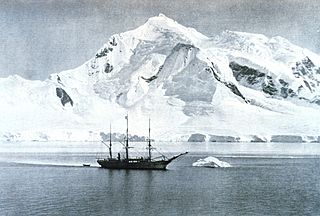
The Belgian Antarctic Expedition of 1897–1899 was the first expedition to winter in the Antarctic region. Led by Adrien de Gerlache de Gomery aboard the RV Belgica, it was the first Belgian Antarctic expedition and is considered the first expedition of the Heroic Age of Antarctic Exploration. Among its members were Frederick Cook and Roald Amundsen, explorers who would later attempt the respective conquests of the North and South Poles.

Danco Island or Isla Dedo is an island off Antarctica, 2 kilometres (1 nmi) long lying in the southern part of Errera Channel, off the west coast of Graham Land. It was charted by the Belgian Antarctic Expedition under Adrien de Gerlache, 1897–1899. Danco Island was surveyed by the Falkland Islands Dependencies Survey from Norsel in 1955, and named by the UK Antarctic Place-names Committee for Emile Danco (1869–1898), a Belgian geophysicist and member of the Belgian Antarctic Expedition, who died on board Belgica in the Antarctic.

Gerlache Strait or de Gerlache Strait or Détroit de la Belgica is a channel/strait separating the Palmer Archipelago from the Antarctic Peninsula. The Belgian Antarctic Expedition, under Lt. Adrien de Gerlache, explored the strait in January and February 1898, naming it for the expedition ship Belgica. The name was later changed to honor the commander himself.
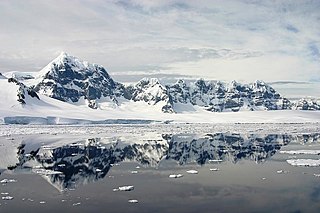
Wiencke Island is an island 26 km (16 mi) long and from 3 to 8 km wide, about 67 km2 (26 sq mi) in area, the southernmost of the major islands of the Palmer Archipelago, lying between Anvers Island to its north across the Neumayer Channel and the west coast of the Antarctic Peninsula to its east across the Gerlache Strait.
Belgica Mountains is an isolated chain of mountains about 10 miles (16 km) long, standing 60 miles (97 km) east-southeast of the Sor Rondane Mountains in Queen Maud Land, in the Antarctic. The chain was discovered by the Belgian Antarctic Expedition (1957-1958) under Gaston de Gerlache, and named after the ship Belgica, commanded by his father, Lt. Adrien de Gerlache, leader of the Belgian Antarctic Expedition of 1897–99.

Henryk Arctowski Polish Antarctic Station is a Polish research station on King George Island, off the coast of Antarctica.

Arnaldo Faustini (1872–1944) was an Italian polar geographer, writer, and cartographer. He is considered by some to be the first East European polar specialist. Born in Rome, he received his doctorate at the University of Rome at the age of 19. Faustini worked at a newspaper based in Rome as scientific editor. He had a special interest in polar subjects, and published 19 books on polar subjects in his native Italian. He also wrote numerous articles.
Gumery is a rare surname extant in the United Kingdom, France and North America, that used to be a first name.

Jean-Charles Jacobs was a Belgian doctor and entomologist, a pupil of Constantin Wesmael. He graduated in medicine from the University of Brussels, but never abandoned the study of insects, and was one of the founders of the Société entomologique de Belgique. He concentrated on the Hymenoptera, often in collaboration with Jules Tosquinet, turning to Diptera later in life. Among his later studies was a report on the insects collected by the Belgian Antarctic Expedition, including that continent's largest fully terrestrial animal, the fly Belgica antarctica .

Antoni Bolesław Dobrowolski was a Polish geophysicist, meteorologist and explorer.

Belgica was a barque-rigged steamship that was built in 1884 by Christian Brinch Jørgensen at Svelvik, Norway as the whaler Patria. In 1896, she was purchased by Adrien de Gerlache for conversion to a research ship, taking part in the Belgian Antarctic Expedition of 1897–1901, becoming the first ship to overwinter in the Antarctic. In 1902, she was sold to Philippe, Duke of Orléans and used on expeditions to the Arctic in 1905 and from 1907 to 1909.
De Gerlache Seamounts are seamounts in Antarctica, named for Lieutenant Adrien Victor Joseph de Gerlache, Commander of the Belgica during the first Belgian Antarctic Expedition, 1896–1899.
Bryde Island is an island 10 km (6 mi) long and 5 km (3 mi) wide, lying immediately south-west of Lemaire Island, off the west coast of Graham Land, Antarctica. It was discovered by the Belgian Antarctic Expedition (BelgAE) under Adrien de Gerlache, 1897–99, and named for Ingvald Bryde, Norwegian agent who arranged the purchase of the expedition ship Belgica.
Baron Gaston de Gerlache de Gomery was a Belgian polar explorer.
Belgium was one of the 12 countries that initially negotiated and signed the Antarctic Treaty.
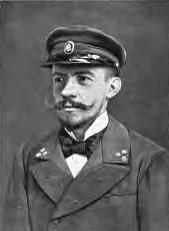
Georges Lecointe was a Belgian naval officer and scientist. He was captain of the Belgica and second-in-command of the Belgian Antarctic Expedition, the first to overwinter in Antarctica. After his return to Belgium he was the founder of the International Polar Organization and deeply involved in the foundation of the International Research Council and the International Astronomical Union.
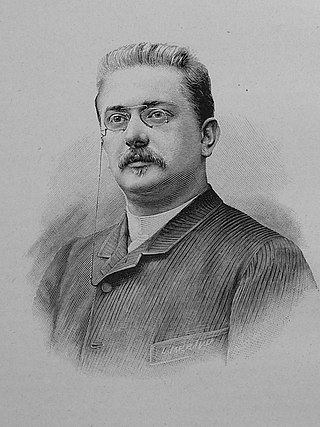
Jean Baptiste François René Koehler was a French zoologist best known for his research of echinoderms.
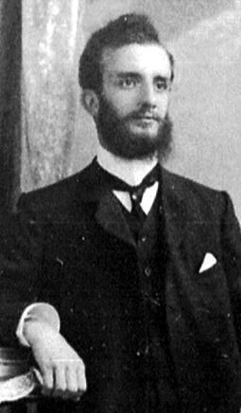
Max van Rysselberghe was a Belgian-born Chilean engineer and Antarctic explorer.