The demographics of Guatemala are diverse; the population, 14,901,286 strong, historically comprises primarily of Mestizos (60%), then Amerindians (30%) and people of European descent (10%). The population is divided almost evenly between rural and urban areas.

Spanish, or Castilian, is a Romance language that originated in the Iberian Peninsula and today has over 483 million native speakers, mainly in Spain and the Americas. It is a global language, the world's second-most spoken native language, after Mandarin Chinese, and the world's fourth-most spoken language, after English, Mandarin Chinese and Hindi.

The Mayan languages form a language family spoken in Mesoamerica and northern Central America. Mayan languages are spoken by at least 6 million Maya people, primarily in Guatemala, Mexico, Belize and Honduras. In 1996, Guatemala formally recognized 21 Mayan languages by name, and Mexico recognizes eight more within its territory.
Mam is a Mayan language spoken by about half a million Mam people in the Guatemalan departments of Quetzaltenango, Huehuetenango, San Marcos, and Retalhuleu, and the Mexican state of Chiapas. Thousands more make up a Mam diaspora throughout the United States and Mexico, with notable populations living in Oakland, California and Washington, D.C.

The Maya peoples are an ethnolinguistic group of indigenous peoples of Mesoamerica. They inhabit southern Mexico, Guatemala, Belize, El Salvador and Honduras. "Maya" is a modern collective term for the peoples of the region, however, the term was not used by the indigenous populations themselves since there never was a common sense of identity or political unity among the distinct populations, societies and ethnic groups because they each had their own particular traditions, cultures and historical identity.
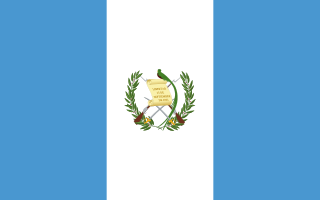
Guatemalans are people identified with Guatemala, a multiethnic country in Central America. Guatemalans are mainly of Mestizos, indigenous people or Amerindians and descendants from European people. Guatemalans are also nicknamed chapines by other mainly Spanish-speaking countries of the Latin America.

Tzotzil is a Maya language spoken by the indigenous Tzotzil Maya people in the Mexican state of Chiapas. Most speakers are bilingual in Spanish as a second language. In Central Chiapas, some primary schools and a secondary school are taught in Tzotzil. Tzeltal is the most closely related language to Tzotzil and together they form a Tzeltalan sub-branch of the Mayan language family. Tzeltal, Tzotzil and Chʼol are the most widely spoken languages in Chiapas.

Ajaw or Ahau ('Lord') is a pre-Columbian Maya political title attested from epigraphic inscriptions. It is also the name of the 20th day of the tzolkʼin, the Maya divinatory calendar, on which a king's kʼatun-ending rituals would fall.
The Kaqchikel language is an indigenous Mesoamerican language and a member of the Quichean–Mamean branch of the Mayan languages family. It is spoken by the indigenous Kaqchikel people in central Guatemala. It is closely related to the Kʼicheʼ (Quiché) and Tzʼutujil languages.
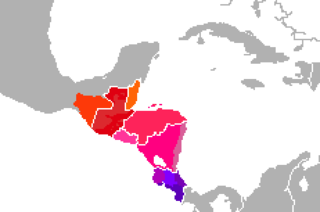
Central American Spanish is the general name of the Spanish language dialects spoken in Central America. More precisely, the term refers to the Spanish language as spoken in Costa Rica, El Salvador, Guatemala, Honduras, and Nicaragua. Although Panama is part of Central America, Panamanian Spanish is classified as a variety of Caribbean Spanish.
The Qʼeqchiʼ language, also spelled Kekchi, Kʼekchiʼ, or kekchí, is one of the Mayan languages, spoken within Qʼeqchiʼ communities in Guatemala and Belize.
Chuj is a Mayan language spoken by around 40,000 members of the Chuj people in Guatemala and around 3,000 members in Mexico. Chuj is a member of the Qʼanjobʼalan branch along with the languages of Tojolabʼal, Qʼanjobʼal, Akateko, Poptiʼ, and Mochoʼ which, together with the Chʼolan branch, Chuj forms the Western branch of the Mayan family. The Chujean branch emerged approximately 2,000 years ago. In Guatemala, Chuj speakers mainly reside in the municipalities of San Mateo Ixtatán, San Sebastián Coatán and Nentón in the Huehuetenango Department. Some communities in Barillas and Ixcán also speak Chuj. The two main dialects of Chuj are the San Mateo Ixtatán dialect and the San Sebastián Coatán dialect.
The Ladino people are a mix of mestizo or hispanicized peoples in Latin America, principally in Central America. The demonym Ladino is a Spanish word that derives from Latino. Ladino is an exonym invented during the colonial era to refer to those Spanish-speakers who were not colonial elites of Peninsulares, Criollos, or indigenous peoples.
Poqomam is a Mayan language, closely related to Poqomchiʼ. It is spoken by 50,000 or so people in several small pockets in Guatemala, the largest of which is in Jalapa department.
Qʼanjobʼal is a Mayan language spoken primarily in Guatemala and part of Mexico. According to 1998 estimates compiled by SIL International in Ethnologue, there were approximately 77,700 native speakers, primarily in the Huehuetenango Department of Guatemala. Municipalities where the Qʼanjobʼal language is spoken include San Juan Ixcoy, San Pedro Soloma, Santa Eulalia, Santa Cruz Barillas (Yalmotx), San Rafael La Independencia, and San Miguel Acatán. Qʼanjobʼal is taught in public schools through Guatemala's intercultural bilingual education programs.
Guatemalan Sign Language or "Lengua de Señas de Guatemala" is the proposed national deaf sign language of Guatemala, formerly equated by most users and most literature equates with the sign language known by the acronymic abbreviations LENSEGUA, Lensegua, and LenSeGua. Recent legal initiatives have sought to define the term more inclusively, so that it encompasses all the distinctive sign languages and sign systems native to the country.
Guatemala, officially the Republic of Guatemala, is a country in Central America bordered by Mexico to the north and west, Belize and the Caribbean to the northeast, Honduras to the east, El Salvador to the southeast and the Pacific Ocean to the south. With an estimated population of around 17.2 million, it is the most populous country in Central America. Guatemala is a representative democracy; its capital and largest city is Nueva Guatemala de la Asunción, also known as Guatemala City.
The Awakatek (Aguacateco) are a Maya people in Guatemala, primarily located in the municipality of Aguacatán (Huehuetenango). Their native Awakatek language is related to the Ixil language.

Guatemalan Spanish is the national variant of Spanish spoken in the Central American country of Guatemala. About 13.7 million of the 16 million population speak Spanish. It includes the use of the second-person singular personal pronoun vos alongside the standard Spanish second-person singular pronouns tú and usted to form a three-level system of second-person singular address.
Kʼicheʼ, or Quiché, is a Maya language of Guatemala, spoken by the Kʼicheʼ people of the central highlands. With over a million speakers, Kʼicheʼ is the second-most widely spoken language in the country after Spanish.

