Long-term memory (LTM) is the stage of the Atkinson–Shiffrin memory model in which informative knowledge is held indefinitely. It is defined in contrast to short-term and working memory, which persist for only about 18 to 30 seconds. LTM is commonly labelled as "explicit memory" (declarative), as well as "episodic memory," "semantic memory," "autobiographical memory," and "implicit memory".

Fragile X syndrome (FXS) is a genetic disorder characterized by mild-to-moderate intellectual disability. The average IQ in males with FXS is under 55, while about two thirds of affected females are intellectually disabled. Physical features may include a long and narrow face, large ears, flexible fingers, and large testicles. About a third of those affected have features of autism such as problems with social interactions and delayed speech. Hyperactivity is common, and seizures occur in about 10%. Males are usually more affected than females.
Ram, ram, or RAM may refer to:

Brodmann area 9, or BA9, refers to a cytoarchitecturally defined portion of the frontal cortex in the brain of humans and other primates. It contributes to the dorsolateral and medial prefrontal cortex.
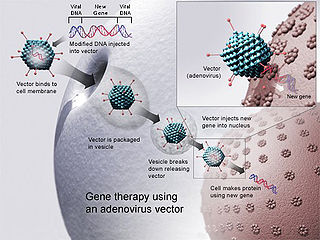
Human genetic enhancement or human genetic engineering refers to human enhancement by means of a genetic modification. This could be done in order to cure diseases, prevent the possibility of getting a particular disease, to improve athlete performance in sporting events, or to change physical appearance, metabolism, and even improve physical capabilities and mental faculties such as memory and intelligence. These genetic enhancements may or may not be done in such a way that the change is heritable.
Memory has the ability to encode, store and recall information. Memories give an organism the capability to learn and adapt from previous experiences as well as build relationships. Encoding allows a perceived item of use or interest to be converted into a construct that can be stored within the brain and recalled later from long-term memory. Working memory stores information for immediate use or manipulation which is aided through hooking onto previously archived items already present in the long-term memory of an individual.

The human-body model (HBM) is the most commonly used model for characterizing the susceptibility of an electronic device to damage from electrostatic discharge (ESD). The model is a simulation of the discharge which might occur when a human touches an electronic device.

The health belief model (HBM) is a social psychological health behavior change model developed to explain and predict health-related behaviors, particularly in regard to the uptake of health services. The HBM was developed in the 1950s by social psychologists at the U.S. Public Health Service and remains one of the best known and most widely used theories in health behavior research. The HBM suggests that people's beliefs about health problems, perceived benefits of action and barriers to action, and self-efficacy explain engagement in health-promoting behavior. A stimulus, or cue to action, must also be present in order to trigger the health-promoting behavior.
Imprint or imprinting may refer to:

The sense of smell, or olfaction, is the special sense through which smells are perceived. The sense of smell has many functions, including detecting desirable foods, hazards, and pheromones, and plays a role in taste.
Mu hemoglobin is a predicted protein encoded in the HBM gene. The mRNA is expressed at moderate levels, but the protein has not been detected by mass spectrometry. The order of genes is: 5' - zeta - pseudozeta - mu - pseudoalpha-1 - alpha-2 - alpha-1 - theta1 - 3'.
The study of memory incorporates research methodologies from neuropsychology, human development and animal testing using a wide range of species. The complex phenomenon of memory is explored by combining evidence from many areas of research. New technologies, experimental methods and animal experimentation have led to an increased understanding of the workings of memory.

Memory is the faculty of the mind by which data or information is encoded, stored, and retrieved when needed. It is the retention of information over time for the purpose of influencing future action. If past events could not be remembered, it would be impossible for language, relationships, or personal identity to develop. Memory loss is usually described as forgetfulness or amnesia.
Behavioral epigenetics is the field of study examining the role of epigenetics in shaping animal and human behavior. It seeks to explain how nurture shapes nature, where nature refers to biological heredity and nurture refers to virtually everything that occurs during the life-span. Behavioral epigenetics attempts to provide a framework for understanding how the expression of genes is influenced by experiences and the environment to produce individual differences in behaviour, cognition, personality, and mental health.
Hybrid Memory Cube (HMC) is a high-performance computer random-access memory (RAM) interface for through-silicon vias (TSV)-based stacked DRAM memory competing with the incompatible rival interface High Bandwidth Memory (HBM).

High Bandwidth Memory (HBM) is a high-speed computer memory interface for 3D-stacked synchronous dynamic random-access memory (SDRAM) initially from Samsung, AMD and SK Hynix. It is used in conjunction with high-performance graphics accelerators, network devices, high-performance datacenter AI ASICs and FPGAs and in some supercomputers. The first HBM memory chip was produced by SK Hynix in 2013, and the first devices to use HBM were the AMD Fiji GPUs in 2015.
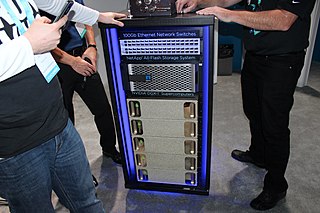
Nvidia DGX is a line of Nvidia-produced servers and workstations which specialize in using GPGPU to accelerate deep learning applications. The typical design of a DGX system is based upon a rackmount chassis with motherboard that carries high performance x86 server CPUs. The main component of a DGX system is a set of 4 to 16 Nvidia Tesla GPU modules on an independent system board. DGX systems have large heatsinks and powerful fans to adequately cool thousands of watts of thermal output. The GPU modules are typically integrated into the system using a version of the SXM socket.
