Prescription drug list prices in the United States continually rank among the highest in the world. The high cost of prescription drugs became a major topic of discussion in the 21st century, leading up to the U.S. health care reform debate of 2009, and received renewed attention in 2015. One major reason for high prescription drug prices in the United States relative to other countries is the inability of government-granted monopolies in the U.S. health care sector to use their bargaining power to negotiate lower prices and that the US payer ends up subsidizing the world's R&D spending on drugs. The Democratic Party is broadly in favor of allowing the government to negotiate drug prices, whereas the Republican Party has prevented passage of bills that would permit that.
Health insurance or medical insurance is a type of insurance that covers the whole or a part of the risk of a person incurring medical expenses. As with other types of insurance is risk among many individuals. By estimating the overall risk of health risk and health system expenses over the risk pool, an insurer can develop a routine finance structure, such as a monthly premium or payroll tax, to provide the money to pay for the health care benefits specified in the insurance agreement. The benefit is administered by a central organization, such as a government agency, private business, or not-for-profit entity.
A health savings account (HSA) is a tax-advantaged medical savings account available to taxpayers in the United States who are enrolled in a high-deductible health plan (HDHP). The funds contributed to an account are not subject to federal income tax at the time of deposit. Unlike a flexible spending account (FSA), HSA funds roll over and accumulate year to year if they are not spent. HSAs are owned by the individual, which differentiates them from company-owned Health Reimbursement Arrangements (HRA) that are an alternate tax-deductible source of funds paired with either high-deductible health plans or standard health plans.
In the United States, a flexible spending account (FSA), also known as a flexible spending arrangement, is one of a number of tax-advantaged financial accounts, resulting in payroll tax savings. One significant disadvantage to using an FSA is that funds not used by the end of the plan year are forfeited to the employer, known as the "use it or lose it" rule. Under the terms of the Affordable Care Act however a plan may permit an employee to carry over up to $550 into the following year without losing the funds but this does not apply to all plans and some plans may have lower limits.

Employee benefits and benefits in kind include various types of non-wage compensation provided to employees in addition to their normal wages or salaries. Instances where an employee exchanges (cash) wages for some other form of benefit is generally referred to as a "salary packaging" or "salary exchange" arrangement. In most countries, most kinds of employee benefits are taxable to at least some degree. Examples of these benefits include: housing furnished or not, with or without free utilities; group insurance ; disability income protection; retirement benefits; daycare; tuition reimbursement; sick leave; vacation ; social security; profit sharing; employer student loan contributions; conveyancing; long service leave; domestic help (servants); and other specialized benefits.
A Health Reimbursement Account, formally a Health Reimbursement Arrangement (HRA), is a type of US employer-funded health benefit plan that reimburses employees for out-of-pocket medical expenses and, in limited cases, to pay for health insurance plan premiums.
Consumer-driven healthcare (CDHC), or consumer-driven health plans (CDHP) refers to a type of health insurance plan that allows employers and/or employees to utilize pretax money to help pay for medical expenses not covered by their health plan. These plans are linked to health savings accounts (HSAs), health reimbursement accounts (HRAs), or similar medical payment accounts. Users keep any unused balance or "rollover" at the end of the year to increase future balances or to invest for future expenses. They are a high-deductible health plan which has cheaper premiums but higher out of pocket expenses, and as such are seen as a cost effective means for companies to provide health care for their employees.
In the United States, a pharmacy benefit manager (PBM) is a third-party administrator of prescription drug programs for commercial health plans, self-insured employer plans, Medicare Part D plans, the Federal Employees Health Benefits Program, and state government employee plans. According to the American Pharmacists Association, "PBMs are primarily responsible for developing and maintaining the formulary, contracting with pharmacies, negotiating discounts and rebates with drug manufacturers, and processing and paying prescription drug claims." PBMs operate inside of integrated healthcare systems, as part of retail pharmacies, and as part of insurance companies.
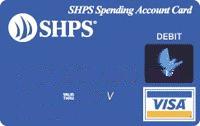
A FSA Debit Card is a type of debit card issued in the United States. It can access tax-favored spending accounts such as flexible spending accounts (FSA) and health reimbursement accounts (HRA), and sometimes health savings accounts (HSA) as well.
A cafeteria plan or cafeteria system is a type of employee benefit plan offered in the United States pursuant to Section 125 of the Internal Revenue Code. Its name comes from the earliest such plans that allowed employees to choose between different types of benefits, similar to the ability of a customer to choose among available items in a cafeteria. Qualified cafeteria plans are excluded from gross income. To qualify, a cafeteria plan must allow employees to choose from two or more benefits consisting of cash or qualified benefit plans. The Internal Revenue Code explicitly excludes deferred compensation plans from qualifying as a cafeteria plan subject to a gross income exemption. Section 125 also provides two exceptions.
In the United States, a high-deductible health plan (HDHP) is a health insurance plan with lower premiums and higher deductibles than a traditional health plan. It is intended to incentivize consumer-driven healthcare. Being covered by an HDHP is also a requirement for having a health savings account. Some HDHP plans also offer additional "wellness" benefits, provided before a deductible is paid. High-deductible health plans are a form of catastrophic coverage, intended to cover for catastrophic illnesses. Adoption rates of HDHPs have been growing since their inception in 2004, not only with increasing employer options, but also increasing government options. As of 2016, HDHPs represented 29% of the total covered workers in the United States; however, the impact of such benefit design is not widely understood.
Health Spending Accounts (HSA) are Self-insured Private Health Services Plan (PHSP) benefits arranged by Employers for their Employees residing in Canada. Private Health Services Plans are described in Canada Revenue Agency (CRA) Income Tax Bulletin IT-339R2 "Meaning of PHSP" for Health and Dental Care Expenses described in Income Tax Bulletin IT-519R2 "Medical Expenses".
A Health and welfare trust (HAWT) or Health and welfare plan (HAWP) is a tax-free vehicle for financing a corporation's healthcare costs for their employees. They were introduced in 1986 by Canada Revenue Agency (CRA) in their interpretation bulletin entitled IT-85R2. Many companies offer this product to Canadian employers.
A Private Health Services Plan in Canada is Health and/or Dental Care, as part of an insured Group Insurance Plan or a self-insured plan, such as a Health Spending Account, Cost-Plus Plan or one of the three options under a Health and Welfare Trust.
Health insurance in the United States is any program that helps pay for medical expenses, whether through privately purchased insurance, social insurance, or a social welfare program funded by the government. Synonyms for this usage include "health coverage", "health care coverage", and "health benefits". In a more technical sense, the term "health insurance" is used to describe any form of insurance providing protection against the costs of medical services. This usage includes both private insurance programs and social insurance programs such as Medicare, which pools resources and spreads the financial risk associated with major medical expenses across the entire population to protect everyone, as well as social welfare programs like Medicaid and the Children's Health Insurance Program, which both provide assistance to people who cannot afford health coverage.
In the United States, a medical savings account (MSA) refers to a medical savings account program, generally associated with self-employed individuals, in which tax-deferred deposits can be made for medical expenses. Withdrawals from the MSA are tax-free if used to pay for qualified medical expenses. The MSA must be coupled with a high-deductible health plan (HDHP). Withdrawals from MSA go toward paying the deductible expenses in a given year. MSA account funds can cover expenses related to most forms of health care, disability, dental care, vision care, and long-term care, whether the expenses were billed through the qualifying insurance or otherwise.
Catamaran Corporation is the former name of a company that now operates within UnitedHealth Group's OptumRX division. It sells pharmacy benefit management and medical record keeping services to businesses in the United States and to a broad client portfolio, including health plans and employers. Working independently of the government and insurance companies allowed it to operate as a third party verifier; the RxCLAIM online claim processing system allowed for prescription drug claims to be processed online if the customer lived in and filled his/her prescription in the United States. SXC had three separate but interrelated business segments which dealt with prescription drug programs. For 2013, 23% of company revenue came from Cigna Corporation.
Health care finance in the United States discusses how Americans obtain and pay for their healthcare, and why U.S. healthcare costs are the highest in the world based on various measures.
The Affordable Care Act (ACA) is divided into 10 titles and contains provisions that became effective immediately, 90 days after enactment, and six months after enactment, as well as provisions phased in through to 2020. Below are some of the key provisions of the ACA. For simplicity, the amendments in the Health Care and Education Reconciliation Act of 2010 are integrated into this timeline.
The Elijah Cummings Lower Drug Costs Now Act is proposed legislation in the 117th United States Congress. The bill is designed to lower prescription drug costs in the United States. Notably, the law gives the federal government the power to negotiate prescription drug prices. The legislation takes the name of late Maryland Representative Elijah Cummings.


