Hopkins Notes and Records System

Last updated

The concept of a system for filing and for the cross-referencing of specimen, collection, and identification information, was first advanced by A. D. Hopkins in 1894. [1] The System was formally initiated by the U.S. Department of Agriculture in 1902 by Hopkins himself, who was subsequently named Chief of Forest Insect Investigations. It was still in use in 1987 by more than twenty Forest Service units of Forest Insect and Disease Research and Forest Pest Management, and by the Agricultural Research Service Systematic Entomology Laboratory (ARS-SEL). A salient feature or the System was the controlled assignment of “Hopkins numbers” to avoid redundancy within or between field units. These unique numbers allow for the keying of records, an essential pre-requisite for the creation of a proper relational database.

Contents

The paper records of the Hopkins Notes and Records System and the corresponding digital records in the Hopkins US System Index (HUSSI) are co-dependent repositories for data about specimens of forest insects and their damage. These specimens were curated by Government professionals beginning with Hopkins' work at the USDA. The more than 80 years of records with identification and collection information are from all geographic areas managed by the USDA Forest Service, as well as small subset of records from other countries.

Genesis

A.D. Hopkins, commonly referred to as the father of forest entomology in the United States, formulated the record-keeping system that now bears his name. Hopkins brought his system to the federal government when he came to work for the Division of Entomology in the late 1890s, by which time he had already been using his record-keeping system at West Virginia University, Morgantown, WV, where he previously worked. Hopkins then brought the system to the USDA Division of Entomology in 1902. [2] It was subsequently adopted by personnel of Forest Insect Investigations at field stations throughout the country. The System contains U.S. in its name to distinguish it from those earlier Hopkins records at West Virginia University. The Hopkins U.S. System became widely used by Forest Service Research, by other pest management units, and also by ARS-SEL. It was in continuous use until the mid-1980s.

The Hopkins Notebook Series

The biological data from the original Hopkins records were recorded on either 3"×5" forms, or on 3"×5" or 5"×8" cards (hereafter referred to simply as cards) that were filed in the Hopkins Notebook Series. These Notebooks are the original “database” from which the Hopkins U.S. System developed. The system, represented in these volumes, consists of notebook entries bearing “checklist numbers,” and a set of such file cards.

Cards are indexed to the descriptive narratives or notes that appear in the notebooks in numerical order by checklist number. Additional notes often provide extensive textual descriptions of the writer’s observations and many include detailed drawings as well. The table of contents for a given notebook was derived from the way in which those checklist numbers were assigned to individual collectors. Taken as a whole, the Notebook Series chronicles the work and travels of many of the pioneering figures of North American entomology, from the turn of the century to about 1920.

Beginning in 1899, number-series – usually in blocks of 100 to 200 – appear to have been assigned to entomologists as needed. There are also blocks of numbers that were evidently set aside to accommodate material that was sent to the staff entomologists for identification. Such blocks of numbers are designated “Office Notes.” Some blocks of numbers in the Office Notes series are from outside the contiguous United States. For example, specimens or collections from Central and South America, Mexico, Cuba, Puerto Rico, the Virgin Islands, and Africa appear there. The information shown in the Office Notes often include references to the original correspondence accompanying the specimens when they were submitted.

The Hopkins Record cards

The card observations consist of the collection and identification information associated, by number, with specific insect or damage specimens. The numbers also correspond to identical numbers originally attached to mounted insects in collections distributed across the country. They connect that field sample to the information about how, when, and by whom, the work was done. All of that information is detailed by the Hopkins Record cards. The cards are the only link that exists between the sample and its physical provenance. At some archive locations, the early records included the above-mentioned notebooks or ledgers containing more detailed information. The card files usually have three components: a numerical file, the basic file of cards in numerical order; the species file or insect species index; and host file or host index. The System has been applied differently at the various field locations; some units have only the numerical file.

Organizational framework

Hopkins' organizing scheme was based on a series of duplicate paper records that contained collection and identification information about the specimens. Each record was given a unique sequential Hopkins U.S. Number. Specimens, each one bearing its own unique Hopkins US Number, and collection records were stored at Forest Service Research Stations and Laboratories, Regional Offices, and at the ARS-SEL in the U.S. National Museum / Smithsonian Institution.

The Hopkins US System contained about 163,000 paper records representing several hundred thousand identified specimens or series of specimens. These are either of insects or samples of insect-damage. Each record has information about taxon, insect and plant association, collection location, date, and collector at a minimum. In addition to the drawings and textual narratives, the record can also have measurements, notes on the research study or spray program, or rearing and other biological data provided by the original collector.

Specimen collection, preparation and record keeping

All the details of the overall process can be found in R.G. Mitchell's unpublished monograph. [3] That work includes "the procedures one follows from the time insect materiel is collected until identifications are obtained". A numbered list of those procedures, taken from the monograph, is reproduced below, with a block diagram of the corresponding workflow shown on the right:

Workflow for the Hopkins records system HopkinsWorkflow.png
Workflow for the Hopkins records system
  1. Collect insects or infested material, keeping insects separated by host.
  2. Rear insects from infested host material or, in the case of defoliators, on fresh host material. When insects are collected as adults, rearing may not be necessary. (At times mating of insects and egg-laying may be desired to obtain needed biological information).
  3. If the rearing or collecting results are of interest, assign a Hopkins number to the collection. (A single Hopkins number cannot be assigned to insects collected from more than one host species, or to insects of the same host species when the collections are separated appreciably by time, space, or host condition).
  4. Fill out general note card (Figure 1) in the number file after preparing and editing a rough draft. The information should be typed on the card stamped with the Hopkins number.
  5. If the insects were reared, fill out rearing notes summary card).
  6. Fill out, if needed, species note card.
  7. Separate insects by order and family. By microscopic examination decide how many species are represented.
  8. Assign a "letter" suffix to the Hopkins number for each tentative identification and fill out species summary card.
  9. Label insects (including a suffixed Hopkins number label) and place specimens in a Schmidt box in order of Hopkins number. Later, the insects to be identified will be removed and sent to a specialist. The duplicates retained at the Station are labeled with a blue tag to show that specimens have been sent away.
  10. Make out three copies of the species determination card for each insect species being sent away for identification.
  11. Write a covering memo for the insects to be shipped. One white copy is prepared for the Division Chief in Washington, D.C., in addition to the copy for the Station files.
  12. Type six copies of the insect identification slip.
  13. Attach two copies of each species determination card (step #9) and three copies of the insect identification slip (step #12) to the covering memo going to the specialist (usually through A.R.S. Division of Identification and Parasite Introduction). Mail memo.
  14. Attach one insect identification slip (step #11) to the covering memo going to the W.O. This goes with other mail to the Chief, U.S.F.S.
  15. Attach one insect identification slip (step #11) to the file copy of the covering memo and place in the pending file (U.S.F.S file code #4500-4).
  16. Place one insect identification slip (step #11) in the shipping box and mail specimens to the specialist for identification.
  17. Clip (use paper clip) all file copies of species determination cards together and place in pending section at the back of the number file. Place the other cards in the proper place in the number file.

Current status

In 1986, concern for the safety and integrity of the Hopkins US System files prompted what was then the Forest Insect and Disease Research Staff (FIDR-WO) to take steps to preserve the information contained in the Hopkins US System. The intent was also to consolidate the information and make it more useful and accessible to the scientific community. About 153,000 Hopkins US System cards and nearly 10,000 notebook pages throughout the Forest Service and at ARS_SEL were microfilmed. Microfiche sets of the file cards were distributed to the office of FIDR-WO, Forest Service labs, Regional Offices, and field units nationwide, and to ARS-SEL.

To make the information in the Hopkins files more accessible, in 1987, FIDR began building the digital database that would become HUSSI. Approximately 61,000 ASCII records were initially created. Of these, about 37,000 records from Hopkins System files held by Forest Service units, mostly in the West, were developed into a relational database. The additional 20,000+ digitized ASCII records are from the Hopkins System paper records held by ARS-SEL at the U.S. National Museum. These have yet to be included in the database.

Future of the digital records

The existing HUSSI database can be queried to produce plant-host and insect-host lists, historical records, and, for example, information on historic and recent geographic range of forest insects to indicate climate change. The unique Hopkins US Number allows users to obtain desired supplemental information on the physical location of curated specimens, and additional information on the original paper Hopkins record(s). Such information is available from Forest Service repositories, ARS-SEL at the U. S. National Museum / Smithsonian Institution, and from several universities where specimens, records, and/or microfiche now reside.

The goal is to make the records available over the Forest Service's internal network, and over the Internet as well. The Hopkins U.S. System is of great potential for use in forestry and forest entomology from a global perspective. The notes and records accumulated in the System constitute the foundational work for forest entomology in North America and elsewhere. They represent an invaluable set of historical field observations. The System was also a means of information sharing for the very earliest investigators during the pioneering phases of forest entomology in the United States.

At that time, little was known, not even the identities, of a large proportion of forest insects in this country. With its files containing nearly 200,000 records, the System is most important as a repository for information on the biologies, habits, and distributions of many thousands of insects of forest trees and other woody plants. Moreover, the observations in the notes have formed an important basis for the study of most of our major forest insect pests. They continued until recent times to provide information for field manuals, host lists, and biological studies.

As forest conditions and forest management practices change, the roster of insects perceived to be pests changes. The Hopkins U.S. System files contain valuable biological information that can be used as a basis for dealing with insects reaching pest status. Because the files contain a vast amount of information on relationships between forest pests and their parasites, predators, and other associated insects, they have served as a source of information to evaluate the potential for biological control through introductions/redistributions of natural enemies or manipulation of habitats.

Related Research Articles

<span class="mw-page-title-main">Entomology</span> Scientific study of insects

Entomology is the scientific study of insects, a branch of zoology. In the past the term insect was less specific, and historically the definition of entomology would also include the study of animals in other arthropod groups, such as arachnids, myriapods, and crustaceans. This wider meaning may still be encountered in informal use.

<i>Lymantria dispar</i> Species of moth

Lymantria dispar, also known as the gypsy moth or the spongy moth, is a species of moth in the family Erebidae native to Europe and Asia. Lymantria dispar is subdivided into several subspecies, with subspecies such as L. d. dispar and L. d. japonica being clearly identifiable without ambiguity. Lymantria dispar has been introduced to several continents and is now additionally found as an invasive species in Africa, North America and South America. The polyphagous larvae live on a variety of deciduous and coniferous trees and can cause severe damage in years of mass reproduction. Due to these features, Lymantria dispar is listed among the world's 100 worst invasive alien species.

<span class="mw-page-title-main">Tachinidae</span> Family of insects

The Tachinidae are a large and variable family of true flies within the insect order Diptera, with more than 8,200 known species and many more to be discovered. Over 1,300 species have been described in North America alone. Insects in this family commonly are called tachinid flies or simply tachinids. As far as is known, they all are protelean parasitoids, or occasionally parasites, of arthropods, usually other insects. The family is known from many habitats in all zoogeographical regions and is especially diverse in South America.
<span class="mw-page-title-main">Insect collecting</span> Hobby

Insect collecting refers to the collection of insects and other arthropods for scientific study or as a hobby. Most insects are small and the majority cannot be identified without the examination of minute morphological characters, so entomologists often make and maintain insect collections. Very large collections are conserved in natural history museums or universities where they are maintained and studied by specialists. Many college courses require students to form small collections. There are also amateur entomologists and collectors who keep collections.

<span class="mw-page-title-main">Francis Walker (entomologist)</span> English entomologist (1809-1874)

Francis Walker was an English entomologist. He was born in Southgate, London, on 31 July 1809 and died at Wanstead, England on 5 October 1874. He was one of the most prolific authors in entomology, and stirred controversy during his later life as his publications resulted in a huge number of junior synonyms. However, his assiduous work on the collections of the British Museum had great significance.

<i>Trichogramma</i> Genus of parasitic insects

Trichogramma is a genus of minute polyphagous wasps that are endoparasitoids of insect eggs. Trichogramma is one of around 80 genera from the family Trichogrammatidae, with over 200 species worldwide.

<span class="mw-page-title-main">Fairyfly</span> Family of wasps

The Mymaridae, commonly known as fairyflies or fairy wasps, are a family of chalcidoid wasps found in temperate, subtropical, and tropical regions throughout the world. The family contains around 100 genera with 1,400 species.

Paratachardina pseudolobata, the lobate lac scale, is a polyphagous and pestiferous lac scale insect, which damages trees and woody shrubs in Cuba, Florida, the Bahamas and the Australian territory of Christmas Island. It was mistakenly identified as Paratachardina lobata (Chamberlin), an insect native to India and Sri Lanka, but was in 2007 recognized and named as a distinct species based on material from Florida; its native distribution is as yet unknown. The new lac insect was described based on all stages of the female, during the revision of the genus Paratachardina, wherein all its known species were redescribed.
<span class="mw-page-title-main">Andrew Delmar Hopkins</span> American entomologist (1857–1948)

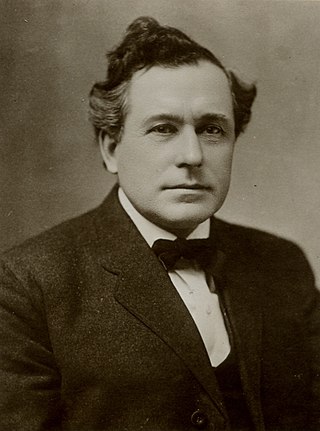
Andrew Delmar Hopkins was an American entomologist of the late 19th and early 20th centuries. Though self-taught, his scientific understanding of forest entomology was exceptional. He received an honorary doctorate from West Virginia University and in 1902 he went to work for the US Department of Agriculture. He was subsequently named head of the newly created Division of Forest Insect Investigations. He became a specialist in the bark beetle family Scolytidae, especially the genus Dendroctonus, species of which are the most destructive insects in coniferous forests of North America. His taxonomic monographs on these beetles are classics. He proposed the Law of Bioclimatics and he also developed the Hopkins Notes and Records System, a system he brought into the federal government when he first came to work for the Division of Entomology in the late 1890s. Hopkins’ research is one of the cornerstones of entomology on the North American continent and he is often referred to as the “father of North American forest entomology.”

<span class="mw-page-title-main">Social Security number</span> Nine-digit number issued to U.S. citizens and permanent residents

In the United States, a Social Security number (SSN) is a nine-digit number issued to U.S. citizens, permanent residents, and temporary (working) residents under section 205(c)(2) of the Social Security Act, codified as 42 U.S.C. § 405(c)(2). The number is issued to an individual by the Social Security Administration, an independent agency of the United States government. Although the original purpose for the number was for the Social Security Administration to track individuals, the Social Security number has become a de facto national identification number for taxation and other purposes.

BugGuide is a website and online community of naturalists, both amateur and professional, who share observations of arthropods such as insects, spiders, and other related creatures. The website consists of informational guide pages and many thousands of photographs of arthropods from the United States and Canada which are used for identification and research. The non-commercial site is hosted by the Iowa State University Department of Entomology. BugGuide was conceived by photographer Troy Bartlett in 2003 and since 2006 has been maintained by John VanDyk, an adjunct assistant professor of entomology and a senior systems analyst at Iowa State University. The website has been recognized for helping change the public perception of insects.

<span class="mw-page-title-main">John Merton Aldrich</span> American entomologist (1866–1934)

John Merton Aldrich was an American entomologist. Aldrich was the Associate Curator of Insects at the United States National Museum. He is considered one of the most prolific entomologists in the study of flies.

<span class="mw-page-title-main">Department of Entomology, National Museum of Natural History</span> Department of the Smithsonians National Museum of Natural History

The Department of Entomology is a research department and collection unit of the Smithsonian Institution's National Museum of Natural History (NMNH), located in Washington, D.C. The department houses the U.S. National Insect Collection, one of the largest entomological collections in the world, with over 35 million specimens housed in 132,354 drawers, 33,000 jars or vials, and 23,000 slides in more than 5,200 cabinets. The department also includes research scientists and technical staff from the Smithsonian Institution, the United States Department of Agriculture Systematic Entomology Lab (SEL) and United States Department of Defense Walter Reed Biosystematics Unit (WRBU).

<i>Dactylopius</i> Genus of insects

Dactylopius is a genus of insect in the superfamily Coccoidea, the scale insects. It is the only genus in the family Dactylopiidae. These insects are known commonly as cochineals, a name that also specifically refers to the best-known species, the cochineal. The cochineal is an insect of economic and historical importance as a main source of the red dye carmine. It has reportedly been used for this purpose in the Americas since the 10th century. Genus Dactylopius is also important because several species have been used as agents of biological pest control, and because several are known as invasive species.

The Hayk Mirzayans Insect Museum (HMIM) is the largest insect collection in Iran with over 4 million insect specimens, including 20–25,000 local species, hundreds of primary types and paratypes, and a representative collection of exotic insects, especially tropical butterflies.

<i>Polistes apachus</i> Species of wasp

Polistes apachus is a social wasp native to western North America. It is known in English by the common name Texas paper wasp, or southwestern Texas paper wasp. It has also been called the Apache wasp, perhaps first by Simmons et al. in California in 1948. Simmons et al. reported how in California P. apachus is often found in fig orchards where it is considered a pest species due to its aggressive attacks and painful stings on farm labourers during harvest time in September and October. It may sometimes also be found in other types of orchards or in vineyards, but in California it is also commonly found to establish nests in or on houses in urban areas in attics or under the eaves of buildings. It is a type of paper wasp, which is the common name for a type of wasp that uses a papery material to construct its nests.

<span class="mw-page-title-main">Spotted lanternfly</span> Species of planthopper indigenous to Southeast Asia

The spotted lanternfly is a planthopper indigenous to parts of China and Vietnam. It has spread invasively to Japan, South Korea, and the United States, where it is often referred to by the acronym "SLF". Its preferred host is tree of heaven, but it infests crops including soybean, grapes, stone fruits, and Malus spp. In its native habitat, L. delicatula populations are regulated by parasitic wasps.

Edwin Cooper Van Dyke was an American physician and entomologist. A leading authority on beetles (Coleoptera) of the Pacific Coast of North America, he was also an expert on insect pests of forests and forest products. He became a professor of entomology at the University of California, Berkeley and worked on the curatorial staff at the California Academy of Sciences for almost fifty years.

<span class="mw-page-title-main">Conservation and restoration of insect specimens</span>

The conservation and restoration of insect specimens is the process of caring for and preserving insects as a part of a collection. Conservation concerns begin at collection and continue through preparation, storage, examination, documentation, research and treatment when restoration is needed.

<i>Saissetia coffeae</i> Species of true bug

Saissetia coffeae, known generally as hemispherical scale, is a species of soft scale insect in the family Coccidae. Other common names include the helmet scale and coffee brown scale.

References

  1. , Hopkins, A. D. Note and Record Keeping for the Economic Entomologist. Insect life 103–109 (1894)
  2. , Henneberry, T. J. Federal Entomology: Beginnings and Organizational Entities in the United States Department of Agriculture, 1854-2006, With Selected Research Highlights. 87 (United States Department of Agriculture: Washington, D.C., 2008)
  3. Mitchell, R. G. Contents and Use of the Hopkins U.S. File System. Research; Unpublished. Portland, OR: USDA Forest Service, Division of Forest Insect Research, September 1961.