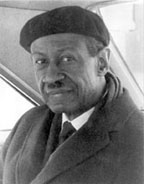
James Amos Porter was an African-American art historian, artist and teacher. He is best known for establishing the field of African-American art history and was influential in the African American Art movement.
Peter Paret was a German-born American cultural and intellectual historian, whose two principal areas of research were war and the interaction of art and politics from 18th to 20th century Europe. He also wrote on related subjects.
Frederick Brockway Deknatel was an American art historian and educator. Deknatel was the William Door Boardman Professor of Fine Arts at Harvard University from 1942 to 1972.
Frank Jewett Mather Jr. was an American art critic and professor. He was the first "modernist" professor at the Department of Art and Archaeology, Princeton University. He was a direct descendant of Richard Mather a Puritan minister in 17th century Boston.
Thomas Corwin Mendenhall II was a professor of history at Yale University, the sixth President of Smith College, and the leading authority on the history of collegiate rowing in the United States.
Robert Orwill Fink was an American papyrologist with a special interest in Roman military papyri.

Carl Wilbur Condit was an American historian of urban and architectural history, a writer, professor, and teacher. He was professor at Northwestern University 1945–82. He wrote numerous books and articles on the history of American building, especially Chicago, Cincinnati, and the Port of New York. He founded the History of Science Department at Northwestern University, where he taught for over 30 years. His research specialty was the architecture of Chicago, Illinois, and he lived in Chicago most of his life, having moved there in 1945 in order to study its urban and technological development.
Ronold Wyeth Percival King was an American applied physicist and electrical engineer, known for his contributions to the theory and application of microwave antennas. He published twelve books and over three hundred articles in his area, as well as mentoring one hundred doctoral dissertations.
William Henry Gerdts Jr. was an American art historian and professor of Art History at the CUNY Graduate Center. Gerdts was the author of over twenty-five books on American art. An expert in American Impressionism, he was also well known for his work on nineteenth-century American still life painting.
Alexander Nemerov is an American art historian. He is the Carl and Marilynn Thoma Provostial Professor in the Arts and Humanities at Stanford University. He specializes in American art dating from the nineteenth and twentieth centuries.
Albert Sidney Beckham (1897–1964) was the first African American to hold the title of school psychologist. He was a pioneering African American psychologist specializing in educational psychology and made significant contributions to the base of knowledge about the racial intelligence score disparity. Additionally, he taught in the New York public school system and was a professor at Wilberforce University and Howard University. He served the Chicago school district as their first African American school psychologist.
Allen Goodrich Shenstone, was a Canadian physicist. He earned bachelor's, master's, and Ph.D. degrees from Princeton University, as well as a Bachelor of Arts from the University of Cambridge. After a brief stint as a junior faculty member at the University of Toronto, he returned to Princeton, where he was a professor in the Department of Physics 1925–62. He chaired the department 1949–60. He worked primarily in the field of atomic spectroscopy. He was awarded the Military Cross for his service in the Royal Engineers in World War I and made an Officer of the Order of the British Empire for his work as a scientific officer in World War II.
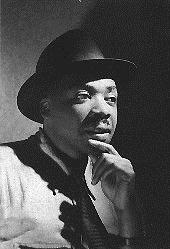
Claude Clark was an American painter, printmaker and art educator. Clark's subject matter was the diaspora of African American culture, including dance scenes, street urchins, marine life, landscapes, and religious and political satire images executed primarily with a palette knife.
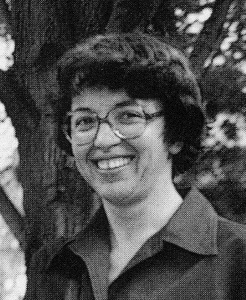
Doula Mouriki was a Greek Byzantinologist and art historian. She made important contributions to the study of Byzantine art in Greece.
Christopher S. Wood is an American art historian. He is a professor in the Department of German at New York University.
Edgar Lane was a professor of political science at the University of California Santa Barbara. He was the author and editor of many scholarly articles, book reviews, and a book on lobbying reform. He made substantial contributions to the regulation of lobbying by assisting the House Select Committee on Lobbying Activities (1950).
Martin Bernard Dickson was a professor of Near Eastern studies at Princeton University and an historian of Iran and Central Asia, who specialized in Safavid History. His magnum opus, Houghton Shahnameh , represented a 20-year long cooperation with art historian Stuart Cary Welch, was described as "[A work which] not only delineate the Turkman and Timurid sources of the Safavid idiom, but also try to recapture the personalities of the artists responding to the actors and themes of the stories they painted". Dickson tutored many accomplished specialists of Medieval Iran, such as John E.Woods, Robert D. McChesney and Wheeler Thackston (Harvard).
Wesley Howard Henderson, is an American architect, educator, and historian. He is an assistant professor at the Robert R. Taylor School of Architecture and Construction Science at Tuskegee University, and is a member of the American Institute of Architects (AIA), and the National Organization of Minority Architects (NOMA). Particularly notable is Henderson's dissertation on Paul Revere Williams, celebrated as the most in-depth examination of the career of Williams, a prominent and celebrated African American architect.
Andrew Carnduff Ritchie (1907–1978) was a Scottish-born American art historian specialising in British 18th-century sculpture, a professor, museum director and post-World War II 'Monuments Man'. He was the director of the Albright-Knox Art Gallery in Buffalo, N.Y., director of Painting and Sculpture at the Museum of Modern Art, and director of the Yale University Art Gallery.
Walter William Spencer Cook, also known as Walter W. S. Cook in citation was an American art historian and professor. He specialized in Spanish Medieval art history. He was an emeritus professor from New York University and he helped found the New York University Institute of Fine Arts. He had a prominent role in introducing eminent German art historians to the United States.

