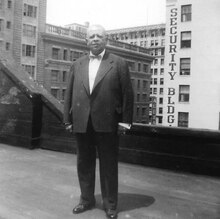
Korematsu v. United States, 323 U.S. 214 (1944), was a landmark decision by the Supreme Court of the United States that upheld the internment of Japanese Americans from the West Coast Military Area during World War II. The decision has been widely criticized, with some scholars describing it as "an odious and discredited artifact of popular bigotry", and as "a stain on American jurisprudence". The case is often cited as one of the worst Supreme Court decisions of all time. Chief Justice John Roberts repudiated the Korematsu decision in his majority opinion in the 2018 case of Trump v. Hawaii.
Peter H. Irons is an American political activist, civil rights attorney, legal scholar, and professor emeritus of political science. He has written many books on the U.S. Supreme Court and constitutional litigation.
Ex parte Mitsuye Endo, 323 U.S. 283 (1944), was a United States Supreme Court ex parte decision handed down on December 18, 1944, in which the Court unanimously ruled that the U.S. government could not continue to detain a citizen who was "concededly loyal" to the United States. Although the Court did not touch on the constitutionality of the exclusion of people of Japanese ancestry from the West Coast, which it had found not to violate citizens' rights in the Korematsu v. United States decision on the same date, the Endo ruling nonetheless led to the reopening of the West Coast to Japanese Americans after their incarceration in camps across the U.S. interior during World War II.
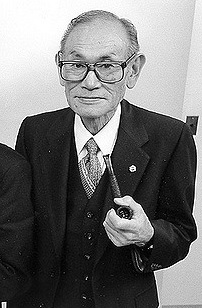
Fred Toyosaburo Korematsu was an American civil rights activist who resisted the internment of Japanese Americans during World War II. Shortly after the Imperial Japanese Navy launched its attack on Pearl Harbor, President Franklin D. Roosevelt issued Executive Order 9066, which authorized the removal of individuals of Japanese ancestry living on the West Coast from their homes and their mandatory imprisonment in incarceration camps, but Korematsu instead challenged the orders and became a fugitive.
Oyama v. State of California, 332 U.S. 633 (1948) was a United States Supreme Court decision that ruled that specific provisions of the 1913 and 1920 California Alien Land Laws abridged the rights and privileges guaranteed by the Fourteenth Amendment to Fred Oyama, a U.S. citizen in whose name his father, a Japanese citizen, had purchased land. In doing so, however, the court did not overturn the California Alien Land Laws as unconstitutional.
Dale Minami is a prominent Japanese American civil rights and personal injury lawyer based in San Francisco, California. He is best known for his work leading the legal team that overturned the conviction of Fred Korematsu, whose defiance of the incarceration of Japanese Americans during World War II led to Korematsu v. United States, which is widely considered one of the worst and most racist Supreme Court decisions in American history.
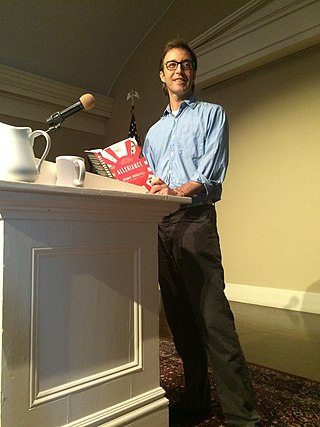
Kermit Roosevelt III is an American author, lawyer, and legal scholar. He is a law professor at the University of Pennsylvania. He is a great-great-grandson of United States President Theodore Roosevelt and a distant cousin of President Franklin D. Roosevelt.
Hirabayashi v. United States, 320 U.S. 81 (1943), was a case in which the United States Supreme Court held that the application of curfews against members of a minority group were constitutional when the nation was at war with the country from which that group's ancestors originated. The case arose out of the issuance of Executive Order 9066 following the attack on Pearl Harbor and the U.S. entry into World War II. President Franklin D. Roosevelt had authorized military commanders to secure areas from which "any or all persons may be excluded", and Japanese Americans living in the West Coast were subject to a curfew and other restrictions before being removed to internment camps. The plaintiff, Gordon Hirabayashi, was convicted of violating the curfew and had appealed to the Supreme Court. Yasui v. United States was a companion case decided the same day. Both convictions were overturned in coram nobis proceedings in the 1980s.
In United States constitutional law, a suspect classification is a class or group of persons meeting a series of criteria suggesting they are likely the subject of discrimination. These classes receive closer scrutiny by courts when an Equal Protection claim alleging unconstitutional discrimination is asserted against a law, regulation, or other government action, or sometimes private action. When a law or government action affects a group that falls under a "suspect classification," courts apply the strict scrutiny standard in reviewing the constitutional validity of a law or action.
On February 19, 1942, shortly after Japan's surprise attack on Pearl Harbor in Hawaii, President Franklin D. Roosevelt signed Executive Order 9066 authorizing the forced removal of over 110,000 Japanese Americans from the West Coast and into internment camps for the duration of the war. The personal rights, liberties, and freedoms of Japanese Americans were suspended by the United States government. In the "relocation centers", internees were housed in tar-papered army-style barracks. Some individuals who protested their treatment were sent to a special camp at Tule Lake, California.
The following article focuses on the movement to obtain redress for the internment of Japanese Americans during World War II, and significant court cases that have shaped civil and human rights for Japanese Americans and other minorities. These cases have been the cause and/or catalyst to many changes in United States law. But mainly, they have resulted in adjusting the perception of Asian immigrants in the eyes of the American government.
Yasui v. United States, 320 U.S. 115 (1943), was a United States Supreme Court case regarding the constitutionality of curfews used during World War II when they were applied to citizens of the United States. The case arose out of the implementation of Executive Order 9066 by the U.S. military to create zones of exclusion along the West Coast of the United States, where Japanese Americans were subjected to curfews and eventual removal to relocation centers. This Presidential order followed the attack on Pearl Harbor that brought America into World War II and inflamed the existing anti-Japanese sentiment in the country.

Charles Fahy was an American lawyer and judge who served as the 26th Solicitor General of the United States from 1941 to 1945 and later served as a United States circuit judge of the United States Court of Appeals for the District of Columbia Circuit from 1949 until his death in 1979.
Wayne Mortimer Collins was a civil rights attorney who worked on cases related to the Japanese American evacuation and internment.
The Fred T. Korematsu Institute for Civil Rights and Education is a non-profit organization which advances pan-ethnic civil rights and human rights through education.
Eric Yamamoto, the Korematsu Professor of Law and Social Justice at the William S. Richardson School of Law at the University of Hawaiʻi at Mānoa, is an internationally recognized expert on issues of racial justice, including racial reconciliation and redress. Flowing from the landmark 1944 Korematsu v. United States case, he is known for his work as a member of Fred Korematsu's 1983 legal team that succeeded in having Korematsu's original conviction overturned.
The Japanese American Evacuation and Resettlement Study (JERS) was a research project funded by the War Relocation Authority (WRA), an agency responsible for overseeing the relocation of Japanese Americans, The University of California, the Giannini Foundation, the Columbian Foundation, and the Rockefeller Foundation with the total amount of funding reaching almost 100,000 U.S. dollars. It was conducted by a team of social scientists at the University of California, Berkeley. The team was led by sociologist Dorothy Swaine Thomas, a Lecturer in Sociology for the Giannini Foundation and a professor of rural sociology, and included anthropologists John Collier Jr. and Alexander Leighton, among others. The study combined each of the major social sciences such as sociology, social anthropology, political science, social psychology, and economics to effectively illustrate the effects of internment on Japanese Americans. The terminology of "relocation" can be confusing: The WRA termed the forced removal of Japanese Americans from the West Coast an "evacuation" and called the incarceration of these people in the ten camps as "relocation." Later it also applied the term "relocation" to the program that enabled the evacuees to leave the camps (provided they had been certified as loyal.

Chiyoko Sakamoto (1912–1994) was California's first Japanese American female lawyer.
Frank Fujio Chuman is a Japanese-American former civil rights attorney and author, involved in several important Japanese American civil rights cases and in the redress movement.
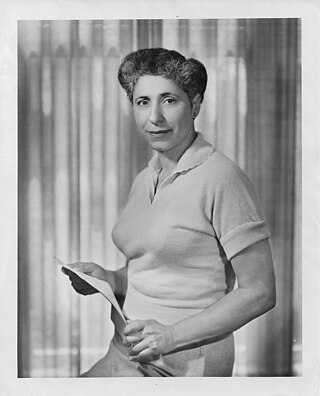
Eva M. Mack, aka Eva Mack and Eva Mack Ringwald was an American woman lawyer based in Los Angeles, California who joined the law firm of Hugh Ellwood Macbeth Sr., in the 1940s before opening her own law office in 1956.