
Heroin, also known as diacetylmorphine and diamorphine among other names, is a morphinan opioid substance synthesized from the dried latex of the Papaver somniferum plant; it is mainly used as a recreational drug for its euphoric effects. Medical-grade diamorphine is used as a pure hydrochloride salt. Various white and brown powders sold illegally around the world as heroin are routinely diluted with cutting agents. Black tar heroin is a variable admixture of morphine derivatives—predominantly 6-MAM (6-monoacetylmorphine), which is the result of crude acetylation during clandestine production of street heroin. Heroin is used medically in several countries to relieve pain, such as during childbirth or a heart attack, as well as in opioid replacement therapy.

Opium is dried latex obtained from the seed capsules of the opium poppy Papaver somniferum. Approximately 12 percent of opium is made up of the analgesic alkaloid morphine, which is processed chemically to produce heroin and other synthetic opioids for medicinal use and for the illegal drug trade. The latex also contains the closely related opiates codeine and thebaine, and non-analgesic alkaloids such as papaverine and noscapine. The traditional, labor-intensive method of obtaining the latex is to scratch ("score") the immature seed pods (fruits) by hand; the latex leaks out and dries to a sticky yellowish residue that is later scraped off and dehydrated. The word meconium historically referred to related, weaker preparations made from other parts of the opium poppy or different species of poppies.

The term narcotic originally referred medically to any psychoactive compound with numbing or paralyzing properties. In the United States, it has since become associated with opiates and opioids, commonly morphine and heroin, as well as derivatives of many of the compounds found within raw opium latex. The primary three are morphine, codeine, and thebaine.
Endorphins are peptides produced in the brain that block the perception of pain and increase feelings of wellbeing. They are produced and stored in the pituitary gland of the brain. Endorphins are endogenous painkillers often produced in the brain and adrenal medulla during physical exercise or orgasm and inhibit pain, muscle cramps, and relieve stress.

Paregoric, or camphorated tincture of opium, also known as tinctura opii camphorata, is a traditional patent medicine known for its antidiarrheal, antitussive, and analgesic properties.

A poppy is a flowering plant in the subfamily Papaveroideae of the family Papaveraceae. Poppies are herbaceous plants, often grown for their colourful flowers. One species of poppy, Papaver somniferum, is the source of the narcotic drug mixture opium which contains powerful medicinal alkaloids such as morphine and has been used since ancient times as an analgesic and narcotic medicinal and recreational drug. It also produces edible seeds. Following the trench warfare in the poppy fields of Flanders, Belgium during World War I, poppies have become a symbol of remembrance of soldiers who have died during wartime, especially in the UK, Canada, Australia, New Zealand and other Commonwealth realms.

Herophilos, sometimes Latinised Herophilus, was a Greek physician regarded as one of the earliest anatomists. Born in Chalcedon, he spent the majority of his life in Alexandria. He was the first scientist to systematically perform scientific dissections of human cadavers. He recorded his findings in over nine works, which are now all lost. The early Christian author Tertullian states that Herophilos vivisected at least 600 live prisoners; however, this account has been disputed by many historians. He is often seen as the father of anatomy.
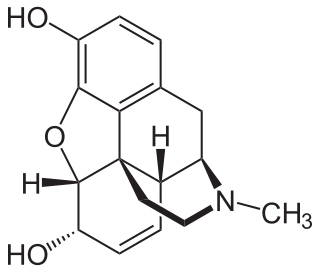
Opioids are a class of drugs that derive from, or mimic, natural substances found in the opium poppy plant. Opioids work in the brain to produce a variety of effects, including pain relief. As a class of substances, they act on opioid receptors to produce morphine-like effects.

Candace Beebe Pert was an American neuroscientist and pharmacologist who discovered the opioid receptor, the cellular binding site for endorphins in the brain.

The Science of Discworld III: Darwin's Watch (2005) is a book set on the Discworld, by Terry Pratchett, Ian Stewart and Jack Cohen. It is the sequel to The Science of Discworld and The Science of Discworld II: The Globe.

β-Endorphin (beta-endorphin) is an endogenous opioid neuropeptide and peptide hormone that is produced in certain neurons within the central nervous system and peripheral nervous system. It is one of three endorphins that are produced in humans, the others of which include α-endorphin and γ-endorphin.

Brian Inglis was an Irish journalist, historian and television presenter. He was born in Dublin, Ireland, and retained an interest in Irish history and politics.

Thomas Hager is an American author of popular science and narrative nonfiction.

Huda Akil is a Syrian-American neuroscientist whose research has contributed to the understanding of the neurobiology of emotions, including pain, anxiety, depression, and substance abuse. Akil and her colleagues are best known for providing the first physiological evidence for a role of endorphins in the brain and demonstrating that endorphins are activated by stress and can cause pain inhibition.

The 4 Percent Universe: Dark Matter, Dark Energy, and the Race to Discover the Rest of Reality is a nonfiction book by writer and professor Richard Panek and published by Houghton Mifflin Harcourt on January 10, 2011.

The Demon Under the Microscope: From Battlefield Hospitals to Nazi Labs, One Doctor's Heroic Search for the World's First Miracle Drug is a 2006 nonfiction book about the discovery of Prontosil, the first commercially available antibacterial antibiotic and sulfanilamide, the second commercial antibiotic. Prontosil was the first commercially available antibacterial antibiotic (with a relatively broad effect against Gram-positive cocci. It was developed in the 1930s by a research team at the Bayer Laboratories of the IG Farben conglomerate in Germany. The discovery and development of this first sulfonamide drug opened a new era in medicine.

Florence Williams is an American journalist and nonfiction author whose work focuses on the environment, health and science. She is a contributing editor at Outside magazine and a freelance writer for National Geographic, the New York Times, New York Times Magazine, The New York Review of Books, Slate, Mother Jones, High Country News, O-Oprah, W., Bicycling and numerous other publications.
""Human milk is like ice cream, penicillin, and the drug ecstasy all wrapped up in two pretty packages." — Florence Williams
John Hughes is a British neuroscientist who shared the 1978 Albert Lasker Award for Basic Medical Research for the discovery of met-enkephalin and leu-enkephalin. This discovery demonstrated that opiate drugs exert their effects on the human brain by mimicking endogenous neurotransmitters, the opioid peptides.
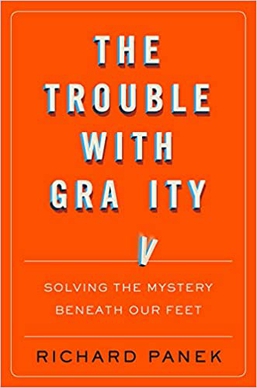
The Trouble with Gravity: Solving the Mystery Beneath Our Feet is a nonfiction popular science book by Richard Panek and published by Houghton Mifflin Harcourt on July 9, 2019.

