
The Eureka Rebellion was a series of events involving gold miners who revolted against the British colonial government in Victoria, Australia during the Victorian gold rush. It culminated in the Battle of the Eureka Stockade, which took place on 3 December 1854 at Ballarat between the rebels and the colonial forces of Australia. The fighting left at least 27 dead and many injured, most of the casualties being rebels. There was a preceding period beginning in 1851 of peaceful demonstrations and civil disobedience on the Victorian goldfields. The miners, many of whom such as Raffaello Carboni came from Europe and were veterans of the Revolutions of 1848, had various grievances, chiefly the cost of mining permits and the officious way the system was enforced.

The City of Merri-bek is a local government area in metropolitan Melbourne, Australia. It comprises the inner northern suburbs between 4 and 11 kilometres from the Melbourne CBD. The Merri-bek local government area covers 51 km2 (20 sq mi), and in June 2018, it had a population of 181,725.

Coburg is a suburb in Melbourne, Victoria, Australia, 8 km (5.0 mi) north of Melbourne's Central Business District, located within the Cities of Darebin and Merri-bek local government areas. Coburg recorded a population of 26,574 at the 2021 census.

Fawkner is a suburb in Melbourne, Victoria, Australia, 12 km (7.5 mi) north of Melbourne's Central Business District, located within the Cities of Hume and Merri-bek local government areas. Fawkner recorded a population of 14,274 at the 2021 census.

The Australia First Party (AFP), officially known as the Australia First Party (NSW) Incorporated, is an Australian nationalist political party founded in 1996 by Graeme Campbell, a former member of the Australian Labor Party. The policies of the party have been described as nationalist, anti-multicultural and economically protectionist, advocating for strict immigration controls, the prioritization of Australian citizens in employment, and the promotion of Australian culture and values. The party's logo includes the Southern Cross of the Eureka Flag.

Fawkner railway station is located on the Upfield line in Victoria, Australia. It serves the northern Melbourne suburbs of Hadfield and Fawkner the station opened on 8 October 1889 as Fawkner. It closed on 13 July 1903, and reopened on 12 December 1906 as Fawkner Cemetery. It was renamed Fawkner in 1914.

John Batman was an Australian grazier, entrepreneur and explorer. He is best known for his role in the founding of Melbourne.
Resistance: Young Socialist Alliance (RYSA) is the youth wing of Socialist Alliance, an Australian eco-socialist and anti-capitalist political party.

The Geelong Advertiser is a daily newspaper circulating in Geelong, Victoria, Australia, the Bellarine Peninsula, and surrounding areas. First published on 21 November 1840, the Geelong Advertiser is the oldest newspaper title in Victoria and the second-oldest in Australia. The newspaper is currently owned by News Corp. It was the Pacific Area Newspaper Publishers Association 2009 Newspaper of the Year.
Norman Leslie Gallagher was a controversial Australian trade unionist, and Maoist who led the militant Builders Labourers Federation as federal Secretary and as Victorian State Secretary.
Brunswick Juventus FC is an Australian soccer club based in the Melbourne municipality of Merri-bek. The club currently competes in the National Premier Leagues Victoria 2 and is based at CB Smith Reserve in the suburb of Fawkner. The earliest traces of the club date back to 1948 with the founding of Brunswick Zebras, and was officially founded in 1997 with mergers and de-mergers occurring between Italian backed clubs within the Italian community of Melbourne.

The Eureka Prizes are awarded annually by the Australian Museum, Sydney, to recognise individuals and organizations who have contributed to science and the understanding of science in Australia. They were founded in 1990 following a suggestion by science journalist Robyn Williams.

Anarchism in Australia arrived within a few years of anarchism developing as a distinct tendency in the wake of the 1871 Paris Commune. Although a minor school of thought and politics, composed primarily of campaigners and intellectuals, Australian anarchism has formed a significant current throughout the history and literature of the colonies and nation. Anarchism's influence has been industrial and cultural, though its influence has waned from its high point in the early 20th century where anarchist techniques and ideas deeply influenced the official Australian union movement. In the mid 20th century anarchism's influence was primarily restricted to urban bohemian cultural movements. In the late 20th century and early 21st century Australian anarchism has been an element in Australia's social justice and protest movements.
Montague David Miller, born 7 July 1839 in Van Diemen's Land, was an Australian trade unionist, secularist, and revolutionary anarchist-socialist chiefly active in the states of Victoria and, in his most productive period, in Western Australia. His activism with unions and the Industrial Workers of the World (IWW), during the early years of the twentieth century, saw him acting as a speaker and organiser for these sometimes illegal groups, leading to his conviction for conspiracy in 1916.

Ellen José (1951 – 2 June 2017) was an Australian Indigenous artist, photographer and anarchist. She was a Torres Strait Islander descendant from Murray, Darnley and Horn Islands who lived in Melbourne with husband and fellow anarchist Joseph Toscano.

John Fawkner College is a government-funded co-educational secondary day school, located in Fawkner, Melbourne, Victoria, Australia. As of 2009 the school had approximately 400 students from Year 7 to Year 12.
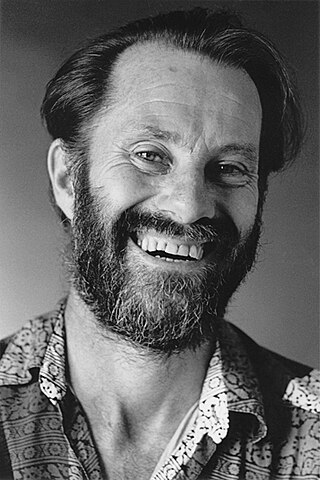
Peter James McGregor was an Australian anarchist known for his political activism, university teaching and commitment to direct action. He was actively involved in and led several major Australian and international political campaigns.
The Transition Decade is a non-partisan shared campaign which is coordinated by an alliance of Australian community, social, and environmental groups, non-profits and NGOs. The initiative forms a unified plan to campaign, lobby and work to restore safe climate conditions and a sustainable future.
Coburg Pine Ridge Cemetery is located in the northern Melbourne suburb of Preston, Victoria, Australia. The main entrance is on Bell Street, Preston. The Cemetery is managed by Greater Metropolitan Cemeteries Trust (GMCT), and work closely with local community group, Friends of Coburg.
The Photographers' Gallery and Workshop (1973–2010) was an Australian photography gallery established in South Yarra, Melbourne, and which ran almost continuously for nearly 40 years. Its representation, in the 1970s and 1980s, of contemporary and mid-century, mostly American and some European original fine prints from major artists was influential on Australian audiences and practitioners, while a selection of the latter's work sympathetic to the gallery ethos was shown alternately and then dominated the program.

