Related Research Articles

Luis Mariano Ospina Pérez, commonly known as Mariano Ospina Pérez, was a Colombian politician and a member of the Colombian Conservative Party. He served as the 17th President of Colombia between 1946 and 1950.
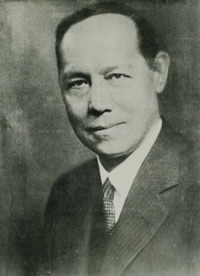
Enrique Alfredo Olaya Herrera was a Colombian journalist and politician. He served as President of Colombia from 7 August 1930 until 7 August 1934 representing the Colombian Liberal Party.
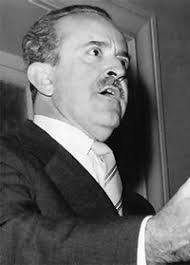
Guillermo León Valencia Muñoz was a Colombian politician, lawyer and diplomat who served as the 21st President of Colombia from 1962 to 1966.

Gonzalo Arango Arias was a Colombian writer, poet, and journalist. In 1958 he led a modern literary and cultural movement known as Nadaism (Nothing-ism), inspired by surrealism, French existentialism, beat generation, dadaism, and influenced by the Colombian writer and philosopher Fernando González Ochoa.
The Colombian Conservative Party is a conservative political party in Colombia. The party was formally established in 1849 by Mariano Ospina Rodríguez and José Eusebio Caro.
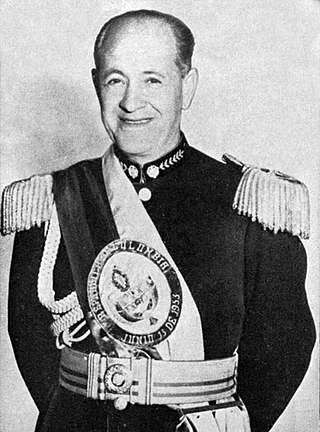
Gustavo Rojas Pinilla was a Colombian army general, civil engineer and politician who ruled as 19th President of Colombia in a military dictatorship from June 1953 to May 1957.
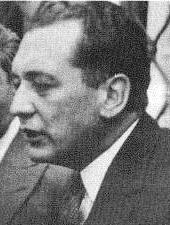
Laureano Eleuterio Gómez Castro was a Colombian politician and civil engineer who served as the 18th President of Colombia from 1950 to 1953. In November 1951 poor health led him to cede presidential power to Roberto Urdaneta Arbelaez. On 13 June 1953, when he tried to resume his presidency, he was overthrown in a military coup led by Gustavo Rojas Pinilla. During the three decades prior to being elected president, Gómez was a radical leader of the Conservative Party and is widely considered to be one of the most brilliant and potent orators of the Congress of Colombia. However, he remains a controversial figure because of his sympathy for authoritarian regimes and the dictatorial nature of his government.

Alonso Neira Martinez was a Colombian sculptor.

José María Dionisio Melo y Ortiz was a Colombian general and political figure who fought in the South American wars of independence, and who rose to power and briefly held the presidency of Colombia in 1854. Of Pijao ancestry, he is considered the country's first and only indigenous president.
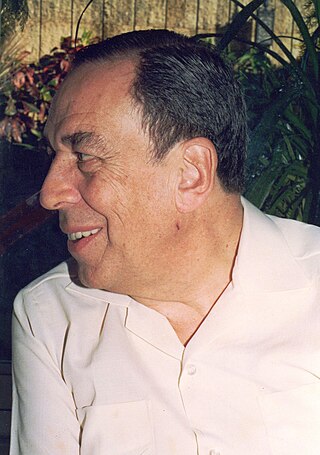
Álvaro Gómez Hurtado was a Colombian lawyer, politician, journalist and active member of the Colombian Conservative Party. Gómez was a son of the former President of Colombia, Laureano Gómez. He is mostly remembered for being one of the writers of the Colombian Constitution of 1991, for running three times for the presidency, without success, and for his murder at the hands of the Revolutionary Armed Forces of Colombia. He served separate appointments as ambassador to Switzerland, Italy, the United States and France, beginning in the 1940s.
National Front was a period in the history of Colombia in which the two main political parties, the Liberal Party and the Conservative Party, agreed to rotate power, intercalating for a period of four presidential terms. The National Front Presidents were Alberto Lleras Camargo (Liberal), Guillermo León Valencia (Conservative), Carlos Lleras Restrepo (Liberal), and Misael Pastrana Borrero (Conservative).
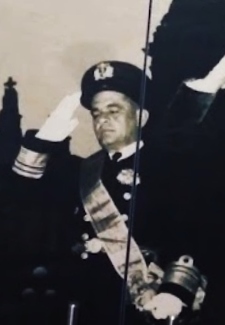
Gabriel París Gordillo was a Colombian military officer and political leader who ruled the country as the chairman of a military junta from May 1957 to August 1958, following the resignation of General Gustavo Rojas Pinilla. París oversaw the regime's transition to electoral democracy after four years of military dictatorship, and turned over power to Alberto Lleras Camargo of the National Front.
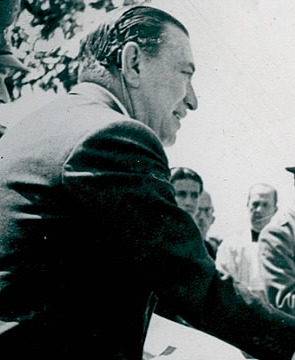
Roberto Urdaneta Arbeláez was a Colombian Conservative party politician and lawyer who served as Acting President of Colombia from November 1951 until June 1953, while President Laureano Gómez was absent due to health issues.

Jorge Tadeo Lozano de Peralta, Viscount of Pastrana was a Neogranadine scientist, journalist, and politician who presided over the Constituent College of Cundinamarca and was elected President of Cundinamarca in 1811.
Presidential elections were held in Colombia on 4 May 1958. They were the first presidential elections since 1949, following a military coup against President Laureano Gómez in 1953. Following the coup, the two main parties came to an agreement on holding office for alternating periods of four years. The agreement, known as the National Front, was approved in a 1957 referendum.

Colegio Mayor de San Bartolomé is a private Catholic pre-school, primary and secondary school, colonial of Plateresque style building, located in the Santa Fe district of Bogotá, Cundinamarca, Colombia. The co-educational school was founded on 27 September 1604 by the Archbishop of Bogota Bartolomé Lobo Guerrero and the Jesuits José Dadey, Martín de Funes, Juan Bautista Coluccini, Martín de Torres, Bernabé de Rojas, and Diego Sánchez. The school is managed by the Society of Jesus.

Álvaro Leyva Durán is a Colombian lawyer, economist, politician, human rights defender and diplomat. He has been the Minister of Foreign Affairs for Colombia in the government of Gustavo Petro since 7 August 2022. On 7 February 2024, he was suspended from his ministerial position for three months over an investigation into potential violations of procurement laws.

The first family of Colombia is the family of the president of Colombia, who is both head of state and head of government of Colombia. It is an unofficial title for the family of a republic's head of state. Members of the first family consist of the president, the First Lady of Colombia, and any of their children. However, other close relatives of the president and first spouse, such as parents, grandchildren, stepchildren, and in-laws, may be classified as members of the first family for context purposes. The first family of Colombia live in the presidential residence Casa de Nariño in Bogotá, Colombia.
María Hurtado de Gómez was the First Lady of Colombia from 1950 to 1953 as wife of the 18th President Laureano Gómez
References
- ↑ "Hoy Será el Sepelio de Jorge Leyva". news.google.com. 24 December 1962. Retrieved 6 October 2023.
- ↑ "Guillermo León Valencia, un presidente de armas tomar". kienyke.com. 27 April 2018. Retrieved 6 October 2023.
- ↑ "Alberto Lleras, Presidente de Colombia arrollador triunfo del Frente Nacional en todo el País". news.google.com. 12 October 1958. Retrieved 6 October 2023.
